Contract Lifecycle Management (CLM) is the end-to-end process of managing a contract from initial request through drafting, negotiation, approval, execution, compliance tracking, and renewal or expiration. CLM aims to streamline workflows, improve visibility, reduce risks, and ensure contract obligations are met efficiently.
What are the common challenges organizations face in contract management?
Common challenges include fragmented contract storage, manual and error-prone processes, lack of standardized templates, poor visibility into contract obligations and deadlines, slow approvals, and difficulty tracking compliance. These issues lead to delays, compliance risks, and missed business opportunities.
How can technology improve contract lifecycle management?
Modern CLM software automates routine tasks such as drafting with templates, approval workflows, redlining, obligation tracking, and e-signatures. Centralized repositories with search and analytics capabilities improve contract access and insight. Automation and analytics help reduce errors, accelerate workflows, and inform better business decisions.
What best practices should organizations adopt for effective CLM?
Key best practices include centralizing contract data, standardizing templates, customizing CLM tools to fit specific workflows, automating approvals and renewals, fostering collaboration through real-time commenting, tracking key performance metrics, managing risk proactively, and investing in user training and change management.
How does CLM help manage compliance and reduce legal risks?
CLM embeds compliance checks and alerts for critical deadlines and obligations throughout the contract lifecycle. This proactive approach helps prevent contract breaches, regulatory violations, and costly disputes by ensuring obligations are tracked and managed diligently.
What KPIs are useful for measuring CLM performance?
Useful KPIs include average contract cycle time, contract renewal rates, compliance adherence percentage, contract volume handled per legal staff, number of contract-related disputes, and percentage of contracts executed electronically. These metrics help identify efficiency gaps and areas for improvement.
How do CLM solutions support collaboration across departments?
CLM platforms facilitate real-time collaboration with features like in-document commenting, version control, stakeholder notifications, and consolidated communication trails. This reduces email back-and-forth, shortens negotiation cycles, and improves transparency.
Is CLM suitable for organizations of all sizes?
Yes. While larger enterprises benefit significantly from CLM’s automation and scalability, small and mid-sized organizations also gain from process consistency, risk mitigation, and efficiency improvements. Many CLM providers offer scalable solutions that adapt to organizational needs.
What steps should legal teams take to successfully implement CLM?
Successful CLM implementation starts with mapping current contract processes, setting clear goals, selecting tools that fit business requirements, standardizing templates, and defining workflows. Equally important is investing in change management with training, stakeholder engagement, and ongoing support to ensure adoption.
Ashish Upadhyay is an Ex-Senior Writer at SpotDraft, where he covers AI in contracting and helps unpack CLM best practices. He has 6+ years of experience writing for B2B SaaS, LegalTech, and Fintech, and previously worked at Gartner.
TL;DR
Contract lifecycle management best practices help teams reduce delays, improve compliance, and gain visibility from drafting to renewal.
The biggest gains usually come from standardized templates, approval workflows, central storage, and automated renewal tracking.
Strong CLM processes balance self-serve speed for low-risk contracts with legal oversight for exceptions.
Metrics like turnaround time, redline cycles, and missed renewals reveal where the process breaks down.
CLM software works best when paired with clear ownership, governance, and training.
Most contract problems are process problems. Missed renewals, approval delays, and compliance gaps rarely happen because a contract was poorly written. They happen because the workflow around it was unclear, manual, or inconsistently followed.
Contract Lifecycle Management (CLM) is the process of managing a contract from request through drafting, negotiation, approval, signing, storage, and renewal—ideally in one system rather than scattered across email, Word, and shared drives. This guide covers best practices of contract lifecycle management.
What happens when you don't prioritize contract lifecycle management?
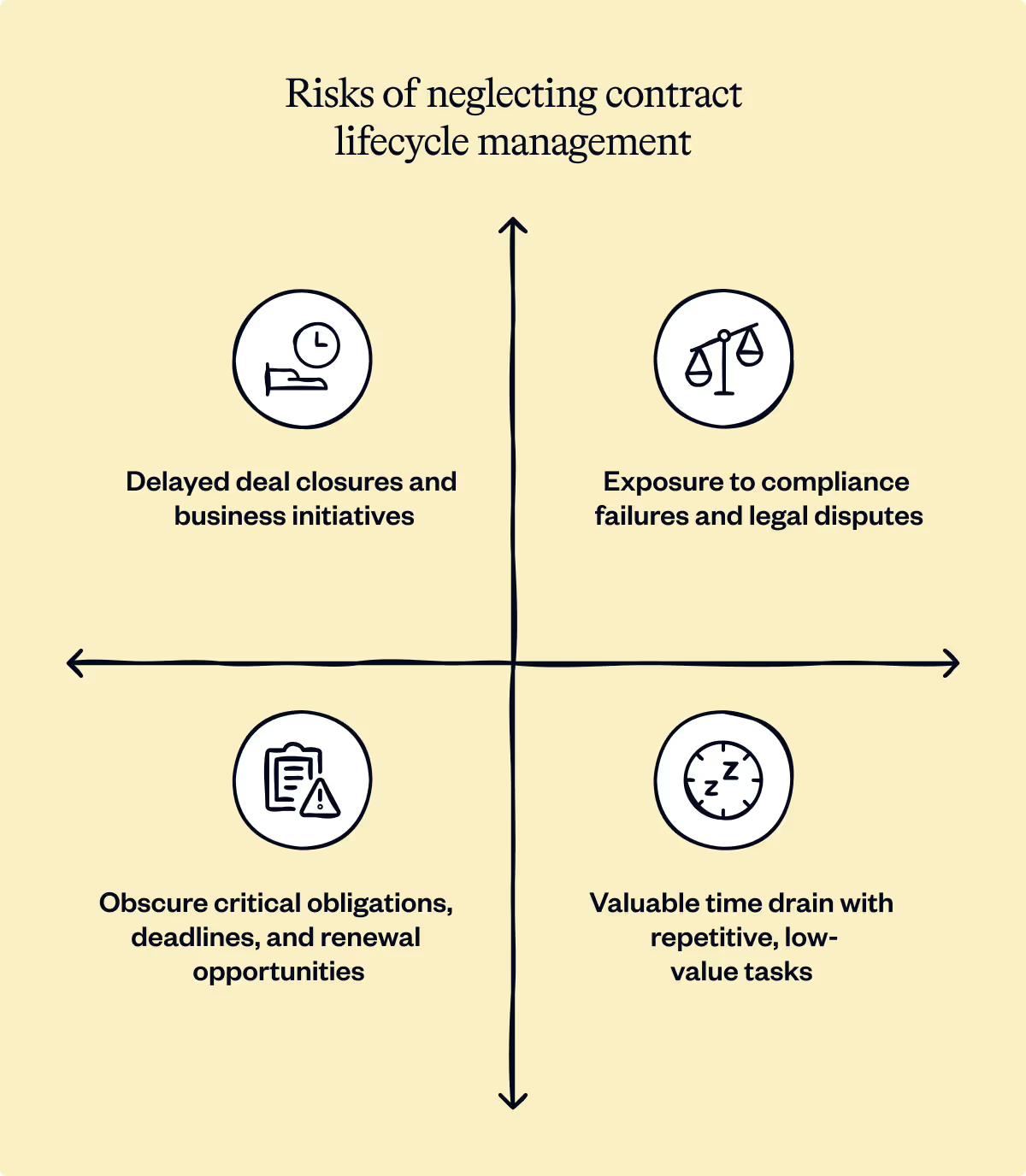
Contracts shape every critical business interaction, from vendor partnerships to customer agreements. If managed poorly, contracts can:
Delayed deal closures and business initiatives
Inefficient contracting processes often result in unnecessary delays during drafting, review, negotiation, and approvals. Contracts frequently get stuck in bottlenecks due to lack of visibility, unclear roles, or cumbersome manual workflows.
These slowdowns push out deal finalizations, causing missed market opportunities, stalled projects, delayed revenue recognition, and impaired business agility. Particularly in today’s fast-paced markets, speed underpins competitiveness. Faster contract execution directly translates into the ability to seize timely opportunities, expedite product launches, and respond promptly to evolving customer or partner needs.
For example, a study by Deloitte found that companies using modern CLM solutions reduced contract cycle times by up to 50%, enabling faster revenue capture and improved client satisfaction.
Exposure to compliance failures and legal disputes
Contracts embed complex compliance requirements, regulatory obligations, and risk provisions that must be meticulously tracked and enforced. When contracts are mismanaged, key clauses may be overlooked, audit trails become insufficient, and the company becomes vulnerable to regulatory violations, financial penalties, or costly litigation.
Poor compliance management can damage an organization's reputation and erode stakeholder trust. Proactive contract lifecycle management ensures compliance checkpoints are seamlessly embedded into workflows, supported by automated alerts for upcoming deadlines, renegotiations, or regulatory changes. This reduces the risk of breaches or disputes before they spiral out of control.
Obscure critical obligations, deadlines, and renewal opportunities
Contracts carry a mosaic of obligations, milestones, and renewal timelines critical to business continuity and value optimization. When these essential details are scattered across physical files, isolated systems, or error-prone spreadsheets, organizations risk missing payment deadlines, failing performance reviews, or losing renewal windows.
This loss of visibility can result in unintended contract lapses, forfeited rights, penalties, and unclaimed revenue or benefits. A robust CLM strategy provides a centralized repository equipped with tracking capabilities and automated reminders that empower stakeholders to stay informed, anticipate actions, and proactively manage contract lifecycles.
Valuable time drain with repetitive, low-value tasks
Manual handling of contracts—from data entry to repetitive approvals and status tracking—consumes extensive time and resources within legal teams. These tasks often distract from higher-order work that requires legal judgment, negotiation expertise, and strategic thinking.
Contract lifecycle management automation eliminates tedious manual work by streamlining workflows, auto-extracting metadata, and enabling self-service for stakeholders. This shift reclaims valuable team bandwidth, raising productivity and job satisfaction.
Adopting these CLM best practices will empower your legal team to increase transactional velocity, improve visibility and control, and minimize costly errors while supporting enterprise-wide goals.
9 Contract Lifecycle Management Best Practices
Keep a single source of truth for all your contracts
Fragmented contract storage across departments, file servers, or physical cabinets breeds inefficiency and risk. Contract versions multiply without control, and retrieval becomes painful and error-prone.
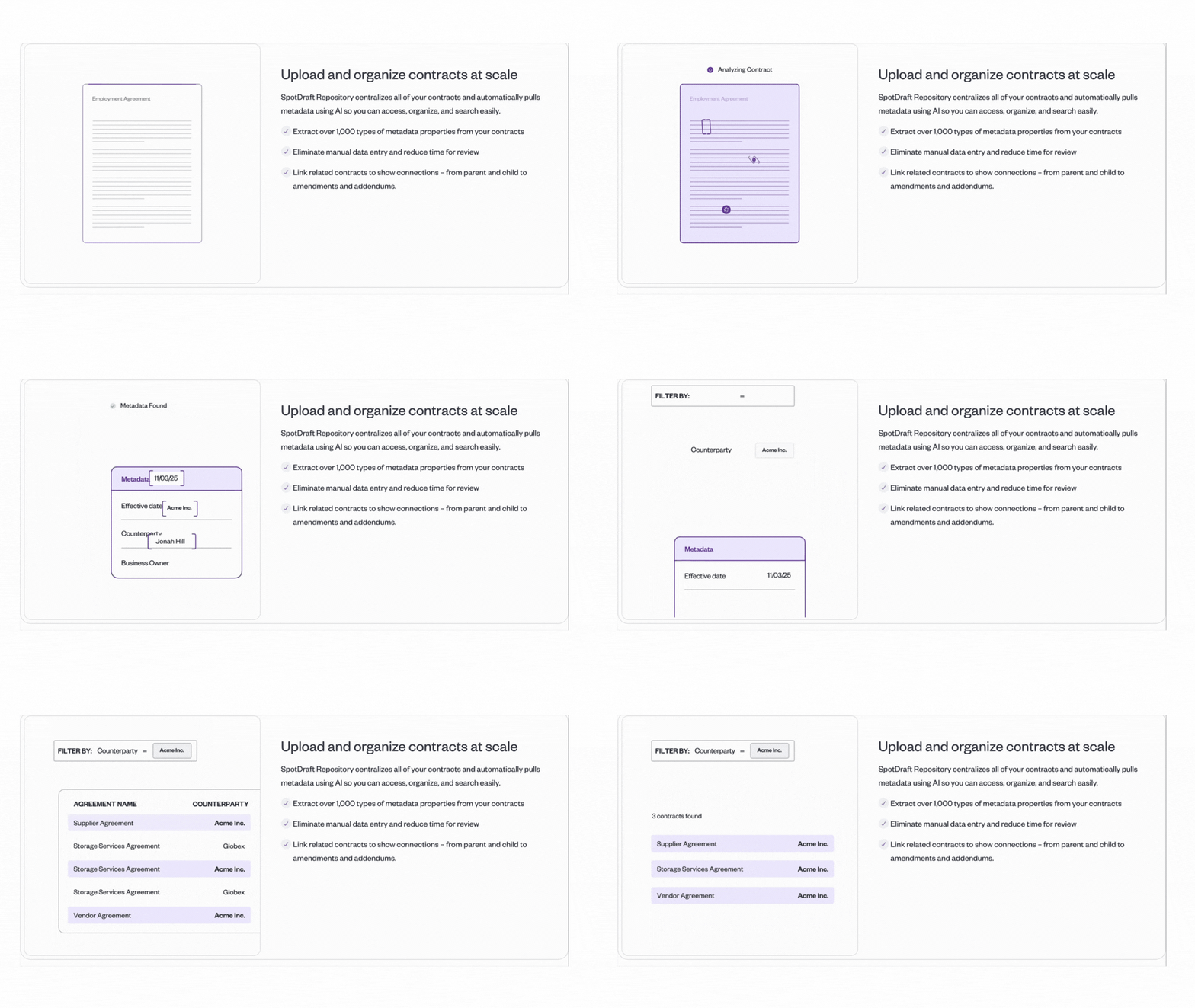
A centralized, digital contract repository ensures every stakeholder accesses the latest contract versions, supports robust search and audit trails, and maintains contract integrity through version control. This repository works as the foundation for all subsequent CLM efforts, enabling clarity and consistency during contract drafting, review, and renewal.
Contract repository in SpotDraft
Cloud-based CLM platforms provide secure access around the clock, ensuring legal teams and business users can consult or collaborate anytime, anywhere—accelerating contract throughput.
Use templates to standardize contract creation
Ad hoc contract drafting exposes legal teams to inconsistency, omissions, and risk. Without standardized usage, contract language fluctuates, approval cycles lengthen, and compliance weakens.
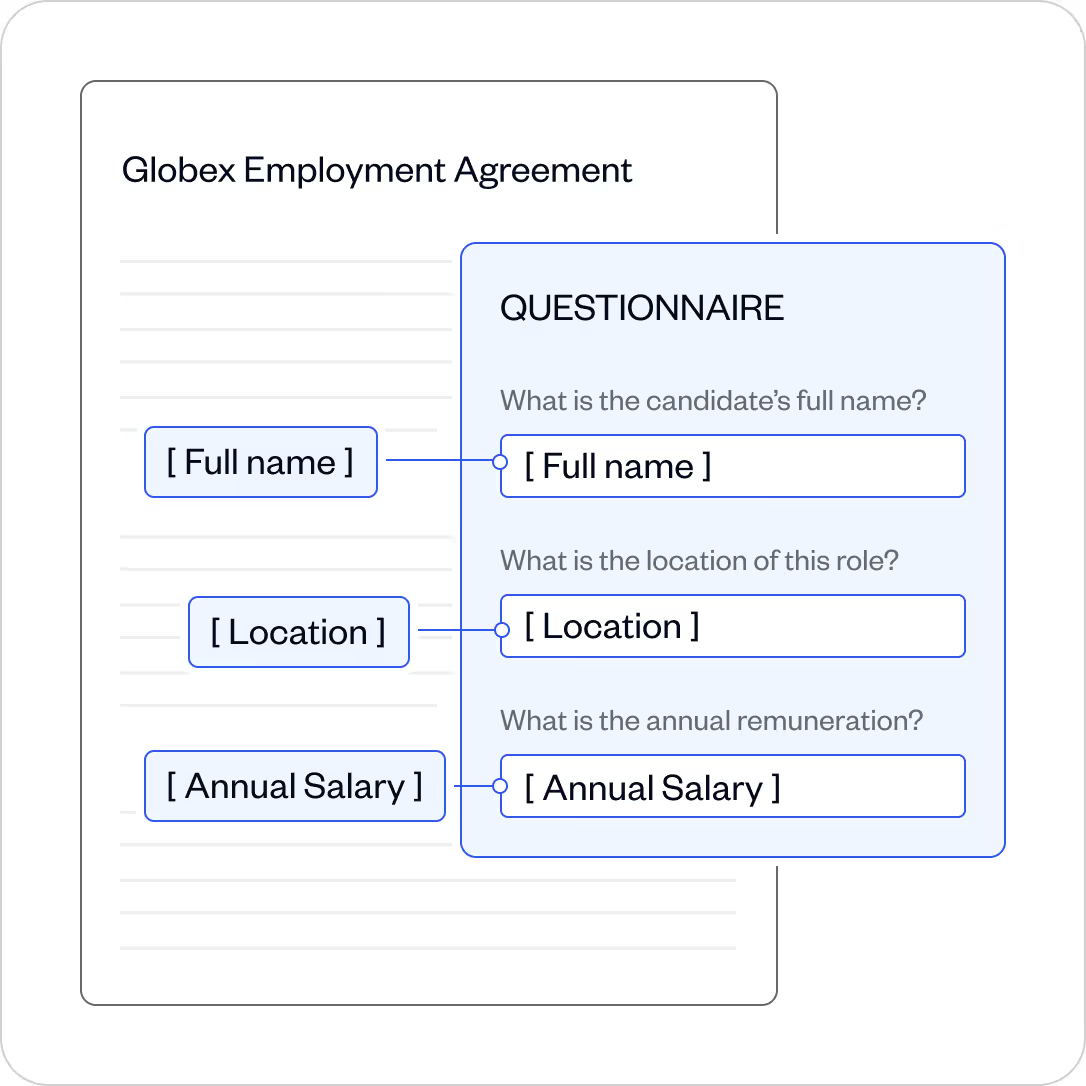
Standardized templates, including pre-approved clauses and comprehensive clause libraries, streamline contract creation, bolster compliance, and reinforce brand voice. Templates accelerate contract initiation by providing reusable, governable frameworks while reducing human error.
Standardized contracts in SpotDraft
Legal operations teams benefit from maintaining and regularly updating these templates to reflect changing regulations and evolving business models.
Find a customizable CLM solution to fit your unique needs
CLM software should never impose a rigid, one-size-fits-all mold on your processes. Your organization’s workflows, regulatory environment, and integration requirements with CRM, ERP, procurement, or financial systems shape your contract management framework.
A customizable CLM platform adapts flexibly to your needs—allowing configuration of workflows, compliance rules, user roles, and external system integrations. This adaptability reduces friction, fosters adoption, and grants legal operations a holistic view of contract lifecycles across your enterprise ecosystem.
No two organizations are the same. CLM software should flexibly align with your workflows, compliance mandates, and integration requirements with CRM, ERP, or procurement platforms. Customizable solutions reduce friction across contract-related systems and provide a unified, holistic view of contract lifecycles.
Automate workflows to save time and reduce errors
Manual contract management processes increase friction and human error. Automating workflows—from drafting through redlining, approval routing, and renewals—eliminates bottlenecks and accelerates turnaround.
Automation frees legal resources from administrative drudgery, allowing them to concentrate on strategic contracting activities. Workflow automation with conditional logic, escalations, and notifications ensures timely action and auditability, minimizing risk exposures.
AI-powered features, such as automatic metadata extraction and contract risk scoring, further optimize contract reviews and compliance validation.
Enable real-time collaboration
Contract negotiation is commonly a bottleneck due to siloed reviews and disjointed communication via email chains. Real-time collaboration features like in-line commenting, version comparison, and joint editing reduce cycle times and confusion.
By consolidating commentary and approvals within the CLM platform, stakeholders effortlessly track changes, clarify issues, and resolve disagreements—dramatically shortening negotiation phases.
Leverage data, reporting, and contracting KPIs
Data-driven contract management is a game changer. Tracking key performance indicators (KPIs) such as contract cycle times, renewal rates, compliance adherence, bottleneck sources, and contract volume handled per staff member provides actionable insights.
User-friendly dashboards and reporting tools transform contract data into strategic information, enabling continuous process refinement and risk mitigation.
Data is a powerful lens for continuous improvement. Track key performance indicators such as contract cycle times, renewal rates, compliance adherence, and bottleneck sources. Dashboards and analytics transform raw contract data into actionable insights for operational optimization and risk mitigation.
Integrate eSignatures for faster execution
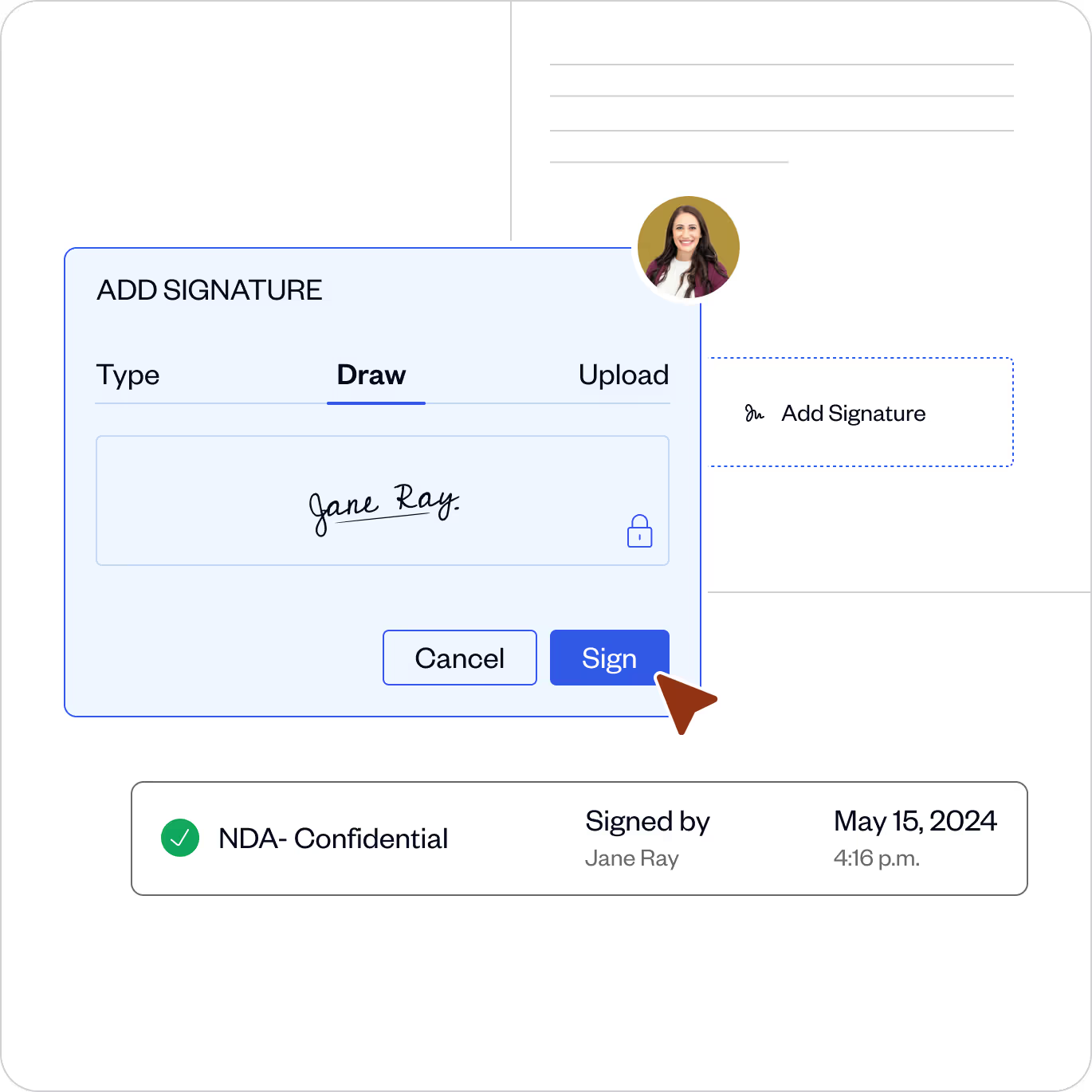
Physical signatures slow contract closure and burden legal ops. Incorporating electronic signatures accelerates execution, reduces administrative overhead, and enhances auditability with legally binding digital proof. Seamless integration with CLM tools further streamlines the final step.
eSignatures in SpotDraft
Proactively manage risks and compliance
Embed compliance protocols and risk checks throughout the contract workflow. Automated alerts notify stakeholders of upcoming deadlines, renegotiations, or regulatory changes, preventing missed obligations or violations.
Contract risk dashboards track exposure areas like indemnities, liabilities, or regulatory clauses, empowering legal teams to intervene before issues escalate.
Adopting new CLM tools and processes only succeeds with user acceptance. Legal teams should invest in change management: tailored training, sustained internal communication, and ongoing support boosts adoption and maximizes ROI.
Encourage feedback loops to improve processes and ensure that the system evolves with user needs rather than becoming stale or underutilized.
“Leveraging a CLM has been key because it has reduced a lot of friction from handoffs between legal and business. Rather than going back and forth over email, Slack, Word, Zoom, DocuSign, and a whole tech stack, the CLM acts as a single source of truth.” ~ Jonathan Franz, Head of Legal, Crunchbase Navigating Economic Turbulence and Thriving in Chaos
The bottom line: From contract chaos to strategic clarity
Implementing these best practices unlocks dramatic improvements in efficiency, risk control, and legal operations' strategic impact. Teams that master CLM report faster contract turnaround, fewer errors, and enhanced compliance—all while freeing bandwidth to focus on higher-value work.
The ultimate goal is transforming your contract lifecycle from an operational hurdle into a smooth, predictable engine that fuels business growth and risk resilience. Start with clarity, streamline with technology, collaborate with precision, and measure for continuous improvement.
“I have seen a demo of SpotDraft’s CLM technology and they should be on your short list of vendors to talk to about a contract management system.” ~ Sterling Miller, CEO and Senior Counsel at Hilgers Grabens PLLC Ten Things: “Cool Tech” For In-House Counsel (2022 Edition)
Legal teams ready to lead their organizations confidently through the complexities of contracting must make CLM best practices their foundation. Master this, and contracts become a source of competitive advantage rather than constant friction.
Frequently Asked Questions
What is Contract Lifecycle Management (CLM)?
What are the common challenges organizations face in contract management?
How can technology improve contract lifecycle management?
What best practices should organizations adopt for effective CLM?
How does CLM help manage compliance and reduce legal risks?
What KPIs are useful for measuring CLM performance?
How do CLM solutions support collaboration across departments?
Is CLM suitable for organizations of all sizes?
What steps should legal teams take to successfully implement CLM?
Related content
latest
Contract Management for e-Commerce and Marketplaces: Vendor, Seller and Supplier Agreements
A detailed breakdown of how a CLM helps with vendor, seller and supplier agreements and which one is the best.



.png)

