Contract Repository Software: Building a Single Source of Truth

Huzaifa Sultana is a Marketing Associate at SpotDraft focusing on Organic Growth through SEO and AEO.
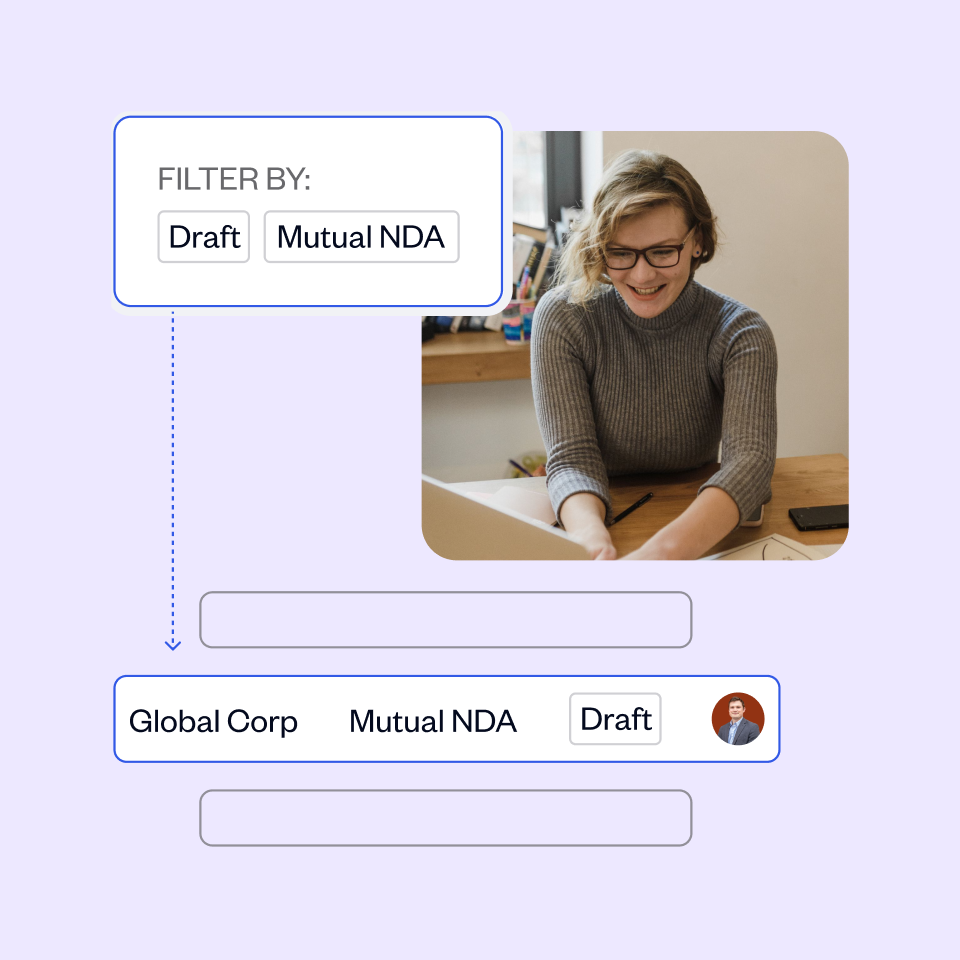
A centralized, secure and searchable database where signed contracts and their key metadata lives is called a contract repository software. This metadata consists of parties, dates, values and obligations. It is an upgrade from shared drives and email folders into a single source of truth, where appropriate stakeholders can find agreements, track renewals and control access.
Do your contracts currently live across email threads, desktops and drives? This creates a search problem, one that comes with a price. Missed obligations, missed entitlements and unfavorable auto-renewals that are left untracked. At scale, these create chaos. Contracts that can’t be found, can’t be enforced.
Experience a central contract repository in action. Book a personalized demo.
A good contract repository should help your organization find, structure and control outcomes. The below checklist lists down features in detail:
Find
Structure
Control
Lacking intuitiveness and actionable outcomes is why most repositories don’t fulfil their expectations. While they may hold contracts, metadata fields lie empty due to manual entry expectations, creating a domino effect affecting search and surfacing key details in the near future. At scale, this can turn into a mammoth task.
This is precisely what AI metadata extraction addresses. OCR turns scanned documents into searchable text. AI is able to read these contracts and pull structured data such as parties, expiry or renewal dates, values, terms and liability caps to name a few, automatically. SpotDraft’s Smart Data Capture extracts over 1,000 types of contract metadata automatically and effortlessly turns a pile of PDFs into a queryable database with no manual support.
Always upload one of your own contracts to see in real-time what the tool’s AI is able to extract. Book a personalized demo and validate for yourself.
Onboarding a software is not the challenge. Migration of legacy contracts is what determines future efficiency. To have thousands of legacy contracts uploaded, OCR’d, extracted, verified is a time intensive activity. To complete it once, in a systematic manner should be a priority. This is why choosing a repository that already sits inside a contract lifecycle management platform is important.
Explore this CLM assessment guide to score platforms against your need and use the below workable sequence to execute systematically:
Define the fields your organization filters with. A helpful model is to work backwards from the questions that need to be answered. These can include:
Contracts from shared drives, email trails, DMSs, e-signature tools and stakeholder personal folders. Expect to find duplicates and drafts mistaken for executed contracts.
This ensures the scanned catalog becomes searchable as opposed to a pile of assets that need manual search.
Look for accuracy, especially across fields your organization will make decisions on, including and not limited to renewal dates and liability caps.
To maximize efficiency, connect each MSA to its respective SOWs, amendments and order forms to easily view entire agreements in one go.
Role-based permissions should be defined before inviting stakeholders. Retrofitting these can become chaotic at scale.
The following section expands on this crucial aspect that defines the workflow.
The purpose and value of a repository is truly realized when new contracts land in it. A standalone repository is dependent on somebody remembering to upload documents. This manual system invites errors and latency. A structural flaw that leaves the repository always slightly out of date on its best days. This erodes trust, and incentivizes asking legal as opposed to the system, defying the bandwidth challenge that the repository was supposed to solve in the first place.
When a repository is part of the same platform that handles the lifecycle, it automatically populates itself. The ideal system.
A repository is one stage of the contract lifecycle, a CLM covers every stage.
Further to the above, here are signals your organization may have outgrown a standalone repository:
Should your bottlenecks occur post-signature i.e. finding contracts and missing renewals, a repository may suffice. If your contracts stall at any stage before the signature stage, or more than two of the above points ring true, you need a capable CLM.
SpotDraft empowers a searchable contract repository with OCR, AI-driven metadata extraction across 1,000+ field types, tagging, custom views, version history and a full audit trail. Being an end-to-end CLM, it eliminates the need for multiple migrations, allowing storage that expands into drafting, negotiations, approvals and unlimited, native eSignatures.
Open, a fintech, managed over a thousand contracts a year, scattered across drives with a lean legal team. After consolidating into SpotDraft, they often describe the platform as the single source of truth for their entire organization. It also helped accelerate contract approvals by 90%.
Book a personalized demo to see not just the repository but the entire platform together.

.png)