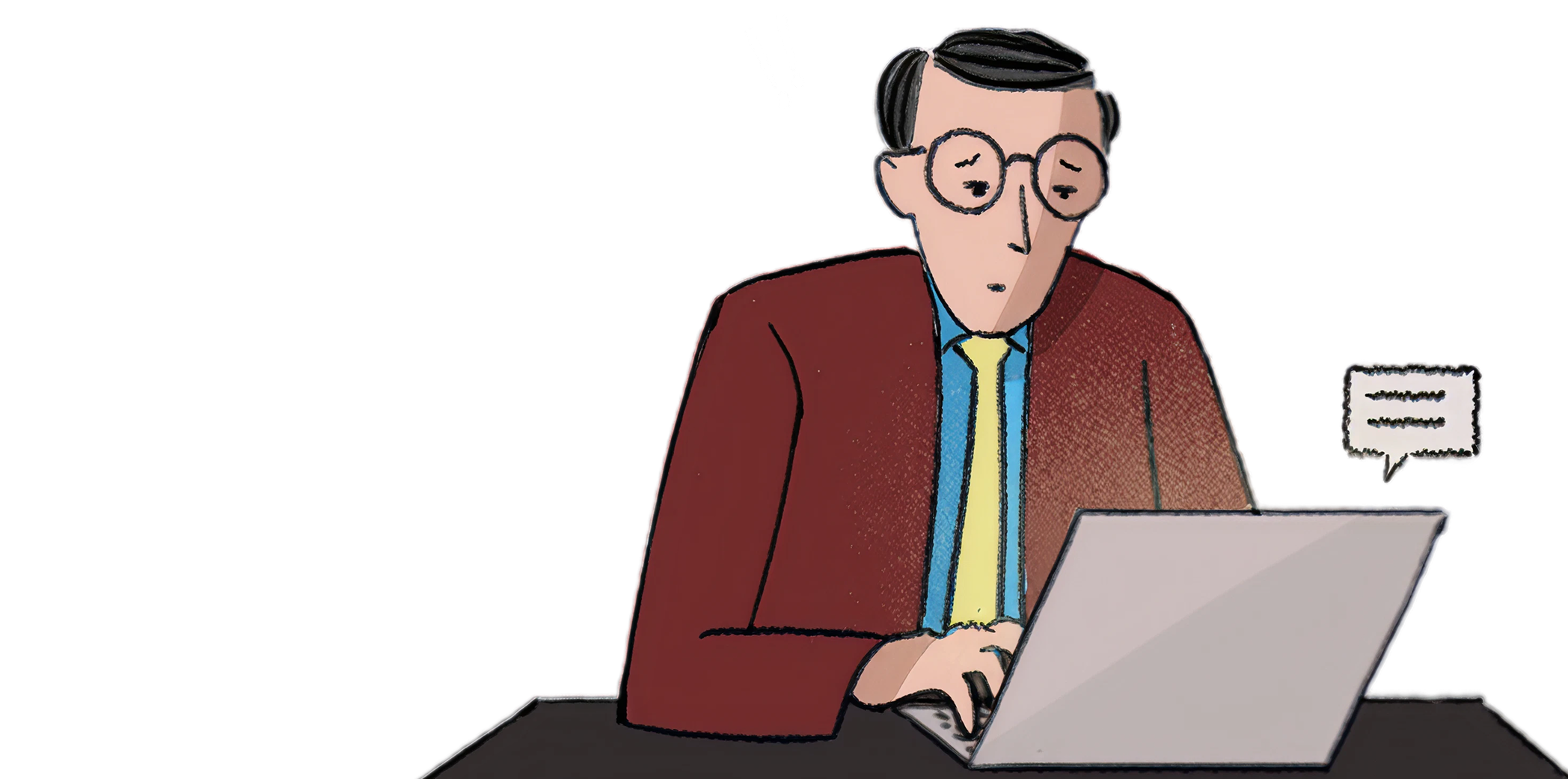
Switching from a General Counsel to a Chief Operating Officer role sounds like a massive jump, but it's not as outlandish as it sounds, especially now that the line between legal and business is blurring inside most companies. This guide covers what a COO actually does, why so many GCs are already closer to that role than they realize, the habits that hold legal professionals back from making the leap, and a practical five-step path for getting there.
Surprised by your
CLM renewal bill?
What Does GC Stand For?
GC stands for General Counsel, the senior in-house lawyer responsible for a company's overall legal strategy, litigation oversight, contract management, and compliance. It's the role most legal professionals hold before considering a move into a broader executive seat like COO. For a fuller breakdown of what the role covers day to day, see General Counsel vs. Chief Compliance Officer.
In a study by the Corporate Counsel Business Journal (CCBJ), more than half (55%) of surveyed GCs say their roles have expanded beyond legal, requiring them to contribute more directly to efforts driving profitability and business outcomes.
A modern GC understands how their company runs its business, coordinates cross-functional collaborations, and manages risks in fast-paced environments.
As a GC, these qualities already make you a strong business executive.
So, if you’re considering transitioning from GC to COO and aren’t sure about your ability to fill the boots of a top-brass strategic leader, this guide will explain everything you need to know.
What Is a COO?
A COO, short for Chief Operating Officer, leads a company's day-to-day operations as a member of the C-suite. With a direct reporting line to the CEO, the COO functions as the strategic engine behind the company's business activities.
Overseeing daily operations is core to the job, but it's only one part of it. In practice, a COO's role is a mix of things, shaped by industry, company stage, and business needs. Alongside running everyday operations, a COO might:
- Oversee strategic expansion
- Lead employee empowerment initiatives
- Handle cost control
- Manage customer service operations
As CEOs increasingly become the public face of their organizations, dealing with external parties, it often falls to COOs to provide internal leadership, helping teams remain resilient and productive.
Thanks to their role in value creation and organizational stability, COOs are often leading contenders for the chief executive position. In 2024, 43% of CEOs in America’s top 500 organizations came from the COO position, more than any other internal role.
What Does a COO Do at a Law Firm Specifically?
Law firm COOs are a distinct variant worth calling out separately, since the role looks different inside a professional services partnership than inside a typical corporation. A law firm COO typically oversees business operations, finance, HR, and technology infrastructure while working closely with the managing partner or executive committee rather than a traditional CEO. The role exists because partners are focused on client work and business development, not day-to-day operational management, which creates a genuine opening for legal professionals with operational instincts. If you're coming from an in-house GC background rather than private practice, the operational skill set transfers, but the reporting structure and stakeholder dynamics (partners instead of a board) are worth understanding before you pursue this specific path.
Is Moving From Legal to a Strategic Role a Natural Fit?
A GC's role isn't limited to legal advice anymore. In the 2024 State of the Corporate Legal Department report, 83% of surveyed GCs said they have a level of influence on their company's board decisions. GCs are increasingly involved in business decisions, not just legal ones.
That said, transitioning into a fully strategic role from a traditionally legal function shouldn't feel like sailing into uncharted territory, because many of the skills built as a GC directly transfer to strategic positions. It won't be effortless. You'll take on a broader range of responsibilities, collaborate with more teams, spend more time in board meetings, and essentially hold the company together from the inside. For more on how GCs build that kind of internal influence in the first place, 4 strategies to demonstrate legal team value is worth reading before you start positioning yourself for the move.
What Holds GCs Back From Becoming Strategic Business Leaders?
"If you're not business-first, you'll never see solid growth."
~ Mine Ekim Managing Director, Legal & Compliance, Golden Gate Global
From Big Law to Business Impact
Before you're seen as a strong candidate for a COO seat, you have to demonstrate to stakeholders that you have the right skills and mindset. A few behaviors, typical of many traditional legal professionals, work directly against that.
1. Excessive Risk Aversion
A GC who's too averse to risk won't do well as a strategic business leader. Business requires calculated risk-taking, especially in a fast-paced, competitive environment. Organizations increasingly need GCs to help them seize opportunities and manage the risk that comes with them. Without an appetite for calculated risk, you risk being seen as a roadblock rather than a strategic partner.
“You need to look at the big picture. If a transaction can create meaningful value for the business financially and operationally, then you should take that information into account when looking at the legal risks involved. Your job is often explaining legal risk in a digestible way to ensure that the business is aware of what could happen and what the consequences of certain decisions may be. Your business teams may be ok with the risks and decide to move forward. Your job becomes mitigating the risk as best you can and not taking it personally if the business is okay moving forward even with the risks you’ve outlined.
~ Katayoon Tayebi, Associate General Counsel, FIGS
Accelerating Your Career as In-house Counsel
2. Limited Cross-Functional Collaboration
Collaborating with diverse teams is key to learning how the business actually runs, and it's how you build the influence needed for strategic decisions. Some GCs stick strictly to what's within the traditional purview of the role, which caps how stakeholders ever come to see them.
“Ultimately, if you detach yourself from the business and only engage to answer questions, you end up becoming an ‘ivory tower of no’, where you only stop deals from happening and don't understand the context around the advice you're giving.”
~ Doug Luftman, Chief Legal Officer, Trust & Will
The Key to Success as an In-House Legal Counsel & Leader
3. Too Much Time Spent on Routine Work
Attorneys spend nearly 40% of their workday on administrative tasks, according to Thomson Reuters. Best-in-class legal professionals understand the value of automation and use it to keep pace with modern business demands. Automating routine tasks like contract drafting, review, and approval with a tool like SpotDraft frees up the bandwidth needed for strategic decision-making. You can't be a strategic leader if most of your days stay neck-deep in routine contract review and drafting work.
4. Insufficient Business Exposure
“You want people to think of you not as a lawyer but as their business partner who happens to have legal expertise.”
~ Doug Luftman, Chief Legal Officer, Trust & Will
The Key to Success as an In-House Legal Counsel & Leader
GCs are typically well-rounded across legal matters, but without enough business exposure, it's hard to connect the dots and drive business outcomes. A lack of business acumen limits your ability to see the bigger picture, and stakeholders often read that as overly conservative advice.
How Do You Transition From GC to COO?
Whether you're eyeing a COO role in your current organization or considering a move elsewhere, this switch isn't a cakewalk. Paul McConomy, who moved from GC at an established company to COO at a startup, described the transition as a "baptism of fire." Regardless, the core skills built as a GC carry real weight. Here's the practical path.
1. Embody the Mentality of a Cross-Functional Leader
“I mentioned being able to act as a strategic adviser. But I think the other thing you have the opportunity to do, as a lead lawyer in a high growth company, which I did, is take on strategic projects for the company and really own them, which some GCs don’t do.”
~ Dan Wright, Chief Operating Officer, AppDynamics
You can't fill a COO's shoes working in isolation. A COO is a connector, a junction uniting finance, HR, IT, and operations. Cultivate a mindset that values collaboration and communication, and learn how to motivate diverse teams to work as one unit.
2. Invest in Relationships That Support Your Mission
Without the right relationships, the road from GC to COO gets long and difficult. Invest in building solid connections: find mentors, attend networking events, stay active in peer forums. Internally, build genuine relationships with board members, including the CEO, by consistently providing value in meetings and showing willingness to learn from their experience.
3. Establish Yourself as a "Business-First" Lawyer
Legal advice and risk mitigation may be your comfort zone as a GC, but making this switch means shifting from a "legal-first" to a "business-first" view. Instead of adding friction, focus on delivering ideas that accelerate business goals. This means expanding your tolerance for calculated risk and actively participating in business meetings, not just answering legal questions when asked.
4. Broaden Your Proficiency Across Multiple Functions
A COO's role touches nearly every part of the business, finance, project management, HR, IT, and more. You don't need to be an expert in all of these, but you do need genuine curiosity about how each function works and how cross-functional collaboration drives outcomes.
5. Sharpen Existing Soft Skills, and Develop New Ones
Many of the soft skills built over years as legal counsel—problem-solving, analytical thinking, and attention to detail—are also mission-critical for a COO. Identify the ones you already have and invest in training to sharpen them. Consider coaching or workshops for less common but equally relevant skills like strategic agility and ethical decision-making, covered in more depth in top skills every legal ops professional must have.
GC vs. COO: Quick Comparison
| Factor |
General Counsel |
Chief Operating Officer |
| Primary focus |
Legal risk, compliance, contracts |
Day-to-day business operations |
| Reports to |
CEO or board |
CEO directly |
| Core skill set |
Legal analysis, risk mitigation, negotiation |
Cross-functional leadership, operational execution |
| Path to CEO |
Less common historically |
Most common internal path to CEO (43% in 2024) |
| Risk posture |
Traditionally risk-averse |
Requires calculated risk-taking |
Bottom Line
Taking on a COO role is a dream for a lot of GCs, but it isn't a walk in the park. You'll face a wide mix of new responsibilities and plenty of humbling moments along the way. It's also an incredibly rewarding path where your everyday decisions shape the company's future directly.
At Counsel Corner, we've partnered with dozens of GCs and legal leaders, drawing on their real, often messy experiences making moves like this one. Wherever you are in your own journey, check out Counsel Corner for more stories and lessons from people who've made this exact transition.


.avif)