Hello Claude, meet your contracts: SpotDraft Is Now in the Claude Connector Directory


Software has been organized around apps since forever. If you wanted to understand a customer, you opened your CRM. If you wanted to understand your financials, you opened your ERP. And if you wanted to understand your contracts, you opened your CLM.
Each app comes with its own unique interface, quirks, foibles and learning curves. But the winds of change have gathered force rapidly. AI is, in what is a somewhat violent turn of phrase, rendering software headless.
So what does that really mean? To extend the anatomical analogy: your software retains the arms and legs, but now, its body can take direction from almost any “head” out there.
Head = Claude, ChatGPT, Gemini and other applications of their ilk.
At SpotDraft, we have long believed in the inevitability of a headless future and have actively been at the vanguard. The vision is taking shape: SpotDraft is now officially listed in Claude's connector directory and featured in its latest launch of legal artifacts.
SpotDraft extends Claude's reach beyond individual contracts, enabling it to query thousands of agreements and surface intelligence across your portfolio.
Claude can also initiate actions directly within SpotDraft, while operating within your organization's rules and guardrails, whether these are approval paths, access controls, delegation rules or something else.
1. Portfolio-wide contract analysis: Compare key terms across thousands of agreements and identify patterns, outliers, and deviations from standard positions.
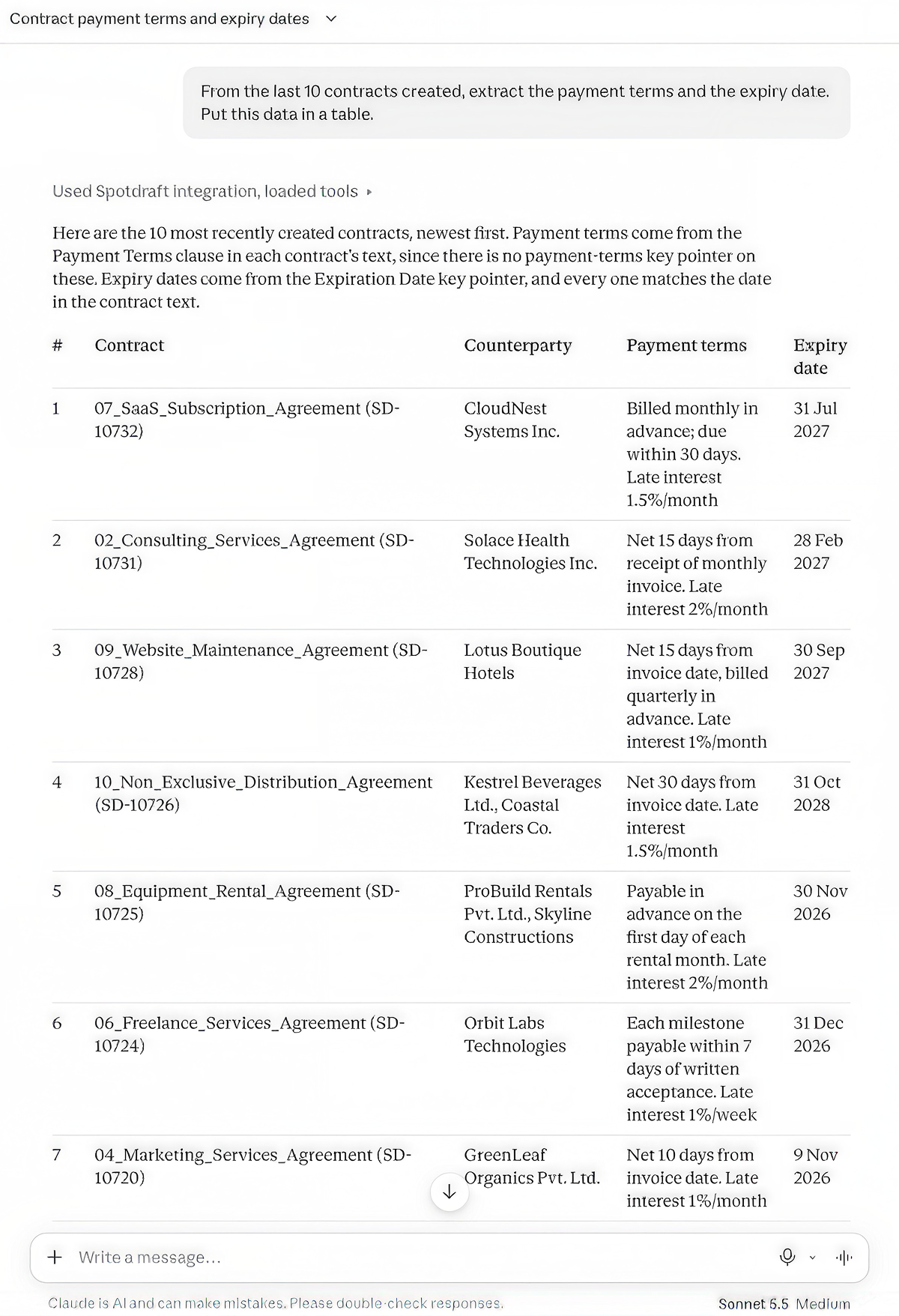
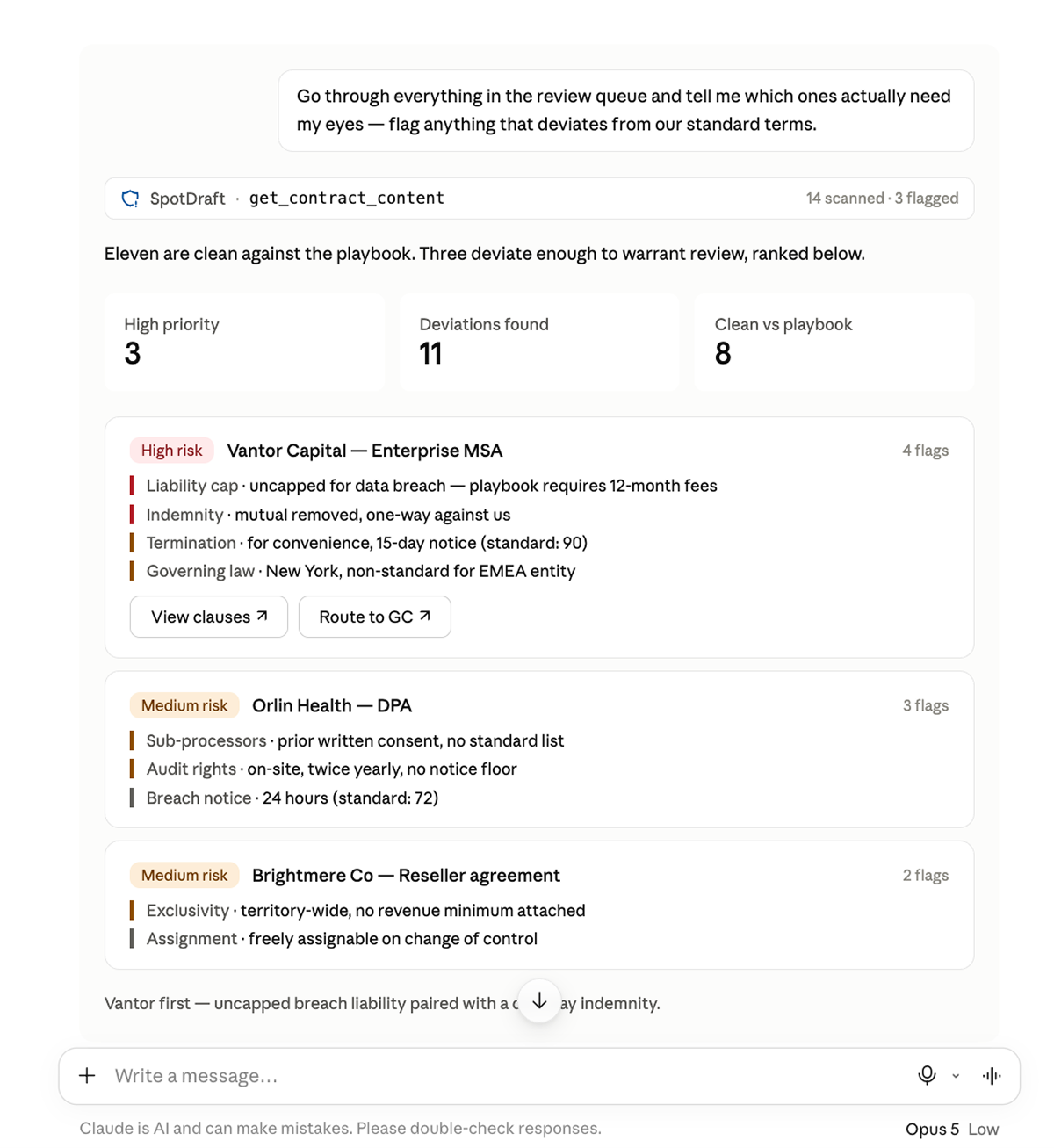
2. Contract risk identification: Surface agreements with unusual liability caps, indemnity provisions, termination rights, or other risk-bearing clauses.
3. Task and review coordination: Assign tasks, add comments, and coordinate follow-up on contract-related work.
4. Contract workflow progression: Initiate supported actions to move contracts through established lifecycle processes.
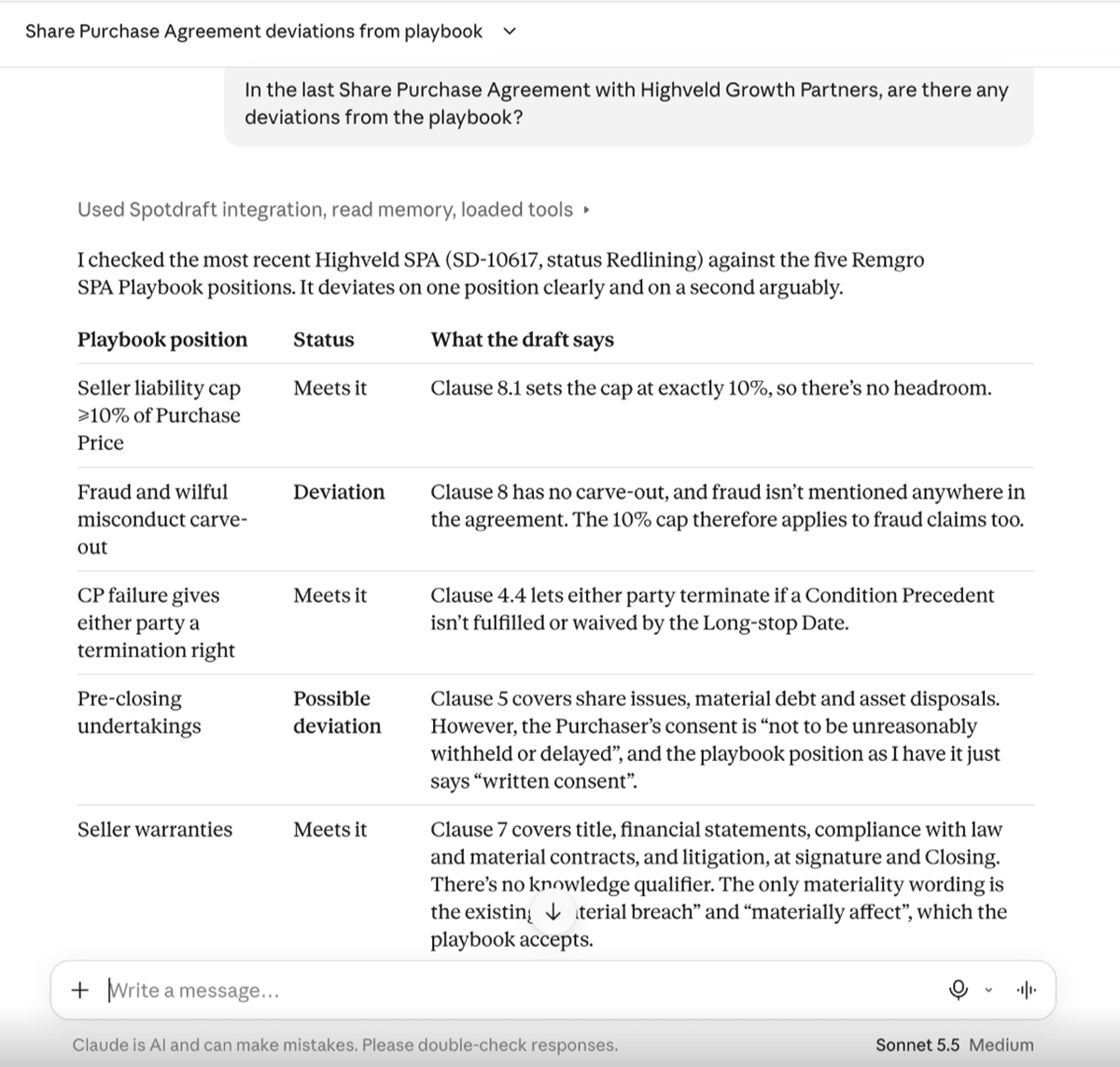
5. Playbook deviation handling: Identify deviations from standard contract positions and initiate the appropriate review or approval process.
6. Approval status visibility: Identify contracts awaiting approval, outstanding decisions, and pending approvers.
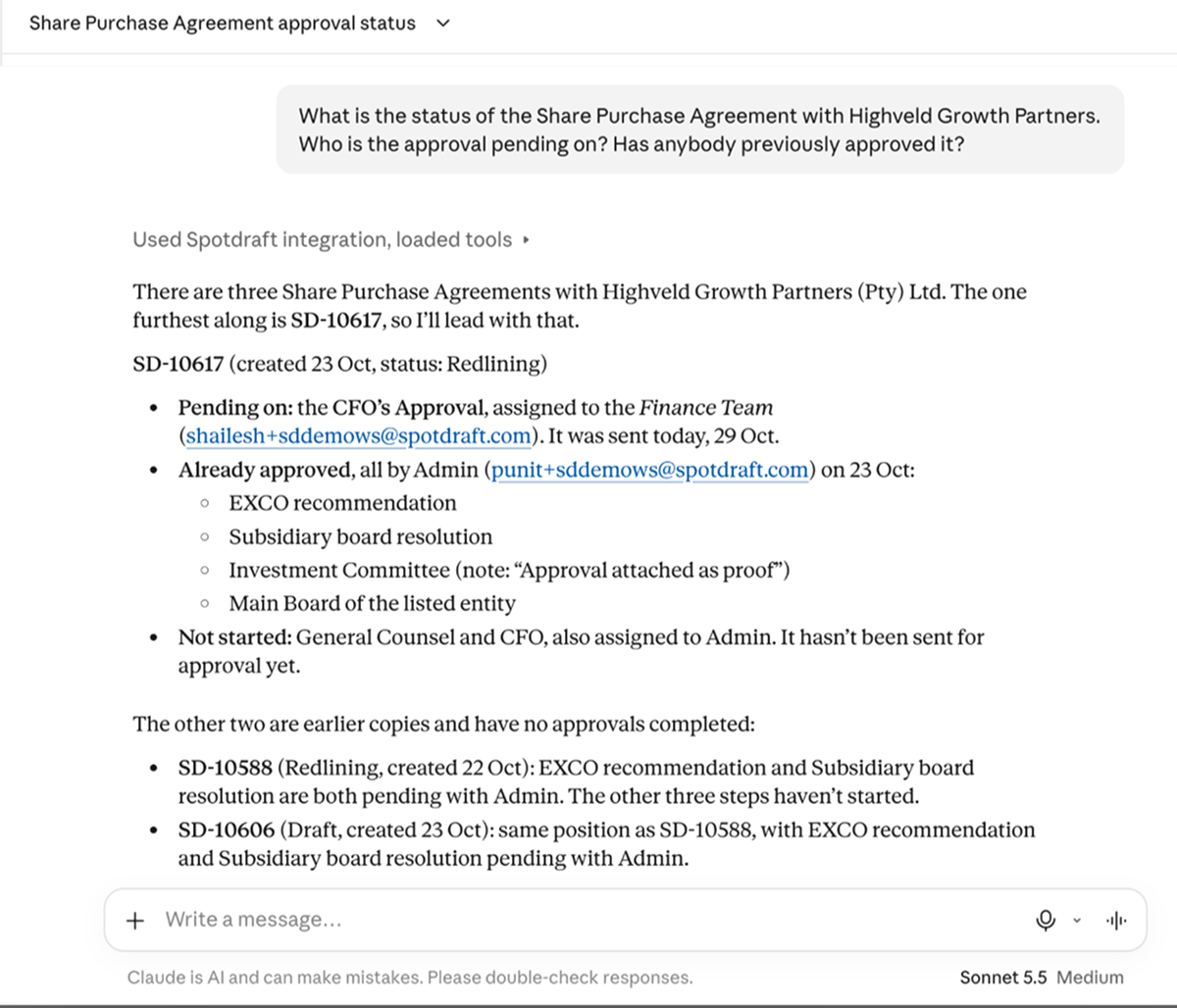
7. Contract review prioritization: Surface agreements that require closer legal scrutiny based on unusual terms, deviations, or potential risk.
8. Legal intake and request management: Create legal requests from Claude and track their progress through SpotDraft.


9. Initiate contract approvals: Start approval workflows for contracts requiring review or authorization.
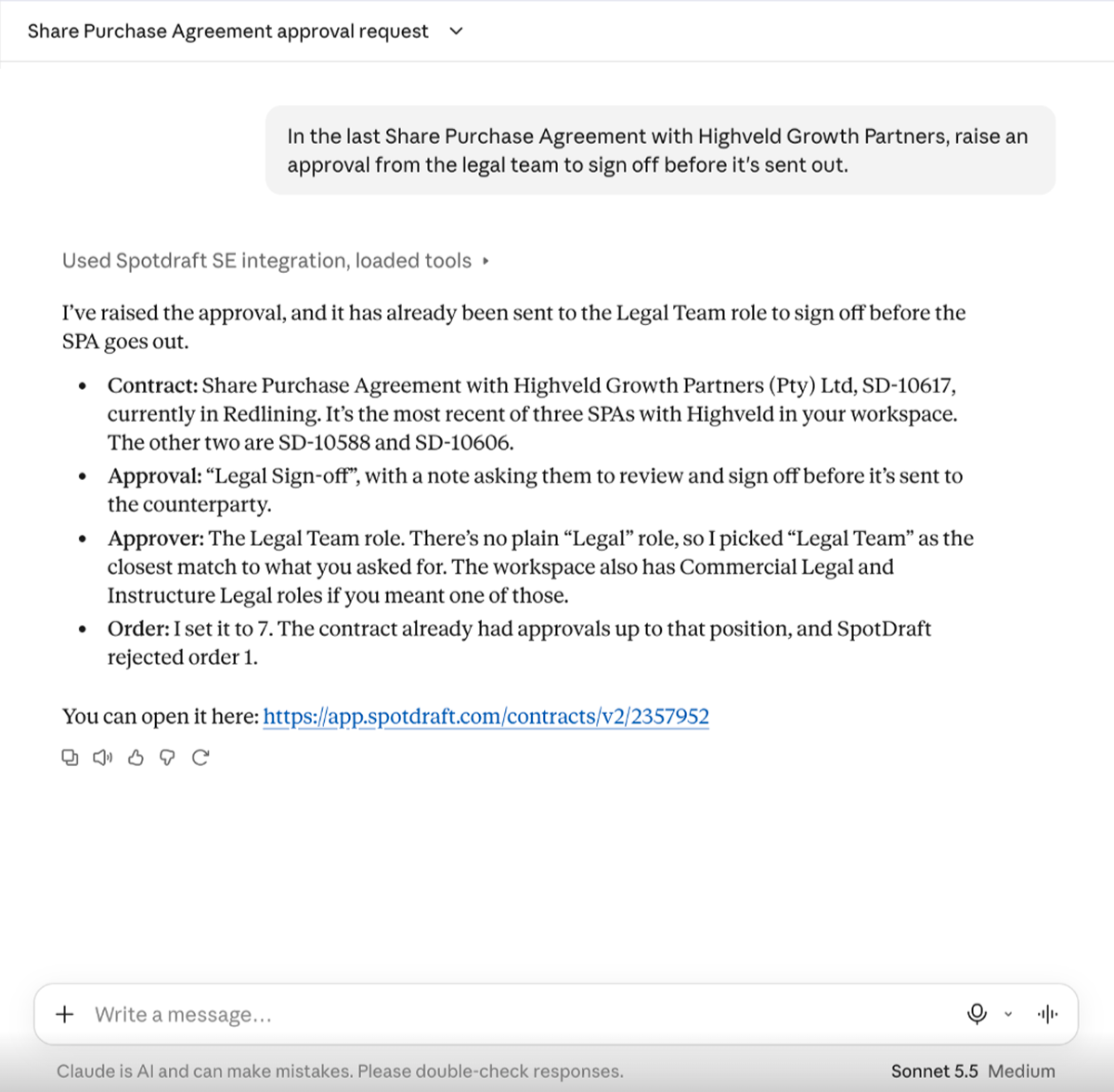
All actions operate within SpotDraft's configured permissions, approval paths, delegation rules, and workflow controls.
The headless future isn't about making the CLM irrelevant. It's about extending its intelligence and capabilities beyond its own interface, without compromising the controls that make it dependable. Claude is one step in that direction. And we're just getting started.
P.S: We also have a fully functional, fully loveable OpenAI connector that is identical in every way to Claude’s but more on that later…