What is AI Contract Negotiation Software and its tools for Legal Teams in 2026



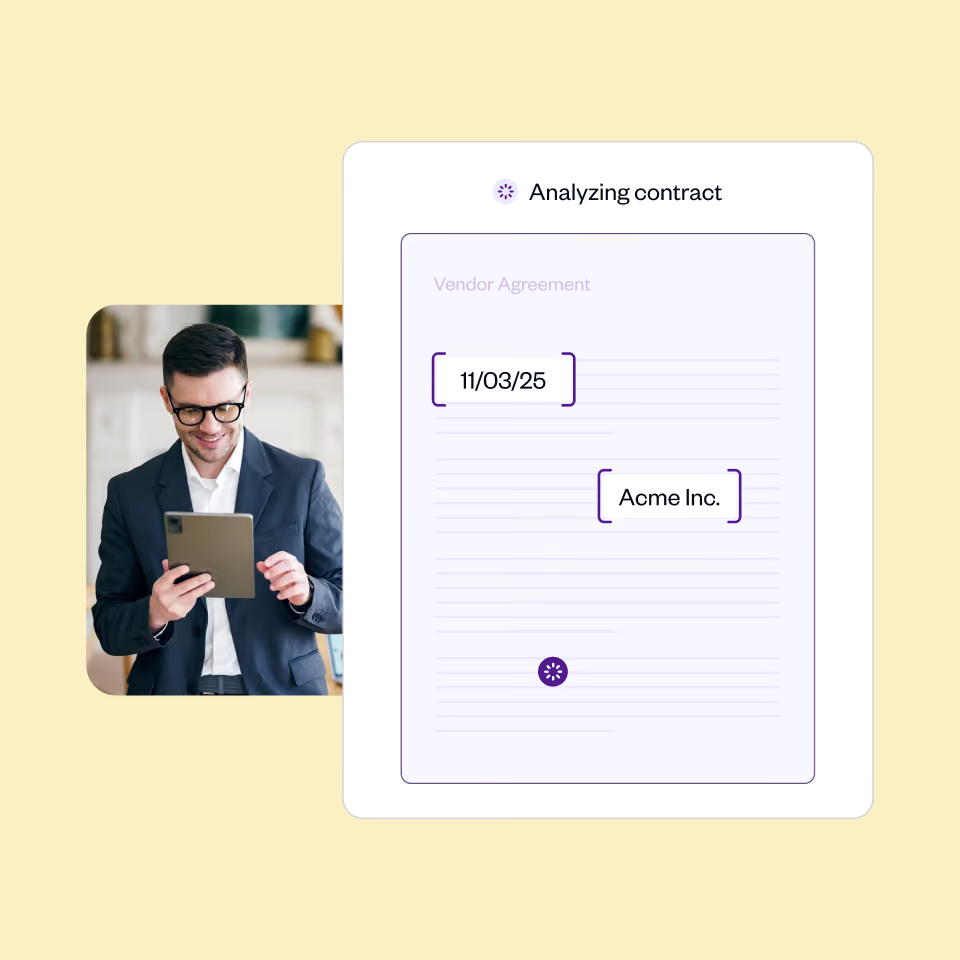
At its core, AI contract negotiation software reads a contract, whether it's your own outbound template or a draft sent back by a counterparty and compares it against a playbook or a record of prior negotiated language. It flags clauses that deviate from your standards, explains why they're flagged and proposes specific redline language. Most of this happens as tracked changes inside Microsoft Word, since that's where legal teams already draft and negotiate.
This is a narrower job than it sounds. The software isn't drafting a contract from scratch and it isn't managing what happens after signature. It's focused on the negotiation window: the point where a draft moves back and forth until both sides agree on the language.
It's worth separating this from general-purpose AI tools like ChatGPT or Claude. Those models can read a contract and offer opinions on it, but they aren't grounded in your playbook, your fallback positions or your company's actual negotiating history. A general model might flag a clause as risky in the abstract. Purpose-built negotiation software flags it because it deviates from what your legal team has decided is acceptable, and it can point to why.
A simple example: a vendor's draft caps their liability at one month of fees. Your playbook calls for at least three months, or a multiple of the contract value. Good negotiation software catches that gap immediately, tells you why it matters and drafts the counter language instead of leaving a reviewer to catch it by reading the whole clause manually.
Once you're evaluating specific tools, a few things matter more than a features list will tell you.
SpotDraft's VerifAI applies playbook-based review to counterparty paper, flagging clause-level risk and suggesting redlining in Microsoft Word. The part that matters most for negotiation-heavy teams: those findings connect straight into SpotDraft's approval workflow instead of sitting in a separate report someone has to act on. There's no manual handoff between "AI found an issue" and "the right person is looking at it."
Sidebar, SpotDraft's AI agent layer, adds negotiation support without requiring a separate tool or a browser extension juggling act. Pricing stays transparent through the sales process, which matters more than it sounds like once you've sat through a few CLM demos that dodge the pricing question until the third call.
Limitation to know about: VerifAI's output quality depends heavily on how well your playbook is configured going in. Teams with little existing playbook documentation will need to spend real time on setup before the AI review reaches full accuracy. That's true of most playbook-based tools, but worth planning for.
Ironclad AI, branded Jurist, handles contract analysis and risk identification and AI Playbooks flag deviations against your standard positions. Version and approval tracking run across the full negotiation cycle and review findings feed into the same platform's negotiation workflows, approval routing and execution rather than requiring an export to somewhere else.
Where Ironclad tends to fall short is AI review accuracy compared to dedicated review specialists. It's common for large enterprises to pair Ironclad as the CLM backbone with a separate, purpose-built review tool for the actual redlining work, which somewhat undercuts the "one platform" pitch.
Limitation to know about: setup is demanding. Expect three to six months and dedicated admin resources to get it fully configured, which rules it out for teams that need something working in weeks.
Luminance's biggest move this year is its institutional memory feature, launched in January 2026, which retains negotiation history and prior legal decision-making across all enterprise contracts in real time. In practice, that means the tool can surface how a specific counterparty's position has shifted across previous drafts and prior deals, which is genuinely useful context that most negotiation tools simply don't have.
Luminance runs on proprietary machine learning models, not a GPT wrapper, trained on a large corpus of legal documents, which shows up in how it handles complex, unusual contract language.
Limitation to know about: it's priced and built for enterprise volume and complexity. Mid-market teams running standard NDA and MSA workflows are likely paying for capability they won't use.
LegalOn ships with more than 50 attorney-built playbooks and generates automated risk scoring plus AI redlines directly in Microsoft Word. What sets it apart is speed-to-value. Setup is measured in hours, not months and reviewers consistently note a strong false-positive rate and clause-level accuracy that holds up on real counterparty paper.
Limitation to know about: LegalOn isn't a CLM. It doesn't handle drafting, approval routing, signing or anything post-signature. If you use it for review, you'll need separate contract lifecycle management software for the rest of it and that means managing two systems instead of one.
Leah, ContractPodAi's AI agent, handles contract creation, data analysis and guides negotiation and review. Leah Insights uses predictive analytics drawn from historical deal data to inform fallback positions, and Ask Leah provides real-time search across your contract repository. It's one of the few platforms actually shipping agentic negotiation features rather than just talking about them.
Worth being direct about here: agentic AI in legal tech is still mostly constrained to routine matters like NDAs and standard reviews. Complex, high-stakes negotiations still need a human making the calls. That's true of Leah too, not a knock specific to this platform.
Limitation to know about: implementation timelines and pricing are built for enterprise budgets, which puts it out of reach for lean legal teams.
Juro's AI review compares incoming contracts against your standard positions and flags deviations from approved language, all inside a browser-native editor with no file export required. That matters more than it sounds like for teams where legal and business stakeholders are collaborating in the same document without passing Word files back and forth. Review findings connect directly to approval workflows and native e-signature in the same platform.
Limitation to know about: Juro is better suited to template-based, first-party paper than complex third-party reviews. Redlining options are limited too. It's largely full of accept or reject, with no ability to redline a redline, which frustrates teams doing multiple negotiation rounds on the same clause.
Agiloft's strength is no-code workflow customization for negotiation routing and approval chains, which makes it a strong fit for regulated environments where every negotiation decision needs a documented audit trail. Approval hierarchies can be configured to match genuinely complex organizational structures.
Limitation to know about: flexibility comes with real complexity. The UI feels dated next to newer platforms and time-to-value requires meaningful setup investment before the workflows are actually running the way you configured them.
Robin AI runs LLM-powered contract review with a built-in human oversight option for matters where AI alone shouldn't be making the call. Redline output is clean and fast for standard agreements and the hybrid model lets teams route routine contracts through AI-only review while sending complex or unusual counterparty positions to AI-plus-human review.
Limitation to know about: Robin AI's lifecycle coverage is narrower than a full CLM. It's strong at review and negotiation, but you'll need separate tools for signing and anything post-signature.
If your main problem is reviewing counterparty paper accurately against your playbook, start with LegalOn or SpotDraft. If you need negotiation history retained across multiple rounds and prior deals, especially at enterprise scale, Luminance's institutional memory feature is worth the evaluation call. If you want negotiation, approval routing and signing handled in one system instead of stitching several tools together, SpotDraft, Ironclad or Juro are the strongest options, with the right pick depending mostly on team size and how much workflow customization you actually need.
For a broader evaluation framework covering the full contract lifecycle rather than just the negotiation stage, the companion guide on AI CLM software for in-house legal teams walks through that in more depth.
The most useful thing you can do before shortlisting any of these tools is ask one specific question in the demo: what happens, step by step, the moment the AI flags a deviation in a counterparty contract? Does it generate a tracked-change redline you could send back today? Does it trigger an approval workflow on its own? Or does it just produce a summary that someone then has to act on manually?
That sequence tells you more about a tool's actual negotiation depth than any feature list or ranking, including this one. If you want to see how SpotDraft handles that handoff specifically, book a demo and ask us to show you.


