Contract collaboration software is a tool that helps legal and business teams manage the contract review and approval process in one shared workspace. It supports intake requests, in-line commenting, redlining, approval routing, and audit trails. It reduces version confusion and gives every stakeholder visibility into the status of a contract at any point in the review process.
How is contract collaboration software different from contract management software?
Contract collaboration software mainly focuses on activities like drafting, negotiation, redlining and approvals, whereas contract lifecycle management platforms cover the entire lifecycle of a contract.
How does the system protect sensitive contract data during collaboration?
By using role-based access controls, encryption and permission settings, the sensitive data can be protected during contract collaboration.
What features should I look for in contract collaboration software?
The most important features are audit trails, workflow automation, and third-party redline comparison. Integrations with existing tools and a contract repository connection are also valuable. Template libraries and AI-assisted review capabilities are valuable additions for teams with high contract volume. Look for a platform that fits your current process maturity and can scale as your needs grow.
Can contract collaboration software help with third-party redlines and approvals?
Yes. Most dedicated platforms support inbound contract review, which means they can handle contracts that arrive as third-party paper from customers, vendors, or partners. The platform allows your team to mark up the document, compare it against your standard positions, and route it through your approval workflow. This is a common use case for legal teams that spend significant time reviewing counterparty paper rather than drafting from their own templates.
Ashish Upadhyay is an Ex-Senior Writer at SpotDraft, where he covers AI in contracting and helps unpack CLM best practices. He has 6+ years of experience writing for B2B SaaS, LegalTech, and Fintech, and previously worked at Gartner.
TL;DR
Contract collaboration software helps legal and business teams request, review, redline, approve, and track contracts in one shared workspace.
It reduces version confusion, cuts approval delays, and gives every stakeholder visibility into the contract process.
It differs from contract management software, which focuses primarily on post-signature storage and obligation tracking.
Key features include audit trails, workflow automation, third-party redline comparison, and integrations with the tools your teams already use.
Companies with growing contract volume and cross-functional review workflows benefit most from dedicated collaboration software.
Most contract delays do not happen because of legal complexity. They happen because the right people cannot find the right version, cannot see the latest comments, or cannot tell whose approval is still missing.
Contract collaboration software is built to fix exactly that. It gives legal, sales, procurement, finance, and HR teams a shared space to manage the full review and approval process. Version sprawl and email threads that slow everything down are eliminated.
This guide explains what contract collaboration software is and how it works. It also covers how it compares to contract management software and what to look for when evaluating a platform.
What is contract collaboration software?
Contract collaboration software is a tool that helps legal, sales, procurement, and other stakeholders create, review, redline, approve, and track contracts in one shared workspace. It reduces version confusion, speeds up approvals, and gives teams visibility into every change made during the contract workflow.
Unlike basic document editors, contract collaboration software is built for cross-functional contract workflows. It manages intake requests, in-line comments, approval routing, third-party redlines, and handoffs between teams without relying on long email threads or disconnected file versions.
The result is a faster, more transparent contract process where everyone works from the same source of truth. Research from the WorldCC Contract Management Whitepaper shows that poor contracting practices erode nearly 9% of annual revenue on average.
How contract collaboration software works
The workflow typically follows these steps:
A business user submits a contract request through a structured intake form or self-service portal.
The platform routes the request to the right legal owner based on contract type, value, or business unit.
Stakeholders review the contract and leave comments in one shared workspace.
Redlines are tracked in a single document so no changes are lost or overwritten.
Approvals are collected through automated workflows, with each approver notified in sequence or in parallel.
Once approved, the contract moves to signature, and then to storage and renewal tracking.
This process replaces the back-and-forth of email-based review with a structured, auditable workflow that keeps every team aligned.
How is a Contract Collaboration Software different from a contract management platform?
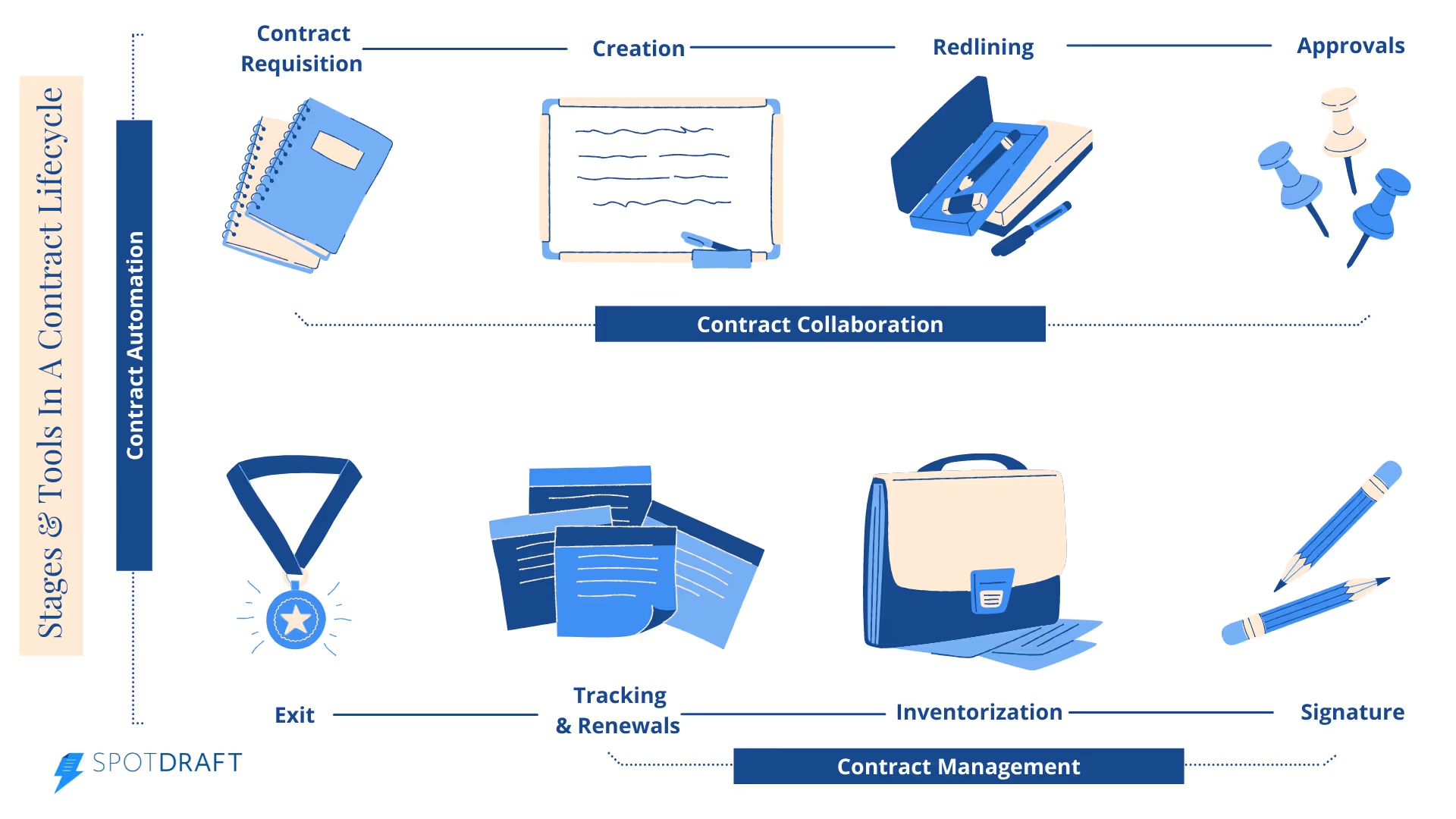
There are many tools in the market that look similar but differ in the stage of the contract lifecycle that they solve. And while the nomenclature is used interchangeably - contract management, contract editing, collaborative contract management, or contract automation have distinct responsibilities from each other. To understand more simply let's break down a typical contract lifecycle and classify where each tool figures in:
To understand more simply let’s break down a typical contract lifecycle and classify where each tool figures in:
Contract Collaboration Software
Contract Management Software
Contract Automation Software
Focuses on the ToFu tasks in a contract lifecycle.
Focuses on BoFU tasks in the contract lifecycle
Are typically end-to-end contract lifecycle tools.
Simplifies every process that requires collaboration or interaction with multiple teams and stakeholders
Simplifies all administrative tasks starting from contract execution to inventorization and data discovery, or analysis
Have a mix of capabilities of both contract collaboration and management software to simplify tasks from creation to post-execution.
All information generated is auto-shared across stakeholders
More control over the post-execution process
Optimized for knowledge and matter management
In-depth analysis of executed contracts
End-to-end functionality in one platform
No need to switch between different applications
🚧 Cons
🚧 Cons
🚧 Cons
Cannot aid the BoFu process
Restricted knowledge management abilities
Doesn’t support collaborative functions
Control mostly rests on one team
Some platforms may not serve as specialized tools
What can Contract Collaboration Software do for your Business?
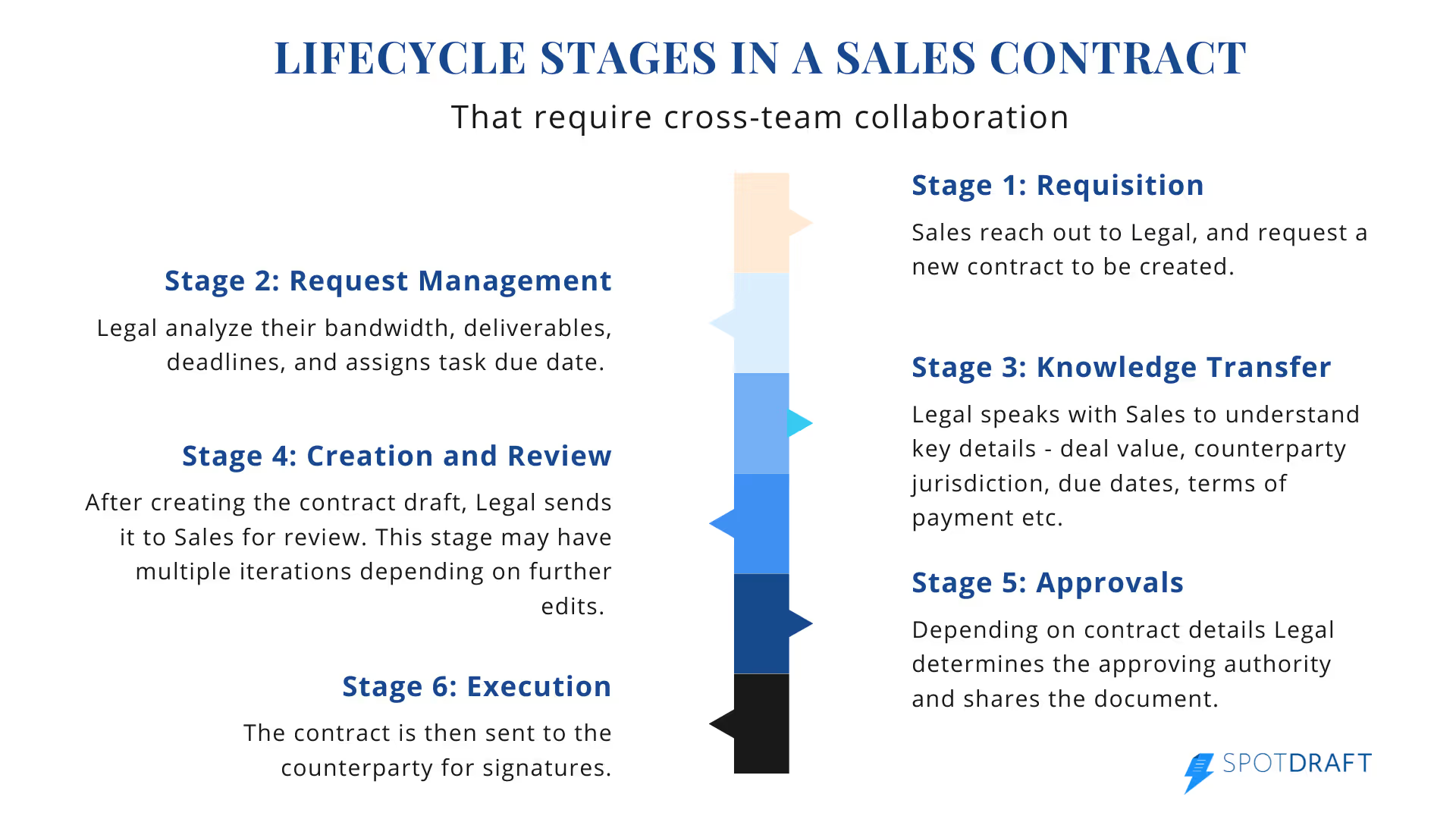
While it is always a good idea to have one platform for all your contracting needs, we will restrict this article to tools that have the ability to simplify all collaborative stages in a contract. The following are the typical stages in a contract lifecycle for Sales contracts, that can be automated or made more accurate by leveraging AI contract collaboration and GenAI for contract teams.
While each contract collaboration platform will be different from the other, there are a few benefits that most provide:
Automated request management
Tracking all contract requests, especially when they are coming in from multiple teams, directions, and via multiple channels can get tricky. With an integrated request dashboard and legal workflow automation, lawyers can keep track of moving projects, and prioritize contracts that are high-impact or of immediate requirement over others.
This also means better workload management and faster turnaround times, a key advantage of modern contract collaboration platforms.
Seamless and centralized knowledge sharing
Speaking of faster TaTs, expecting a lawyer to get back to the internal stakeholder for information at every new instance is a process inefficiency that stretches contract lifecycles.
A contract collaboration platform with contract intelligence capabilities can automate the entire process by pulling in necessary data for Legal to initiate the contract building process.
All of this data is stored in a single repository linked to the requisition dashboard to minimize the time loss in hunting for context. This ensures no lost or missing context, and more importantly – faster, compliant contracts enabled by collaborative contract management systems and GenAI legal assistant technology.
Inclusive contract editing and review
If every new edit instance is forcing a new document version for the same contract - there is eventually a trail of unnecessary documents and continuous back-and-forth between teams. Sharing one version after another via mail or messaging tools can also lead to loss of critical information and force a reboot of the drafting process.
By allowing real-time document edits with an AI redlining tool to track changes made by any stakeholder, contract collaboration platforms can increase accountability, make the editing process more inclusive, and prevent working in silos. Advanced AI co-authoring features allow multiple team members to work simultaneously while maintaining version control.
Note: Many platforms like SpotDraft also allow document integration for 3rd-party edits through 3rd-party contract comparison features. Once a new document version for the same contract is imported, the AI-powered contract review system automatically analyzes changes, unifies them into one document, and highlights all changes made.
This means that there is only one single version for each contract, and zero document byproduct across folders to worry about, another major benefit of a reliable contract collaboration platform with AI contract collaboration capabilities.
Benefits of contract collaboration software
Faster request intake and prioritization
Without a structured intake process, contract requests arrive through email, Slack messages, and spreadsheets. Legal teams spend time gathering context before they can even begin reviewing.
Legal intake software built into a collaboration platform captures all the information legal needs upfront. This means faster triage, better prioritization, and less time spent chasing details. Teams that are still relying on scattered channels can see why this matters in this guide to automated legal intake for in-house teams.
According to World Commerce & Contracting research, poor contract processes cost organizations an average of 9% of annual revenue. A structured intake and review process is one of the most direct ways to reduce that loss.
Centralized context and knowledge sharing
When contract discussions happen across email threads, chat messages, and document comments, context gets fragmented. Reviewers miss earlier decisions. The same issue gets raised multiple times.
Contract collaboration software keeps all comments, edits, and decisions attached to the contract itself. Anyone joining the review can see the full history without asking for a summary. That kind of centralization also helps reduce the legal knowledge fragmentation described in How AI is Redefining Legal Knowledge Management.
Better redlining and version control
Version control problems are one of the most common sources of contract delays. When multiple people edit different copies of the same document, teams end up reconciling conflicting versions instead of progressing toward signature.
Collaboration software tracks all changes in a single document. Reviewers can see who made each edit, when it was made, and what the original language said. Third-party redlines from outside counsel or counterparties can be compared against your standard positions automatically.
If your team still relies on generic tools, it helps to understand the limits of manual approaches like redlining contracts in Google Docs.
Clear approvals and audit trails
Approval workflows in email are easy to lose and hard to audit. Collaboration software routes approvals to the right people in the right order. It sends reminders when approvals are overdue and creates a timestamped record of every decision.
This audit trail is valuable not just for compliance purposes. It also helps legal teams identify where approvals consistently stall so they can address the root cause. That is especially important for organizations trying to avoid the hidden costs and risks of poor contract management.
Faster turnaround across legal and business teams
A Thomson Reuters Institute study found that legal teams spend significant time on administrative tasks rather than substantive legal work. Structured collaboration workflows reduce that administrative burden by automating routing, reminders, and status tracking.
The practical result is shorter contract cycle times and less friction between legal and the business teams they support. For teams focused on improving that relationship, this is closely tied to broader efforts around enabling collaboration between legal and business.
How cross-functional contract review works in practice
Consider a sales team that needs a customer master service agreement reviewed before a deal can close.
Without collaboration software, the process looks like this: the account executive emails the contract to legal. Legal replies with a redlined version. The customer's legal team sends back their own redlines.
Several rounds of email follow before anyone knows whether finance or the VP of sales has approved the final terms.
With contract collaboration software, the process changes significantly. The account executive submits a request through a structured intake form. Legal receives the contract in their queue with all the deal context already attached.
Legal edits indemnity and liability terms directly in the platform. Sales comments on pricing language. Finance checks payment milestone clauses.
The customer's redlines are uploaded and compared against the company's standard positions automatically.
Every stakeholder sees the same document. Approvals are routed in sequence. The final version moves to signature without anyone asking "which version is current?"
This kind of workflow is not just faster. It is more reliable, more auditable, and less dependent on any one person remembering to follow up.
Who needs contract collaboration software?
Legal teams
Legal teams benefit from structured intake, automated routing, and a centralized workspace for all active reviews. Instead of managing contracts through email folders, they get a queue with status, priority, and full context for every request. For legal ops leaders, this fits naturally into the broader mandate of legal operations.
Sales teams
Sales teams need contracts reviewed and returned quickly. Collaboration software gives them visibility into where their contracts are in the review process without having to ask legal for an update every day. It also supports the kind of alignment discussed in CLM for sales teams, helping sales and legal teams work together more efficiently.
Procurement teams
Procurement handles high volumes of vendor contracts, many of which arrive as third-party paper. Collaboration software makes it easier to compare counterparty language against standard positions and flag terms that fall outside acceptable ranges. This is especially useful in high-volume procurement contract management environments.
Finance teams
Finance reviewers often need to check payment terms, billing milestones, and renewal clauses before a contract is approved. A collaboration platform lets finance participate in the review process without becoming a bottleneck.
Offer letters, employment agreements, and contractor agreements all require review and approval. HR teams benefit from templates, approval workflows, and a clear record of which version was signed. Those needs often overlap with broader HR contract management best practices.
Key features to look for in contract collaboration software
Not all platforms offer the same capabilities. Here are the features that matter most when evaluating a solution.
Audit trails Every edit, comment, and approval decision should be timestamped and attributed to a specific user. This protects teams during disputes and supports compliance requirements.
Workflow automation The platform should route contracts to reviewers and approvers automatically based on rules you define. It should also send reminders when actions are overdue.
Third-party redline comparison When counterparties send their own paper, the platform should make it easy to compare their language against your standard positions. It should identify deviations that require legal attention.
Inbound contract review Many contracts arrive from outside the organization. The platform should support review and markup of third-party documents, not just contracts created from your own templates. A strong contract review process should cover both internally generated and third-party paper.
Integrations Legal teams do not work in isolation. The platform should connect with the tools your sales, procurement, and finance teams already use, including CRM systems, procurement platforms, and document storage tools.
Repository connection Executed contracts should move automatically into a searchable contract repository so teams can find them later without digging through email or shared drives.
Analytics and reminders Contract analytics help legal ops teams track cycle times, identify bottlenecks, and report on contract volume and turnaround. Renewal reminders prevent missed obligations.
Template and clause library Contract creation software with a pre-approved template and clause library reduces the time legal spends drafting standard agreements from scratch. Just as importantly, it promotes clear contract language, which lowers ambiguity during negotiation and review.
Signs you need contract collaboration software
If any of the following describes your current process, a dedicated collaboration platform is worth evaluating.
Contract requests arrive through email, Slack, and spreadsheets with no consistent format.
Multiple teams edit the same agreement in different copies.
Legal spends time gathering context before it can begin reviewing.
Version control problems regularly slow down negotiations.
Approvals are hard to track and easy to lose.
Business teams do not know where their contracts are in the review process.
There is no clear audit trail of who approved what and when.
If those issues sound familiar, consider mapping and diagnosing the underlying workflow. This guide to contract process mapping provides a useful framework.
Expert perspective: When collaboration software is enough and when it is not
For most growing companies, the first real contract bottleneck is the review and approval process. Requests pile up, versions multiply, and approvals fall through the cracks. A focused collaboration platform solves that problem without requiring a full CLM implementation.
Full CLM becomes more important when organizations need to manage obligations and track renewals across hundreds or thousands of contracts. It also matters when reporting on contract performance at the portfolio level. These are post-signature problems.
If you have not yet solved the pre-signature collaboration problem, starting with CLM can feel overwhelming and underutilized.
The practical guidance is this: if your team is losing time in the review and approval process, start with collaboration. If you are also losing visibility into what happens after contracts are signed, look for a platform that handles both. SpotDraft is built to support the full contract lifecycle, starting with the collaboration and intake workflows that create the most immediate value.
How to evaluate the right platform
Questions to ask vendors
How does the platform handle third-party paper and counterparty redlines?
Can approval workflows be customized by contract type, value, or business unit?
What integrations are available for CRM, procurement, and document storage systems?
How does the platform support legal teams that receive contracts from outside the organization?
What does the audit trail capture, and how is it accessed?
How long does implementation typically take for a team of our size?
If your team still manages contracts through email and shared drives, a lightweight collaboration platform with structured intake and approval routing will deliver immediate value. You do not need a fully configured CLM to start improving your process.
If your team has basic workflow in place, look for a platform that can grow with your needs. Advanced features like AI-assisted review or obligation tracking become valuable as requirements evolve.
Point solution vs. full CLM
A point solution focused on collaboration may be faster to implement and easier to adopt. A full CLM platform offers more comprehensive coverage of the contract lifecycle but requires more configuration and change management.
The right choice depends on where your biggest bottleneck is today and how quickly your contract volume is growing. See how SpotDraft works across the full contract lifecycle to understand what a combined approach looks like in practice. If you are earlier in your buying journey, this guide on how to choose a CLM solution that works for you can help clarify requirements.
We get it, improving contract processes can be difficult, especially if you are bootstrapped.