What are the best free legal AI tools for in-house teams?
The best free legal AI tools depend on the task. Perplexity is the strongest option for research orientation because it cites sources in real time. Claude and ChatGPT are most useful for drafting internal documents and summaries. Humata and ChatPDF work well for PDF-based contract Q&A on low-risk agreements. LawDroid is the best free option for building intake automation without writing code. Most free tools are best suited to low-risk work and should not replace qualified legal review.
Can lawyers use free AI tools for contract review?
Yes, but only for low-risk, first-pass review. Free AI tools can help identify clauses, summarize agreements, and flag obvious issues in short, low-stakes contracts. They should not be used as the sole review method for high-value, regulated, or confidential agreements. The tool's data handling terms should be reviewed before uploading any document.
Is it safe to upload contracts into free AI tools?
It depends on the vendor's privacy terms, data retention policy, and whether uploaded content is used to train the model. Legal teams should treat free tools as public-facing environments unless the vendor clearly states otherwise. Sensitive, privileged, or highly confidential agreements should not be uploaded into unsecured free tools.
Which free AI tool is best for legal research?
Perplexity is the strongest free option for quick research orientation because it returns source-linked answers from live web content. A fully free workflow can also combine Google Scholar for finding case law with Gemini for summarization. Regardless of which tool you use, always verify statutes, case citations, and legal standards in primary sources before relying on the output.
When should an in-house team move beyond free legal AI tools?
A team should consider upgrading when contract review volume increases, when privacy or compliance requirements tighten, or when the business needs AI that reflects internal playbooks and risk standards. Free tools are well-suited to experimentation and lightweight tasks. Scaling to consistent, accountable AI-assisted review typically requires a platform with workflow integration, audit logging, and business-specific review logic.
Ashish Upadhyay is an Ex-Senior Writer at SpotDraft, where he covers AI in contracting and helps unpack CLM best practices. He has 6+ years of experience writing for B2B SaaS, LegalTech, and Fintech, and previously worked at Gartner.
TL;DR
Free legal AI tools work best for low-risk legal research, first-draft writing, PDF review, and intake automation.
Perplexity is the strongest free option for research orientation. Claude and ChatGPT are most useful for drafting. Humata and ChatPDF are practical for PDF-based contract Q&A. LawDroid supports no-code intake automation.
Free tiers come with real limits: upload caps, usage quotas, and weaker privacy controls than paid enterprise plans.
Do not upload confidential contracts or privileged communications into any tool unless the vendor provides clear, documented data controls.
When your team needs AI that reflects internal playbooks, company-specific risk standards, or audit trails, a dedicated legal AI platform is the more appropriate choice.
Let’s address the elephant in the room: "Free" in legal tech usually comes with a catch.
You are likely operating under the mandate to "innovate with AI" but without the budget to buy an enterprise license for every flashy new platform. You need tools that actually work, not just glorified demos that hit a paywall after three clicks.
The good news? The landscape has matured. In 2026, the gap between "free" and "enterprise" has narrowed. Powerful legal AI tools are now accessible to in-house teams who know where to look and—crucially—how to use them safely.
Whether you are a solo General Counsel or a Legal Ops manager trying to hack together a workflow, this guide cuts through the noise. We’ve tested the market to find the best free legal AI tools that provide genuine utility without compromising your data security.
The Best Free Legal AI Tools at a Glance
Tool
Best For
Free Tier Strength
Main Limitation
Best Low-Risk Use Case
Perplexity AI
Legal research orientation
Source-linked answers
Requires citation verification
Early-stage topic research
Google Scholar + Gemini
Case law and article summaries
No-cost workflow
Manual, multi-step process
Summarizing open-access case PDFs
Humata AI
Contract PDF Q&A
Fast document interrogation
Page and upload limits
Spot-checking low-risk NDAs
ChatPDF
Quick PDF review
Simple interface
No legal-specific training
Summarizing vendor agreements
LawDroid Builder
Intake automation
No-code bot creation
Requires setup effort
Internal legal request triage
Claude
Nuanced drafting and summaries
Strong writing quality
General-purpose model, not legal-specific
Internal approval summaries and emails
ChatGPT
First drafts and memo outlines
Versatile and widely accessible
Needs careful, specific prompting
Policy drafts and internal FAQs
Legal research is one of the highest-value use cases for free AI tools, and also one of the highest-risk. These tools can help you orient quickly on an unfamiliar area of law, identify relevant statutes, or summarize publicly available case law. They should not be used as a substitute for verified primary source research.
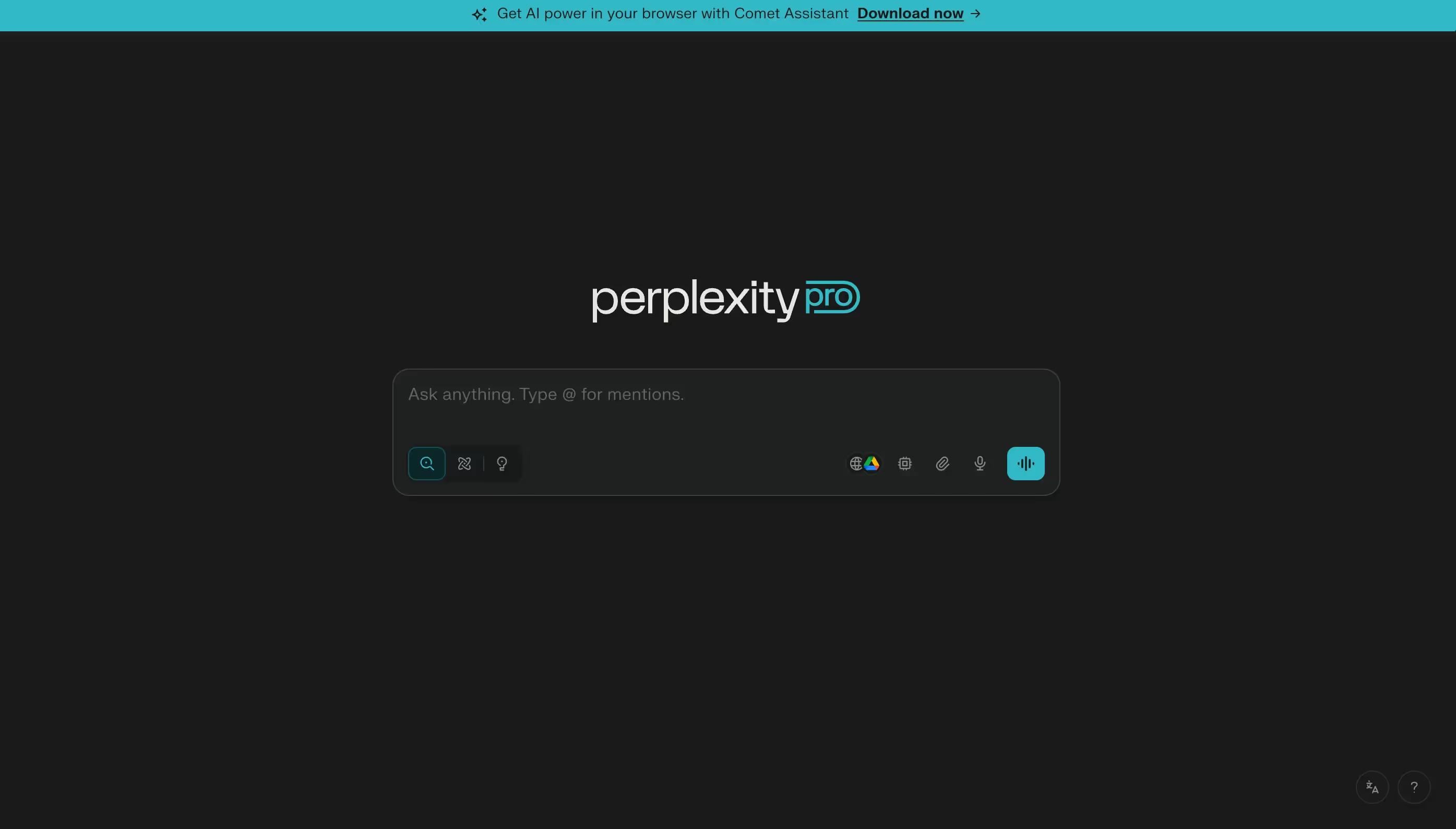
Perplexity AI
Perplexity AI dashboard
What it does: Perplexity is an AI-powered search engine that returns answers with cited sources. Unlike general LLMs, it pulls from live web sources and shows you where each claim comes from.
Best for: Quick orientation on legal topics, identifying relevant statutes, and getting a starting point before going deeper into primary sources.
Free tier limits: The free version supports standard search with limited access to advanced reasoning models. Pro features, including deeper research modes and higher query limits, require a paid subscription.
Privacy note: Perplexity does not offer enterprise-grade data controls on its free tier. Do not enter client-identifying information or privileged facts into queries.
Strengths: Source transparency is the key differentiator. You can see exactly where each answer came from, which makes it easier to verify claims.
Weaknesses: Sources are not always authoritative. Legal conclusions require verification in primary sources. The tool can surface outdated or jurisdiction-inconsistent results.
Ideal for: Solo GCs or small legal teams doing preliminary research on regulatory questions, new market entry, or unfamiliar contract types.
Example use case: A legal ops manager uses Perplexity to identify which U.S. states have enacted specific data privacy statutes before handing the research to outside counsel for a full analysis. The tool saves orientation time without replacing the substantive legal work.
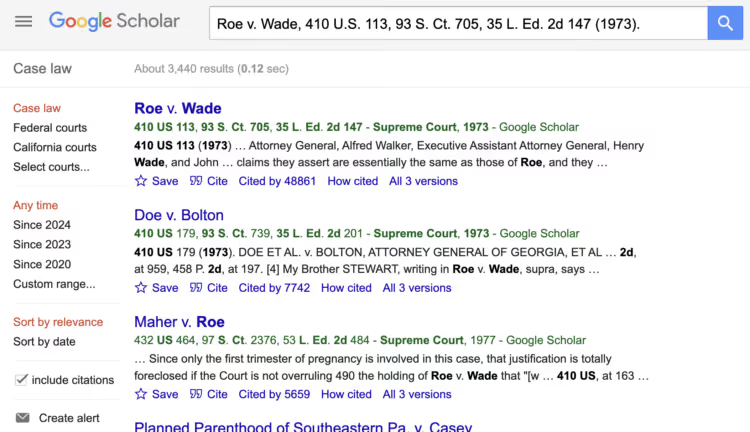
What it does: Google Scholar provides free access to case law, law review articles, and legal citations. Gemini, Google's AI assistant, can summarize documents and help synthesize content from Scholar results.
Best for: Teams that want a completely free research workflow without uploading documents to a third-party tool.
Free tier limits: Both tools are free. Google Scholar has no upload or query limits for publicly indexed content. Gemini's free tier includes usage limits that vary by region and access type.
Privacy note: Do not paste confidential deal terms, client names, or privileged communications into Gemini prompts. Standard Google Workspace terms apply.
Strengths: No cost, no upload caps for research queries, and direct access to indexed case law.
Weaknesses: This is a manual, multi-step workflow. You find the source in Scholar, then summarize it in Gemini. There is no integrated experience.
Ideal for: Researchers and junior legal team members who need to summarize open-access case law or academic articles on a zero-budget basis.
Example use case: A commercial counsel uses Google Scholar to locate a circuit court decision, pastes the publicly available opinion text into Gemini, and asks for a plain-English summary to share with a non-legal stakeholder.
Humata AI
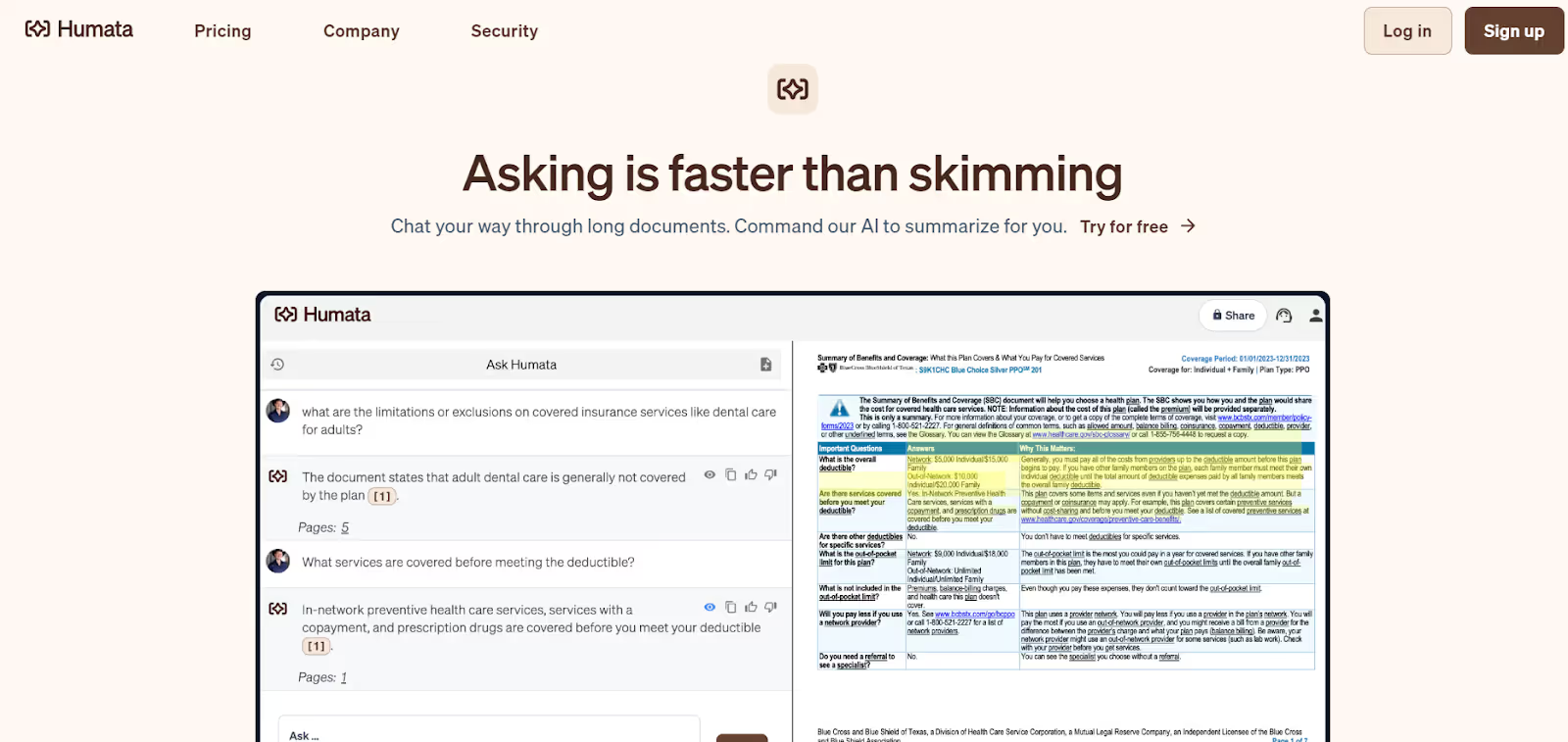
Humata AI dashboard
What it does: Humata is a document AI tool that lets you upload a PDF and ask questions about its contents. It is designed for document-heavy workflows and returns answers with references to specific sections of the file.
Best for: Fast Q&A on contract PDFs, including identifying key clauses, summarizing obligations, and flagging terms that need closer attention.
Free tier limits: The free plan includes limited pages per month and a cap on the number of documents. Exact limits have varied; verify current terms on Humata's website.
Privacy note: Humata's paid plans include stronger data controls. On the free tier, review the privacy policy carefully before uploading anything sensitive.
Strengths: The interface is simple. You upload a document and ask questions in plain English. It returns answers with citations to the relevant section of the PDF.
Weaknesses: Page and upload limits make it impractical for high-volume teams. It is not trained specifically on legal risk standards or your company's playbook.
Ideal for: Solo GCs or small legal teams reviewing low-risk vendor agreements, NDAs, or service contracts where a quick orientation is enough.
Example use case: A solo GC uses Humata to ask "What are the termination rights in this agreement?" and "Does this contract include an auto-renewal clause?" for a low-risk SaaS vendor NDA before sending back redlines.
For teams that need more than first-pass Q&A, AI contract review software goes much deeper on automated redlining, risk detection, and review workflows, while VerifAI by SpotDraft is designed to review contracts against company-specific rules and playbooks.
ChatPDF
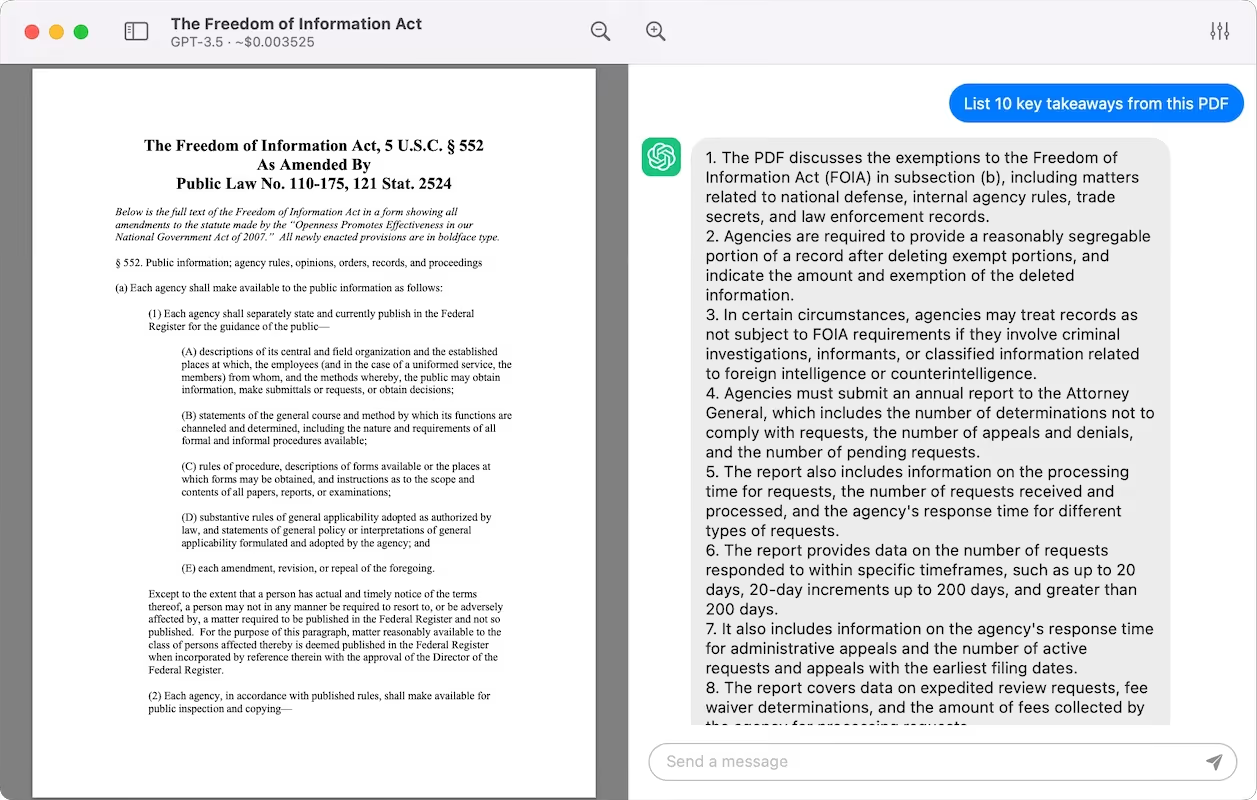
ChatPDF
What it does: ChatPDF allows you to upload a PDF and have a conversation with it. It is a general-purpose tool, not legal-specific, but it works reasonably well for summarizing agreements and answering simple clause-level questions.
Best for: Quick document summaries and basic clause identification on short, low-risk contracts.
Free tier limits: The free version limits the number of PDFs you can upload per day and caps the file size. It is adequate for occasional use but not for regular contract review workflows.
Privacy note: ChatPDF's free tier does not offer enterprise data controls. Treat it as a public tool and avoid uploading confidential or privileged documents.
Strengths: Zero setup required. The interface is clean and accessible for non-technical users.
Weaknesses: No legal-specific training. It will not flag missing standard clauses or identify jurisdiction-specific risk. It can miss nuance in complex agreements.
Ideal for: Teams that need a quick summary of a short vendor agreement or want to locate a specific clause without reading the whole document.
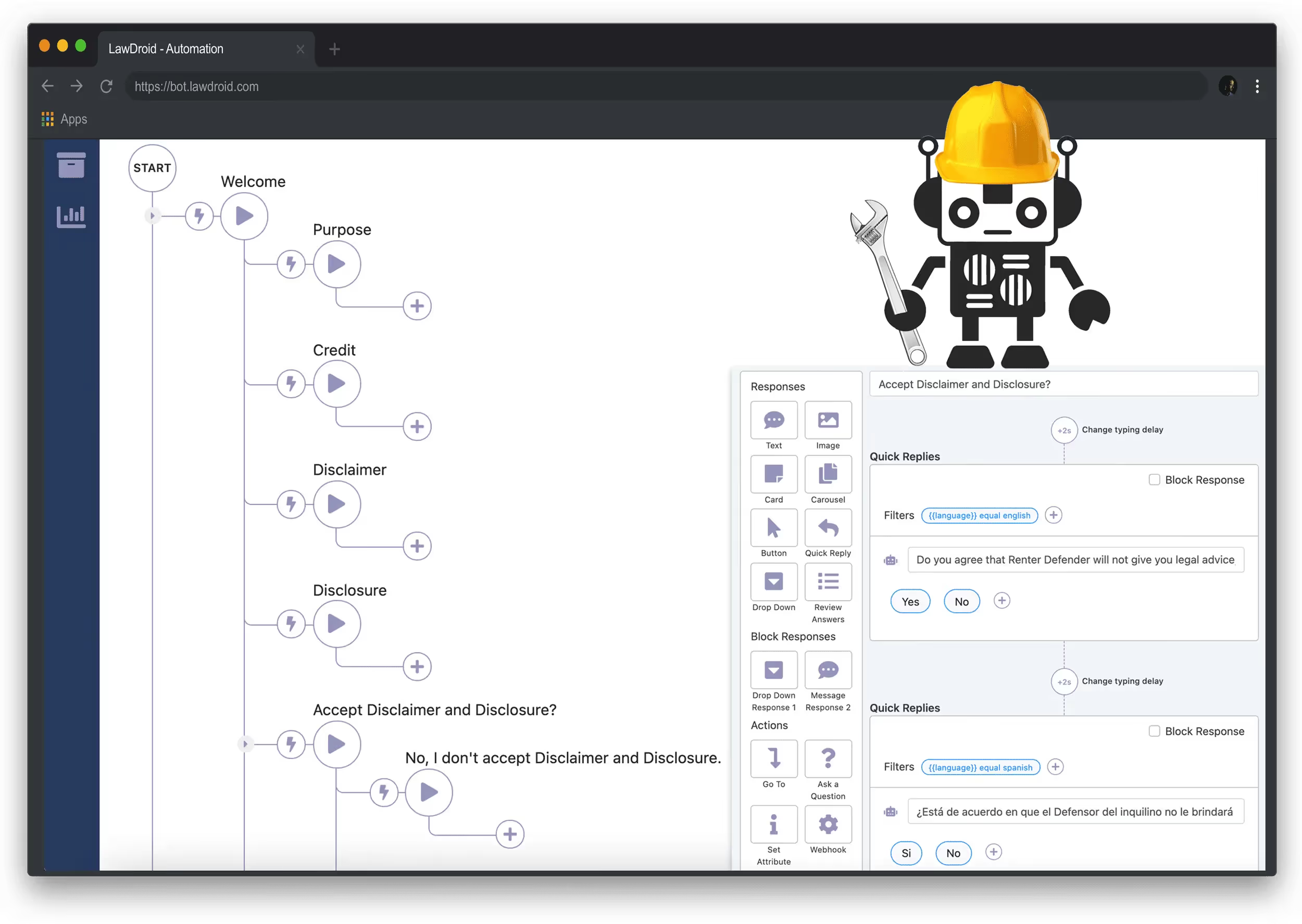
What it does: LawDroid is a no-code legal chatbot builder. It lets legal teams create intake bots, triage workflows, and automated Q&A tools without writing code.
Best for: Automating internal legal intake, routing requests, and handling repetitive informational queries from business stakeholders.
Free tier limits: LawDroid offers a free tier for building basic bots. More advanced features, integrations, and higher usage volumes require a paid plan.
Privacy note: LawDroid is designed for legal workflows and is more privacy-conscious than general-purpose tools. Review the terms for your specific deployment, particularly if your bots collect employee or third-party data.
Strengths: No-code setup is accessible for legal ops managers without technical support. Automating intake triage can meaningfully reduce the time lawyers spend on routine requests.
Weaknesses: Setup takes time and planning. The quality of the bot depends on how well you design the intake questions and decision logic.
Ideal for: Legal ops managers at mid-size companies who want to reduce the volume of informal Slack messages, emails, and ad hoc requests landing directly with lawyers.
Example use case: A legal ops manager at a 300-person company uses LawDroid to build a simple intake bot that routes NDA requests, contract questions, and policy queries to the right person or resource, cutting the team's intake handling time by several hours per week.
Best Free AI Tools for Drafting and Daily Legal Work
Drafting is one of the most time-consuming parts of in-house legal work. Free AI tools can accelerate first drafts, help restructure language, and turn meeting notes into polished summaries. They are not substitutes for legal review, but they can reduce the time it takes to get from blank page to working draft.
Claude
Claude
What it does: Claude, built by Anthropic, is a large language model known for producing clear, well-structured writing. It handles nuanced instructions well and tends to produce fewer hallucinations than some other general-purpose models on writing tasks.
Best for: Drafting internal summaries, turning deal points into approval memos, writing policy language, and restructuring existing contract language for clarity.
Free tier limits: Claude's free tier includes usage limits that reset periodically. Access to more capable model versions (such as Claude 3.5 Sonnet or newer releases) may require a paid plan.
Privacy note: Anthropic's free tier does not guarantee enterprise-grade data controls. Do not paste confidential terms, client names, or privileged legal analysis into free-tier prompts.
Strengths: Claude produces readable, well-organized output. It follows complex multi-part instructions reliably and is less likely to add unsolicited filler content.
Weaknesses: It is a general-purpose model. It does not know your company's contract standards, preferred clause language, or internal risk thresholds. Output always requires legal review.
Ideal for: Commercial counsel who need to turn a set of negotiated deal points into an internal approval summary, or a GC drafting a plain-English policy explanation for a non-legal audience.
Example use case: A commercial counsel pastes a list of negotiated deal points into Claude and asks it to draft a two-paragraph internal approval summary for the CFO. The output takes two minutes to produce and five minutes to review and refine.
For teams using AI to simplify legalese or make internal guidance easier to understand, clear contract language remains just as important as speed. And if you want more structured prompting approaches, our ChatGPT prompts for in-house legal teams offer practical examples that also translate well to Claude.
ChatGPT
ChatGPT
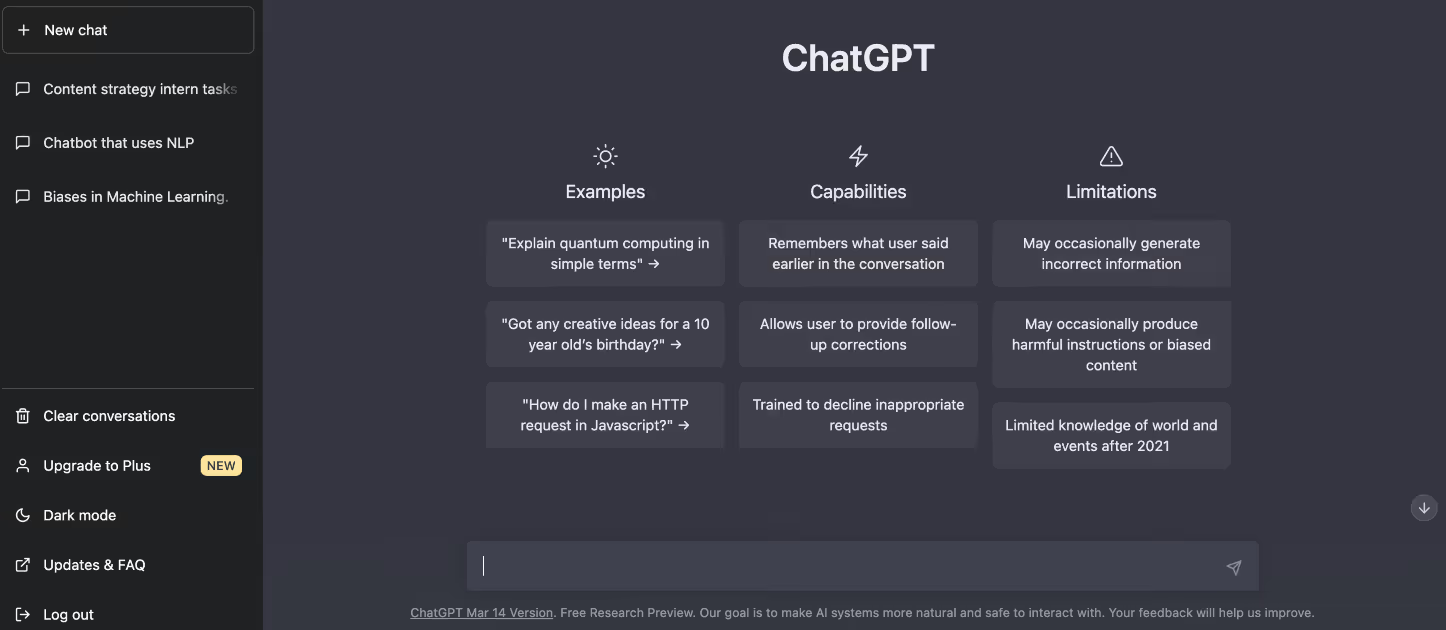
What it does: ChatGPT, built by OpenAI, is the most widely used general-purpose AI assistant. It can draft, summarize, rewrite, and answer questions across almost any topic, including legal tasks.
Best for: First drafts of internal policies, memo outlines, FAQ documents, and email communications. It is also useful for generating multiple clause variations to compare.
Free tier limits: The free version of ChatGPT provides access to GPT-4o with usage limits. Advanced features, longer context windows, and priority access require a ChatGPT Plus subscription.
Privacy note: OpenAI's free tier may use conversation data to improve its models unless you opt out in settings. Review the privacy settings before using ChatGPT for anything work-related. Enterprise plans offer stronger data controls.
Strengths: Versatile and widely familiar. Most legal professionals have already used it in some capacity. It handles a wide range of drafting tasks and responds well to specific, structured prompts.
Weaknesses: Output quality varies significantly based on how well the prompt is written. It can produce confident-sounding but inaccurate legal statements. All output requires careful review.
Ideal for: Legal teams drafting internal-facing documents, policy language, or memo outlines where the stakes are low and the output will be reviewed before use.
Example use case: A GC uses ChatGPT to generate a first draft of an internal AI usage policy for employees, then reviews and edits the output to reflect the company's actual risk posture and legal requirements.
Not every free tool is right for every team. Use these five criteria to evaluate any free legal AI tool before adopting it.
1. Match the tool to a specific task. General-purpose tools like Claude and ChatGPT are strong for drafting. Document tools like Humata are better for PDF review. Research tools like Perplexity are useful for orientation. Avoid using one tool for everything just because it is familiar.
2. Assess the privacy terms before uploading anything. Read the vendor's data retention policy, model training terms, and whether uploaded content is used to improve the model. If the policy is unclear, treat the tool as public-facing and do not upload confidential documents.
3. Check whether the free tier is actually usable for your volume. Some free tiers are generous. Others limit you to a handful of documents per month. Estimate your actual usage before building a workflow around a tool that will hit its cap quickly.
4. Consider how the tool fits into your existing workflow. A tool that requires switching between five browser tabs adds friction. Look for tools that integrate with the systems your team already uses, or that can be accessed quickly without complex setup.
5. Plan for human review at every step. Free AI tools are assistants, not decision-makers. Every piece of output, whether a research summary, a contract clause, or a drafted email, should be reviewed by a qualified person before use.
Free tools are useful. They also carry risks that in-house teams need to take seriously. Here are the five most important ones.
Confidentiality and data leakage. Uploading privileged communications, confidential deal terms, or client-identifying information into a free AI tool may expose that data to the vendor's infrastructure. Some tools use uploaded content to train future models. This can create confidentiality obligations issues and, in some jurisdictions, may implicate attorney-client privilege.
Hallucinations and inaccurate legal output. AI models can generate plausible-sounding but factually incorrect legal statements. A model may cite a case that does not exist, misstate a statute, or describe a legal standard incorrectly. According to SpotDraft's benchmark of OpenAI, Anthropic, and Google LLMs for legal tasks, model performance varies significantly by use case, which is why legal teams should verify legal citations and factual claims in primary sources rather than relying on a single model output.
Lack of jurisdiction-specific accuracy. A general-purpose AI tool does not know whether you are operating under English law, New York law, or GDPR. It will produce output that sounds correct but may not reflect the specific legal framework that applies to your situation.
No audit trail. Free tools do not typically log decisions, track versions, or create records of what was reviewed and when. For regulated industries or high-stakes contracts, the absence of an audit trail is a meaningful gap.
Overreliance and reduced legal judgment. The most subtle risk is that teams start treating AI output as authoritative. Free tools are useful for acceleration. They are not a substitute for legal analysis. The more a team relies on unreviewed AI output, the greater the risk of a material error going undetected.
These concerns sit within a broader set of challenges around AI for lawyers, including privacy, bias, and hallucinations, and they are becoming even more important as AI regulation in the U.S. continues to evolve.
When Free Legal AI Tools Are Enough and When They Are Not
Free tools are genuinely useful for a defined set of tasks. They become inadequate when the work requires precision, accountability, or business-specific knowledge.
Free tools are appropriate when:
You are doing preliminary research to orient on an unfamiliar topic
You need a first draft of a low-stakes internal document
You are summarizing a publicly available document or open-access article
You want to spot-check a short, low-risk contract for obvious issues
You are automating a simple, internal intake or routing workflow
Free tools are not appropriate when:
The contract is high-value, regulated, or involves sensitive personal data
You need the AI to apply your company's specific risk standards or playbook
The work requires an audit trail for compliance or governance purposes
Your legal review volume is high enough that usage caps create workflow gaps
The output will be used without substantive human review
When to upgrade to a dedicated legal AI platform: Most in-house teams reach a point where free tools create more friction than they save. This usually happens when contract volume increases, when the business needs AI that reflects internal risk standards, or when privacy requirements tighten and general-purpose tools no longer meet the bar.
SpotDraft's VerifAI is built specifically for in-house legal teams that need AI to review contracts against company-specific playbooks, flag risks consistently, and integrate with a broader contract workflow. It is designed for teams that have moved past experimentation and need AI that is accountable, auditable, and aligned with how the business actually operates.
That shift usually mirrors the broader trend in how legal teams are using AI tools: free tools help teams start, but sustained scale and consistency typically require purpose-built systems.
If you are evaluating whether your team is ready to move beyond free tools, book a personalized demo of VerifAI to see how it compares to the free options in this guide.
Frequently Asked Questions
What are the best free legal AI tools for in-house teams?
Can lawyers use free AI tools for contract review?
Is it safe to upload contracts into free AI tools?
Which free AI tool is best for legal research?
When should an in-house team move beyond free legal AI tools?
Related content
latest
The State of In-House Legal Teams: Why Lean Teams Win in 2026