What is an NDA? Non-Disclosure Agreements Explained (+Free Template)

Huzaifa Sultana is a Marketing Associate at SpotDraft focusing on Organic Growth through SEO and AEO.
.avif)
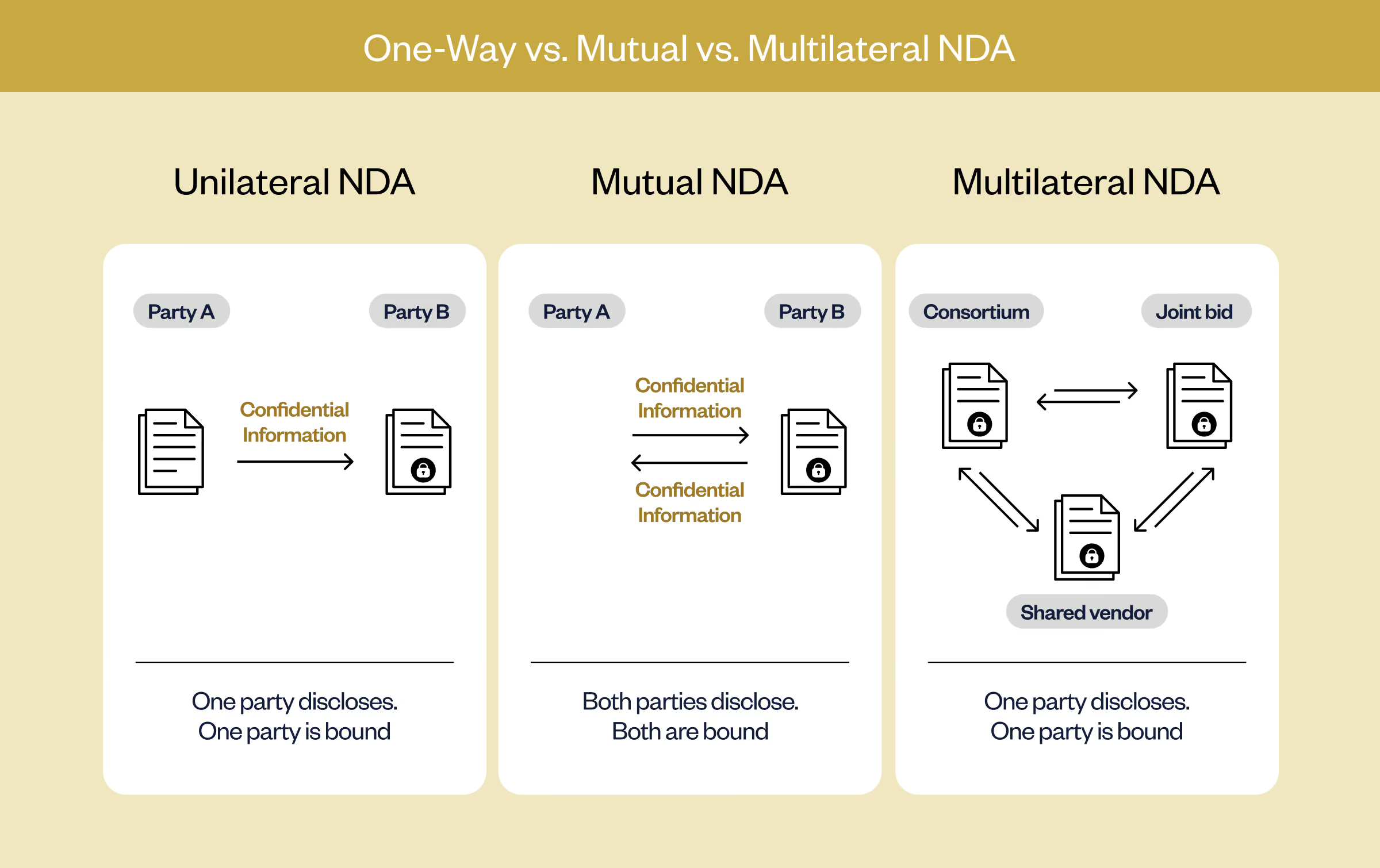
A non-disclosure agreement (NDA) is a legally binding contract where one or more parties agrees to maintain confidentiality of shared information. NDAs protect trade secrets, business plans and metrics, along with other sensitive data often shared during collaboration, hiring or deals. NDAs have three forms:
Picking the right type of NDA is dependent on the flow of information. If you're the only one sharing data, a unilateral NDA should suffice. Should both sides be sharing, a mutual NDA is appropriate. A multilateral NDA comes into effect when several parties sign one agreement, usually efficient for a consortium, but can invite negotiation complexity.
NDAs are the most common contract signed by businesses, in extremely high volumes, making them a low payoff drain on legal bandwidth. SpotDraft's 2025 Contract Efficiency Benchmarking Survey found that 56% of legal teams take a week or more to close a standard contract like an NDA, and some take over 15 days or more. This is unwanted friction for a standard document whose terms barely change.
Standardize your NDAs and transform them into self-serve. Book a demo today.
A well-drafted NDA covers the following essentials:
NDAs, while standard, often have several clauses overlooked and are worth revisiting. Return or destruction of information at the end of the engagement. Governing law and jurisdiction, a no-license clause confirming no IP rights and a survival clause that outlines which obligations continue even after the agreement comes to an end.
Pondering on what requires to be scrutinized before signing an NDA? Our list of five things to look for in an NDA is a must read.
Yes, an NDA is a legally binding document. This is provided it meets standard contract requirements and is signed by all involved parties. To ensure it holds up in court and is enforceable, it should specifically outline what is confidential and for how long. The flip side is where most NDAs fail. Courts have displayed skepticism over NDAs that have been too broad, indefinite or perpetual in duration or unreasonable in scope.
It is vital to remember an NDA that sets out to protect too much often ends up protecting nothing. This is why a standardized, legal authorized NDA out performs a draft without a system. ,
This is a varied count that completely depends on the terms. The usual lifespan of an NDA ranges between 2-5 years, however, obligations that cover trade secrets or strategies can last as long as the secret remains one. The timeline should match the sensitivity of the NDA and what it intends to safeguard.
Terms used loosely and often mixed—here's how they differ:
An NDA is overkill for information that is already public, or for early conversations where nothing confidential is exchanged. Introducing an NDA during these times can slow down a relationship for no reason and should be avoided. An NDA is worth putting in place before sharing anything that is genuinely sensitive, such as, trade secrets, financials, product roadmaps, customer data or pre-deal terms. This extends to partnerships, M&A discussions, fundraising and vendor engagements that involve anything proprietary.
An NDA can be breached if a party discloses protected information in violation of its terms. For a clear picture of the consequences, explore our guide on what happens if you breach an NDA.
Also Read: NDA review checklist: what to check before you sign
Understanding NDAs allow to standardize them while ensuring they are airtight. An ideal first candidate for automation because of their high-volume, low-variation nature.
For a sales team that sends up to 50 vendor and prospect NDAs a month, if handled manually, is up to 50 open loops with legal and a waiting period for a signoff. At scale, this can become extremely chaotic and time-consuming for a low-stakes contract. On the other hand, an approved template helps generate the same 50 NDAs as self-serve where the counterparty signs with native e-signature, and all executed NDAs land in a searchable repository should anyone with authorized access require to view it. Legal sets the rules once, creating a template and only reviews rare NDAs that deviate from it.
For those with the highest volume, such as inbound partners or users accepting a set NDA, clickwrap records instant acceptance at scale while capturing who agreed to what and when.
SpotDraft enables teams to turn NDAs into approved templates that can self-serve and capture native e-signatures while maintaining them in one searchable repository. This prevents high volume, low risk contracts from clogging the legal queue. When approached systematically, it gives legal control through the template and clause library without having a legal review of each NDA, diverting their time to contracts where judgement and scrutiny actually matters. Most importantly, partners receive an NDA in minutes instead of days.
Book a personalized demo to see NDA automation at scale in action.