What Is an AI Contract? Clickwrap, eSignatures and Smart Contracts Explained

Huzaifa Sultana is a Marketing Associate at SpotDraft focusing on Organic Growth through SEO and AEO.
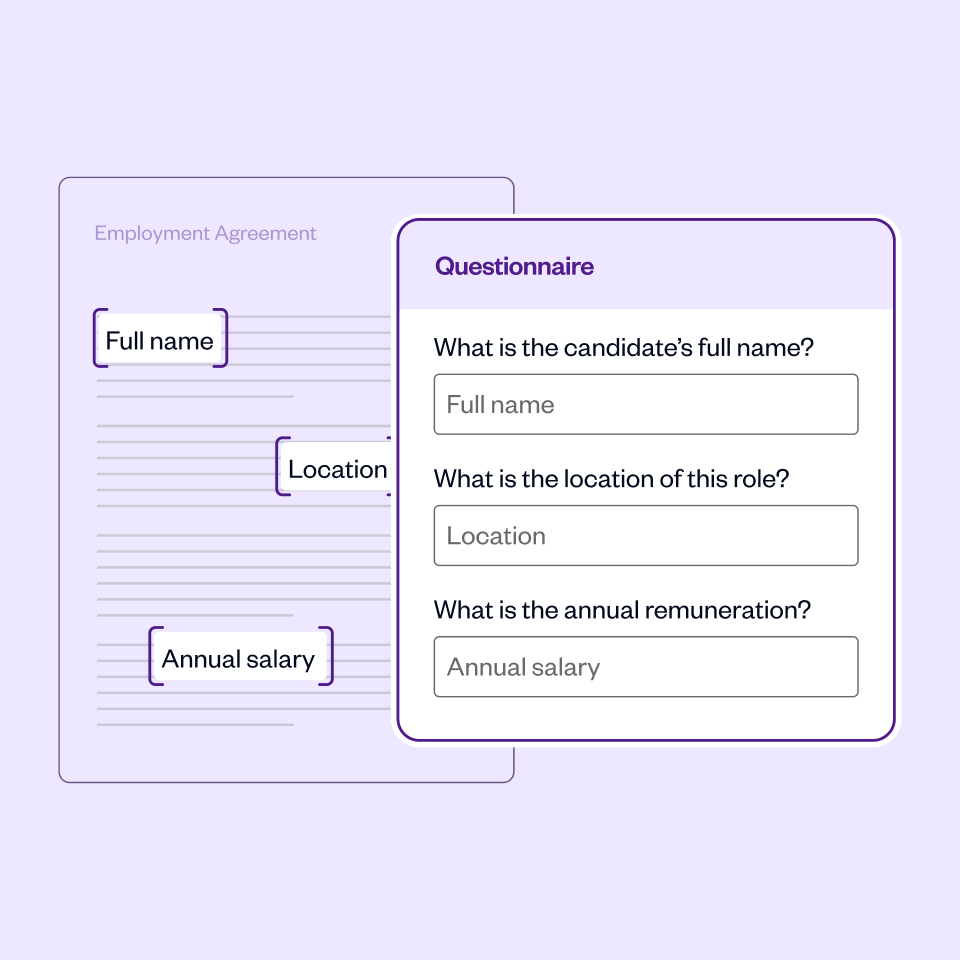
An AI contract, while finalized by people and governed by contract law, is a legal agreement that is drafted, reviewed or managed with the assistance of artificial intelligence. This usually includes the generation of a first draft from an intake form, checks on incoming redlines against your playbook, flagging risks and the extraction of key dates and details.
AI contracts are often mistermed or confused with Smart Contracts, both being fundamentally different. This confusion can have teams looking for blockchain infrastructure when the actual need lies with AI-assisted contract management.
Teams that understand the benefits and applications are the ones actually deriving value from the use of AI. SpotDraft's 2025 State of Legal Ops survey discovered 54% of in-house legal teams consider AI functionality moderately important.
A legal agreement drafted or reviewed with AI vs. self-executing code on a blockchain. Here’s a closer look at what differentiates these commonly misinterpreted terms:
Book a personalized demo and see how our context-rich AI works on your contracts from day one.
The presence of AI optimizes time spent across the contract lifecycle. When context-rich, it can free teams from otherwise mundane tasks and help divert their attention to matters that actually demand their time and expertise. Here is how this manifests in ideal operational conditions across the contract lifecycle:
Using an intake form and pre-approved templates from your clause library as the baseline, AI generates a first draft. This is then submitted through legal intake, usually by a sales rep and is then routed into the contract workflow for approval.
Context makes or breaks this section. Tools like VerifAI, trained on your playbook from day one become extremely context-rich and aligned to your standards. With this, AI is now able to compare incoming redlines and surface deviations. All made possible within Microsoft Word where teams already work, ensuring high adoption along the way.
AI enables high context across stakeholders. Context rich, it is able to articulate and suggest fallback positions in plain English, making legal context comprehensible to sales, procurement and finance, reducing their open loops and queries with the legal team.
Obligations, renewal or expiry dates and metadata all feed into reporting and analytic dashboards, fueled by data extracted by AI. This is transformed into pre-conceived action well in advance.
Context rich AI agents have the ability to monitor compliance relevant terms across the lifecycle. Tools like Sidebar provide crucial assistance, surfacing answers where the work is happening.
AI assists in building and reviewing agreements. The presence of Clickwrap and eSignatures make them enforceable. The presence of these allows companies to scale from a single MSA to high-volume self-serve acceptances without losing a clear audit trail.
A standard method of delivering a self-serve agreement at high volumes. Commonly found across terms of service or SaaS sign-ups in the form of an “I Agree” checkbox. This can be defined as deliberate action taken by a user next to clearly presented terms.
A well-designed clickwrap flow records who agreed, to which version and when.
Recognized in the United States under the federal ESIGN Act & state enactments of UETA as well as eIDAS in the European Union, an eSignature captures the intent of a signatory to be bound by an electronic record. Looking beyond the image of the signature, the audit trail holds up against scrutiny. It also makes for a compelling argument to maintain your signing inside your CLM. Native eSignatures maintain a continuous chain across the lifecycle, providing evidence of the identity, the intent and a reliable timestamp.
Book a personalized demo to see how SpotDraft handles clickwrap and eSignatures.
ABA Formal Opinion 512, is the American Bar Association’s first formal ethics guidance on the use of generative AI. It maps existing Model Rules onto them and presents the following:
It is important to note and verify state guidance layers that sit on top of this. It culminates into a clear blueprint: Human design the system, AI accelerates the workflow and humans approve the output.
SpotDraft intertwines context-rich AI across the entire contract lifecycle as opposed to standalone features. Thoughtfully designed to elevate workflow and optimization, SpotDraft AI drafts and extracts key details. VerifAI is a powerful tool built on your playbook to review redlines inside Microsoft Word. The sidebar is another feature that provides assistance where the work happens. Clickwrap enables high-volume self-serve agreements and native eSignatures execute them.
All the above, made available on one platform, with one audit trail and no added cost, are a few of many star-studded reasons why legal teams choose SpotDraft.
Book a personalized demo and see this come alive on your own contracts.