Luminance Pricing Explained: What It Costs in 2026

Huzaifa Sultana is a Marketing Associate at SpotDraft focusing on Organic Growth through SEO and AEO.

Luminance does not publish a standard monthly, annual, or per-user price. Buyers therefore need a sales quote to determine the commercial scope and compare it with other CLM platforms.
The quote can also be difficult to size from the outside because Luminance has tied pricing to the size of an organization’s contract database, while its current AWS Marketplace listing uses Document Count as the pricing dimension. Luminance has also said onboarding, training, and uploading are included in the upfront price.
That leaves buyers with two practical questions: what is included in the quote, and what could change the cost later? Product scope, database growth, implementation, support, and contract terms all need to be clear before the proposal can be compared with another contract lifecycle management or contract intelligence platform.
This guide breaks down what is publicly known about Luminance pricing, what still needs to be confirmed with the sales team, and which commercial details to check before signing.

Luminance does not publish a verified dollar price or standard pricing range in 2026. There is no public monthly rate, annual subscription figure, or standard price for user licenses, so buyers need a custom quote from the Luminance sales team.
Without a standard published dollar price, buyers need a custom quote before making a direct price comparison with other CLM platforms.
Here is what is publicly known:
Luminance's own pricing explanation remains the clearest statement on the model: pricing is based around the size of the customer's contract database.
The AWS Marketplace listing adds a more recent commercial signal. Luminance Corporate is Private Offer Only, and the listed pricing dimension is Document Count, described as the total volume of documents stored in the system at a given time. AWS also says pricing depends on the duration and terms of the agreement.

The AWS listing is marked “Private Offer Only” and requires buyers to request a custom offer. It should therefore not be used as evidence of a standard Luminance dollar price.
So if you are budgeting for Luminance, start with the number of contracts and documents you expect to store, the functionality your team needs, the length of the agreement, and any implementation work surrounding the deployment. Those inputs give the sales process something concrete to price.
They also give you a better basis for comparing Luminance with other contract lifecycle management products because you are comparing scope, not an unsupported headline figure.
Also read: How to choose a CLM solution that works for you
Public evidence supports contract database size, document volume, and commercial terms as parts of the Luminance pricing model. Product scope, integrations, customization, and implementation also need to be defined in the proposal, although public information does not prove that each one independently increases the price.
For an enterprise CLM deployment, define the buying scope across products, users, integrations, and implementation before comparing proposals.
Contract database size is the clearest documented Luminance pricing input. Luminance has said pricing is based around the size of an organization's contract database.
Its current AWS Marketplace listing points in the same direction. The commercial dimension is Document Count, which AWS describes as the total volume of documents stored in the system at a given time.
That makes a few definitions worth confirming during the sales process:
Luminance does not publish standard dollar rates for different document-volume levels. Its current Master Agreement defines a Subscription Allowance as the maximum number of documents permitted under the Product Order Form at any time and applies an annual upload fair-usage cap of 200% of that allowance. Buyers should confirm the specific document allowance and any commercial treatment of growth in their Order Form.
Contract duration and negotiated terms also form part of the pricing model. AWS Marketplace states that pricing is based on the duration and terms agreed with Luminance.
That means a yearly figure alone may not show the full commercial commitment. To understand the total cost of ownership, confirm:
These details become more important for large enterprises expecting their contract database or product usage to expand over time.
Luminance offers functionality across several legal workflows, but it does not publish separate prices for each product area. Its current platform navigation includes Draft, Negotiate, Analyze, Comply, Investigate, and Collaborate.
Together, those products cover contract authoring, negotiation, repository analysis, obligations, compliance, investigations, legal intake, approval workflows, and automation.
Luminance also increasingly describes the platform through a broader Contract Intelligence story. The company says its technology carries contractual context across the lifecycle and applies that intelligence from creation and negotiation through post-execution analysis and action.
If your team primarily needs a contract intelligence platform, that breadth can be relevant. If the core need is narrower, such as negotiation and portfolio analysis, ask the sales team to identify exactly which functionality is included.
The same applies if you are comparing the full contract lifecycle across different vendors. Luminance covers more than one stage of contracting, but its public site does not establish that every module or capability comes with every quote.
Luminance has stated that onboarding, training, and uploading are included in the upfront price. The statement comes from a 2024 company article, so buyers should confirm the exact 2026 scope in their individual agreement.
This is useful information, but it does not define every implementation activity. If professional services, integrations, configuration, or other implementation services are required beyond that published scope, ask whether they create separate implementation costs.
Luminance has said onboarding is included upfront, but it does not publish a standard onboarding package alongside that pricing statement.
Before signing, clarify what onboarding covers for your deployment. That could include initial configuration, internal stakeholders, integration preparation, testing, customization, and the point at which the team is considered live.
Clarify the implementation scope when several Luminance capabilities are being introduced together. A contract-intelligence deployment focused on Analyze can require a different setup from one spanning negotiation, compliance, and broader workflow automation.
For a checklist of the work to define before launch, see SpotDraft's CLM implementation guide.
Luminance has also said training is included in the upfront price. Its public pricing statement does not specify a standard number of training sessions, user groups, or administrator hours.
Ask the proposal to define training for the teams that will actually use the platform:
Separating launch training from future enablement makes any additional costs easier to spot before the contract is signed.
Luminance has said contract uploading is included upfront. That is relevant for teams bringing an existing contract database into Analyze, but uploading alone does not define the full migration process.
Luminance Analyze organizes and compares agreements, surfaces more than 1,000 legal concepts, manages obligations, and supports natural-language queries across the contract database.
To make the repository useful after migration, clarify:
That turns “uploading included” into a migration scope the Legal team can actually plan around.
The upfront-price statement does not define every commercial boundary. Luminance now publishes a standard Support Datasheet covering support channels, maintenance, and service levels. Buyers should still confirm how the published support terms apply to their Product Order Form and separately clarify playbook configuration, integrations, database growth, product expansion, and renewal terms.
Before signing, get these items documented:
The integration scope should be specific to the systems your business uses. If Legal needs contracts to connect with Salesforce, HubSpot, SAP, Workday, another CRM, or email-based workflows, ask the sales team to identify which connections and configuration are covered. Do not assume integration support simply because a system appears elsewhere in your technology stack.
This is also where professional services should be separated from standard onboarding. If extra configuration or implementation services are required later, the commercial treatment should already be clear.
Because Luminance cost is quote-based, the proposal should make the pricing basis, product scope, implementation inclusions, and longer-term commercial terms explicit. With no public rate card, the quote becomes the main source for understanding the total cost of ownership.
Use this checklist before comparing Luminance with other CLM platforms:
Database growth deserves particular attention because both Luminance's pricing statement and AWS Marketplace information point to contract or document volume.
Product expansion is less clear. Luminance spans drafting, negotiation, portfolio analysis, compliance, investigations, and collaboration, but it does not publish a public price for each area.
If you expect to start with Negotiate and Analyze and later add more automation or compliance functionality, ask how that expansion would be handled before signing the first agreement.
The same checklist can help when comparing other enterprise CLM vendors. If your shortlist includes Icertis Contract Intelligence, Ironclad, or DocuSign CLM, compare the same categories across each proposal instead of putting unrelated subscription numbers side by side. If you are also researching Icertis pricing, for example, keep implementation, support, product scope, and database assumptions aligned before comparing the total.
Luminance also gives buyers a way to test the platform before signing. Its February 2026 article says its Proof of Value is a two-week free trial using the organization's own documents and real workflows.
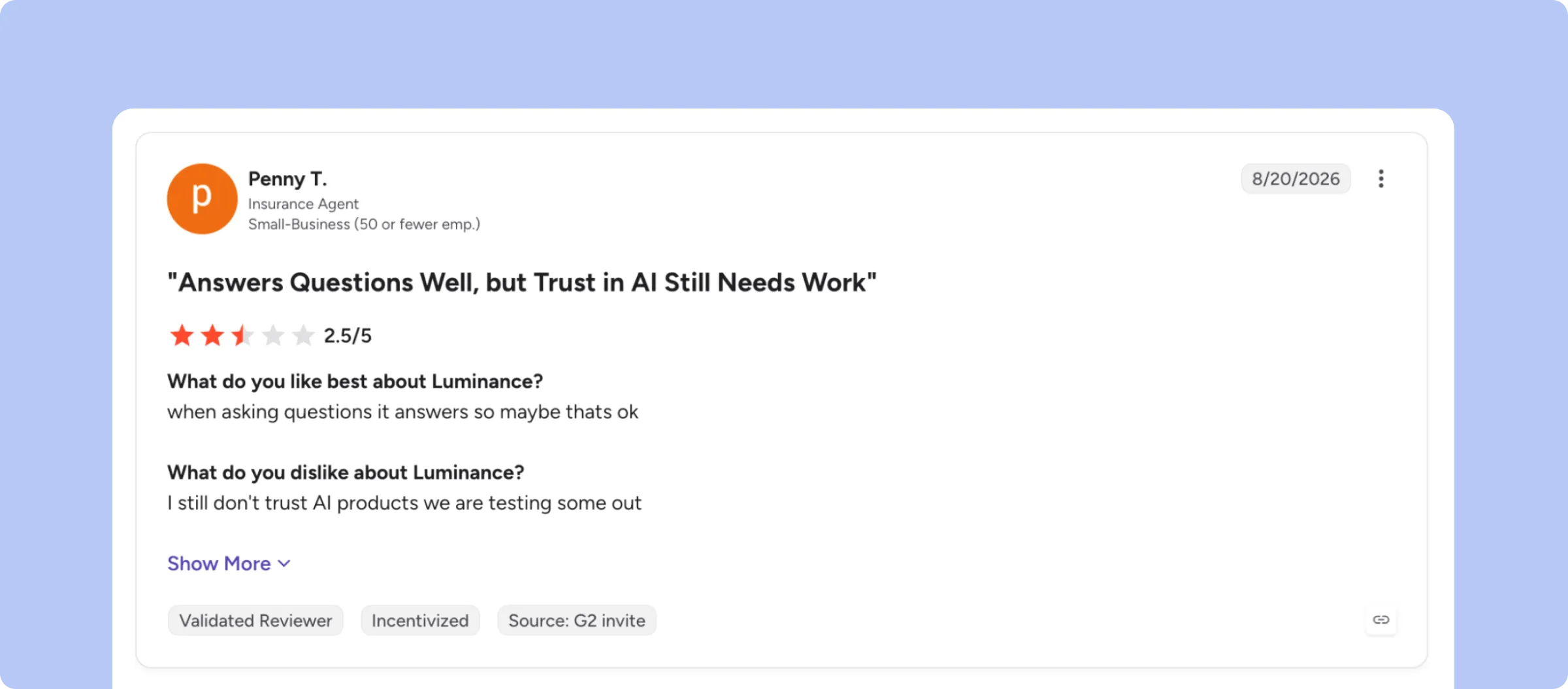
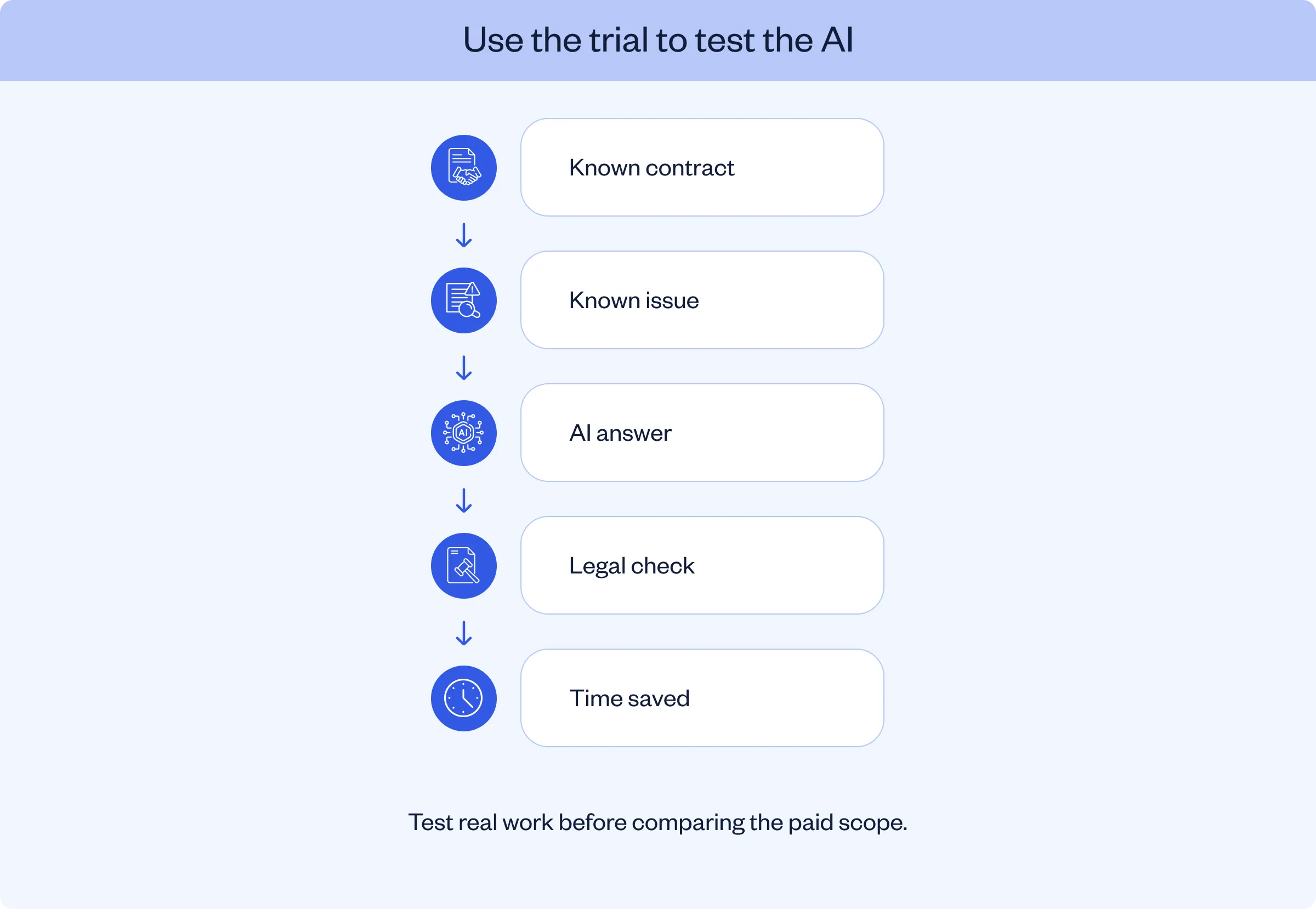
The Proof of Value is also a chance to test how much checking remains with Legal. One customer said their team was still testing AI tools and did not yet fully trust AI-generated answers. Use contracts where Legal already knows the expected answer, then record what still needs manual verification before deciding whether the quoted cost matches the usable time saved.
Also read: Best contract management software platforms
SpotDraft gives in-house Legal teams one contract management workflow across the full contract lifecycle, from creation and review through approval workflows, signing, repository management, and reporting. Its pricing page also states that in-house implementation, workflow and integration setup, legacy migration, dedicated customer success, and 24/7 support are included.
Luminance spans negotiation, portfolio analysis, compliance, investigations, and workflow automation. SpotDraft is centered on Legal-controlled contracting from creation through post-signature management.
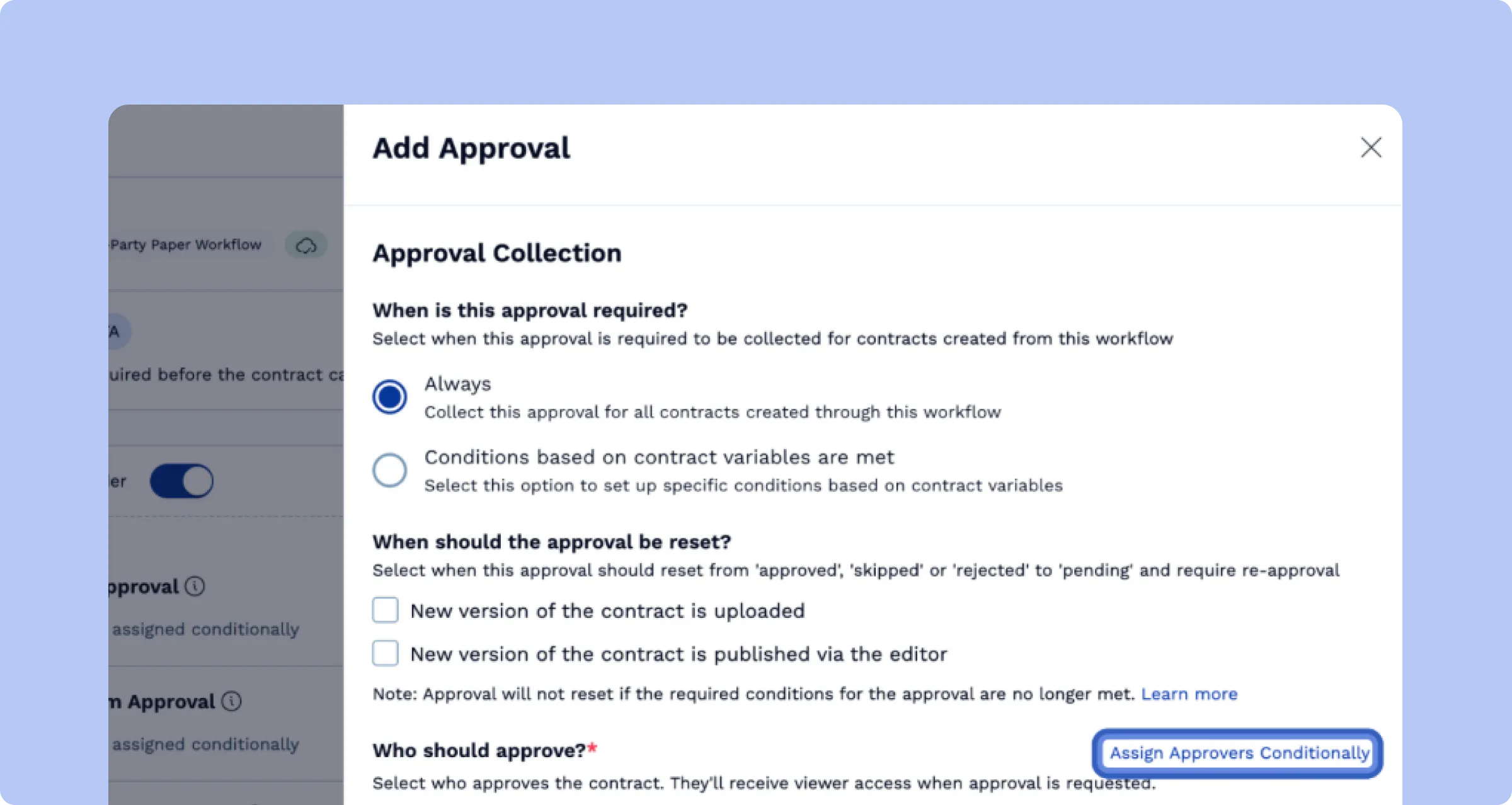
SpotDraft Templates let Legal define the approved starting point for repeat contracts. Each template can use a questionnaire and conditional logic so business users provide the required information and generate the appropriate agreement. Approval workflows can then route the agreement to the right stakeholders.
That creates controlled self-service without requiring business users to draft their own version of a standard agreement.
SpotDraft can also connect contract creation to tools such as Salesforce and HubSpot, allowing deal data to populate contracts from the CRM and approval requests to move forward without switching tools.
Explore SpotDraft Contract Templates
SpotDraft keeps contract editing, collaboration, and AI-supported review connected to the contract record.
Contract Editor supports drafting and redlining in SpotDraft or Microsoft Word, real-time collaboration, comments, and version history.
Sidebar adds an AI layer for repetitive Legal work. It can review agreements against a team's playbooks and past contracts, surface non-standard language or missing clauses, answer questions across contract data, and help teams work through requests without separating the work from their broader legal context.

That keeps Legal involved in judgment while automation handles more of the repetitive review and information retrieval.
SpotDraft Workflow Manager lets Legal define how agreements move through creation, review, approval, and signing without technical expertise. Teams can set dynamic templates, conditional approval paths, and rules that change based on questionnaire responses.
SpotDraft's current admin documentation describes Workflow Manager as a no-code system for defining how contracts are created, reviewed, approved, and signed across the full contract lifecycle.
That means Legal defines the process once and business users follow the appropriate route each time the same conditions apply.
See SpotDraft Contract Workflows
SpotDraft Repository keeps executed and uploaded agreements in one searchable location. The platform extracts more than 1,000 metadata properties, supports full-text search and filters, links related contracts, and lets teams create saved views for recurring reporting.
Those views can then feed reports sent to Finance, Procurement, Sales, and other stakeholders. The result is more visibility into contract data after signature without rebuilding the same spreadsheet every time someone needs an update.
SpotDraft Contract Analytics adds process-level visibility with more than 30 metrics across contract lifecycle activity, approvals, review, and turnaround time.
Explore SpotDraft Contract Repository

SpotDraft publishes more detail about its implementation model before the buyer requests the final price. Its current pricing page says plans are based on users or contract volume and includes in-house implementation, workflow and integration setup, legacy-contract migration, dedicated customer success, and 24/7 support.
That makes implementation easier to account for when comparing total cost of ownership because buyers can see which setup activities we include before entering the sales process.
Luminance also says onboarding, training, and uploading are included upfront. The distinction is in the level of public detail: our pricing page explicitly lists workflow setup, integration setup, and migration, while Luminance's public pricing statement describes onboarding, training, and uploading inclusions.
For buyers, the comparison is straightforward. Put both proposals side by side and check migration, workflow configuration, integrations, training, support, database growth, additional costs, and renewal terms.