ContractPodAI Pricing in 2026

Huzaifa Sultana is a Marketing Associate at SpotDraft focusing on Organic Growth through SEO and AEO.
ContractPodAI changed its name to Leah on January 5, 2026. The company, platform, customers, and existing accounts stayed the same, so buyers searching for ContractPodAI pricing are now evaluating Leah.
Finding the actual price is less straightforward. Leah does not publish a standard dollar amount on its website, and G2 lists its pricing as “Contact Us.” The platform has also expanded beyond contract lifecycle management into agentic workflows across Legal, Procurement, and Finance, so the scope of a Leah deployment can vary depending on what a company wants to implement.
This guide explains the available Leah pricing information, what the published packages include, which deployment requirements to clarify during the sales process, and what can add to the overall ContractPodAI cost as teams expand usage across the full contract lifecycle.

ContractPodAI, now Leah, does not publish exact prices for its plans. G2 currently lists three annual editions, and each directs buyers to contact Leah for pricing.
Here is what G2 currently shows for each package:
Everything in Premium, plus preconfigured applications and additional legal consulting for custom use cases
G2 says this pricing information came from the provider or publicly accessible pricing materials, but it also dates the underlying information to January 4, 2026. ContractPodAI became Leah the next day, and the current Leah website now organizes the platform around products such as Agentic CLM and Agentic OS. Buyers should therefore confirm whether Standard, Premium, and Configured Platform remain the package names used in a current 2026 quote.
For large companies evaluating an enterprise CLM, the package also needs to cover the core need behind the purchase. That could be contract creation, workflow automation, a centralized contract repository, obligation management, or a wider cross-functional deployment.
There is also no standard self-service free trial listed on G2. Leah's current terms allow optional trials and betas when Leah specifically offers them, but that does not establish a generally available free trial.
If AI functionality is part of the reason for considering Leah, use the evaluation to test agreements where Legal already knows the difficult clauses. One customer found the platform useful for straightforward drafting and review but said the AI could still make mistakes or miss legal nuance. Test those known edge cases before deciding whether the AI scope in the proposal fits the contracts your team actually handles.

Also read: How to choose a CLM solution that works for you
Leah does not publish the formula used to calculate individual quotes. Deployment scope, configuration, integrations, and security requirements can change what needs to be delivered, but public sources do not establish that each variable independently increases the price.
It is still useful to define them before the sales conversation because they determine what needs to appear in the proposal. Three areas deserve particular attention.
A ContractPodAI quote can cover very different platform scopes depending on what the organization wants to deploy. Leah's current Agentic CLM product covers the contract lifecycle from intake and drafting through approvals, signature, repository management, obligation tracking, and renewals. Its Agentic OS extends into connected workflows across Legal, Procurement, Finance, and other enterprise functions.
That wider positioning makes Leah an agentic AI platform as well as a contract management product. At enterprise scale, an agentic AI deployment can therefore extend beyond contracts into workflows involving several departments and business systems.
That creates an important question before requesting a quote: are you buying contract management software primarily for Legal, or planning a broader enterprise deployment across several functions?
A wider rollout can involve more departments, workflows, business systems, entities, and governance requirements. Leah does not publish how each of those variables maps to price, so keep them as scope questions and ask the sales team to identify exactly what the quoted package covers.
If your immediate requirement is CLM, map the stages your team needs to manage first. SpotDraft's guide to building a contract management workflow can help separate creation, approvals, signing, and post-signature work before you compare feature lists.
The amount of configuration can vary significantly between Leah deployments. Leah's implementation process includes requirements workshops, end-to-end process mapping, integration design, platform configuration, testing, and training. Its implementation FAQ also says departments can configure their own workflows, clause libraries, templates, and business rules.
For a Legal team, that configuration can include contract terms, contract data, workflow automation without custom code, and areas such as:
The scale can vary widely. One Leah customer story describes a global pharmaceutical company migrating 120,000+ contracts across more than 60 countries from systems including SAP CLM, SharePoint, Google Drives, and local repositories. That example shows the scale Leah can support, but it does not prove that contract count or geographic coverage has a specific effect on price.
For your quote, it is more useful to define which workflows and configurations must be live at launch and which can wait for a later phase.
Integrations and security requirements can change the technical scope of a Leah deployment, but Leah does not publish a standard surcharge for them. Agentic CLM currently lists integrations across CRM, ERP, procurement, e-signature, storage, and communication systems, including Salesforce, Microsoft Dynamics, HubSpot, SAP, Workday, Coupa, DocuSign, Adobe Sign, SharePoint, Slack, and Outlook.
Leah also supports single-tenant deployment for organizations with stricter data-isolation requirements. Its Agentic OS positioning emphasizes connectivity across existing enterprise systems, while the master terms make third-party platforms subject to their own vendor agreements.
Before the quote is finalized, clarify which of the following are part of the proposed deployment:
That helps separate Leah pricing from costs already attached to Salesforce, DocuSign, ERP software, or other systems in your stack. It also makes it easier to see which connections feed contract data into the centralized repository and which systems remain responsible for upstream or downstream workflows.
Leah does not publish a standard list of additional fees, but its commercial terms show several areas buyers should clarify beyond the software subscription. Professional Services can be defined through an Order or SOW, reasonable travel and lodging for those services can be reimbursable unless the agreement limits them, and certain support requests can become separately quoted modifications.
That does not mean every implementation or configuration request carries an extra fee. It means the Order, SOW, and Support Plan need to show what is included.
Implementation is a defined part of Leah's delivery model, but the time and work involved depend on the deployment. Leah's current implementation page covers five stages: Kickoff, Design, Configure, Deploy, and Hypercare. Configuration includes migration, integrations, testing, and training preparation, followed by UAT, end-user training, production deployment, and post-launch support.
Leah says smaller deployments typically take 8–14 weeks, while broader enterprise implementations can take a few months. Its Agentic CLM material separately says most customers are live within two weeks. Those timelines appear to cover different scopes, so buyers should ask what “live” means for the exact deployment being quoted.
A pharmaceutical customer story shows how much the rollout can expand at enterprise scale. That deployment involved validation documentation, security approvals across departments, workflow configuration, roles and permissions, UAT, and a phased release that began with the core contracting team before expanding to more users.
That does not mean every Leah implementation will follow the same path. It does show why the implementation milestone needs to be defined before teams compare timelines or costs.
SpotDraft publishes its implementation terms more directly: its pricing page says implementation is included without an additional implementation fee, with its in-house team handling workflow setup, integrations, and legacy migration.
For a deeper look at the work behind a rollout, see SpotDraft's CLM implementation guide.
Leah supports legacy contract migration as part of its implementation services, but buyers should confirm the exact migration scope in the Order or SOW. Leah says its implementation team oversees migration end to end, including gathering contracts, ingestion, AI classification, data extraction, and OCR where needed. Its current master terms also define migration as a form of Professional Services.
The amount of preparation can depend heavily on the state of the existing repository. Leah's 120,000-contract pharmaceutical case involved agreements spread across SAP CLM, SharePoint, Google Drives, and country-specific systems, which required a broader migration strategy than moving a smaller, standardized repository.
Before signing, establish who owns the main migration tasks:
The objective is not simply to move documents. The migrated agreements need usable contract data so teams can search the repository, track important contract terms, support obligation tracking, and report on agreements after go-live.
If migration is a major part of your project, SpotDraft's guide to legacy contract migration covers the preparation work that should happen before contracts move into a new CLM.
Training is included in Leah's published implementation approach, but adoption and ongoing administration still require internal time. Leah says onboarding workshops, role-based sessions, enablement materials, and continued post-launch support are part of its delivery methodology.
Once the initial rollout is complete, the support model becomes more important. Leah's current Support Policy offers Standard, Gold, and Platinum plans, with the selected level defined in the Order Form. Every customer receives a designated Customer Success Manager, while Gold and Platinum have 24/7/365 Support Desk coverage and Platinum adds telephone support.
The same policy says Leah can classify certain requests as an upgrade, enhancement, configuration change, or other fee-based modification. If that happens, Leah says it will provide a quotation and scope of work before proceeding.
That makes post-launch ownership worth discussing before purchase. Clarify who will maintain workflows, templates, playbooks, integrations, permissions, and future configuration changes as the organization evolves. The same review should cover capabilities such as natural language search, predictive analytics, reporting, and any other functions administrators or business users will rely on after launch.

Teams may compare ContractPodAI alternatives when they want to evaluate pricing visibility, implementation models, reporting requirements, or a different contract-management scope. These are comparison points, not evidence that Leah will be the wrong fit for every buyer.
The reasons become clearer when you look at each one separately.
Leah pricing does not include a public dollar amount, which makes early budget comparisons difficult. G2 lists all three of its recorded annual editions as “Contact Us,” and the current Leah website directs prospects into a sales-led buying process.
There is also some uncertainty around package naming. G2's pricing data dates to January 4, 2026, while ContractPodAI became Leah on January 5 and now markets Agentic CLM and Agentic OS prominently. A current proposal should therefore spell out both the product names and the commercial scope instead of relying on the older Standard, Premium, and Configured Platform labels alone.
SpotDraft does not publish fixed dollar prices either. Its pricing page does, however, state that pricing can be based on users or contract volume and clearly identifies implementation, workflow and integration setup, legacy migration, dedicated customer success, and 24/7 support as included. That gives buyers more context for comparing usage, implementation scope, and ongoing services before entering the sales process.
The implementation effort depends on the scope being deployed. Leah says smaller implementations typically take 8–14 weeks and broader enterprise rollouts can take a few months.
During a proof of concept, test the areas that will need the most setup: a real template, an approval path, one important integration, a batch of legacy contracts, and the reporting your Legal team needs after launch.
Leah includes reporting and dashboards, but teams with specific legal KPIs should test whether those reports can be configured the way they need. G2's pricing page lists full reporting and a dashboard in its Standard edition, so the question is not whether reporting exists. It is whether the available reporting matches the team's actual requirements.
If reporting is a major buying requirement, compare the dashboard your General Counsel, Legal Ops lead, Procurement team, or Finance team expects to receive each month. Include the contract data, obligation tracking, and predictive analytics they need instead of comparing generic “analytics” checkboxes.
SpotDraft provides another approach. Its Reporting product supports advanced filters, custom views, and one-time or recurring reports, while Contract Analytics provides more than 30 metrics across lifecycle activity, approvals, reviews, and turnaround times.
Leah now extends beyond traditional CLM into wider enterprise workflows. Its current positioning connects contracting with Legal, Procurement, Finance, and other commercial processes through Agentic OS. For an organization looking for cross-functional agent orchestration, that wider scope can be relevant.
A Legal team buying primarily for contract creation, approvals, execution, repository management, and post-signature work has a different core need. In that case, confirm that the proposed package can stay focused on those contract workflows and that broader Agentic OS capabilities are included only when the organization needs them.
Teams comparing the wider enterprise CLM market may also evaluate platforms such as Icertis, Ironclad, and DocuSign CLM. Compare each option against the same workflow, implementation, integration, and support requirements.
This is also where comparing several contract management software platforms can help. The goal is to understand the workflow each platform will own and the implementation required to make it usable.
SpotDraft is another option for Legal teams that want to manage the full contract lifecycle in one platform and see implementation and support inclusions before requesting a quote. It covers contract creation, workflow automation, e-signatures, repository management, reporting, analytics, and integrations. Its pricing page also states that implementation, workflow and integration setup, legacy migration, dedicated customer success, and 24/7 support are included.
Leah currently has the broader platform story. Its Agentic OS connects Legal, Contracting, Procurement, and Finance, while Agentic CLM handles the contract lifecycle itself. SpotDraft stays centered on the contracting and legal workflows that Legal teams configure and business users participate in.
For a practical comparison, here is how the main SpotDraft workflows fit together:
SpotDraft's Templates and Workflows connect contract creation with the approval rules Legal has already defined. Business teams can supply contract information through questionnaires, while conditional workflows route agreements to the appropriate reviewers.
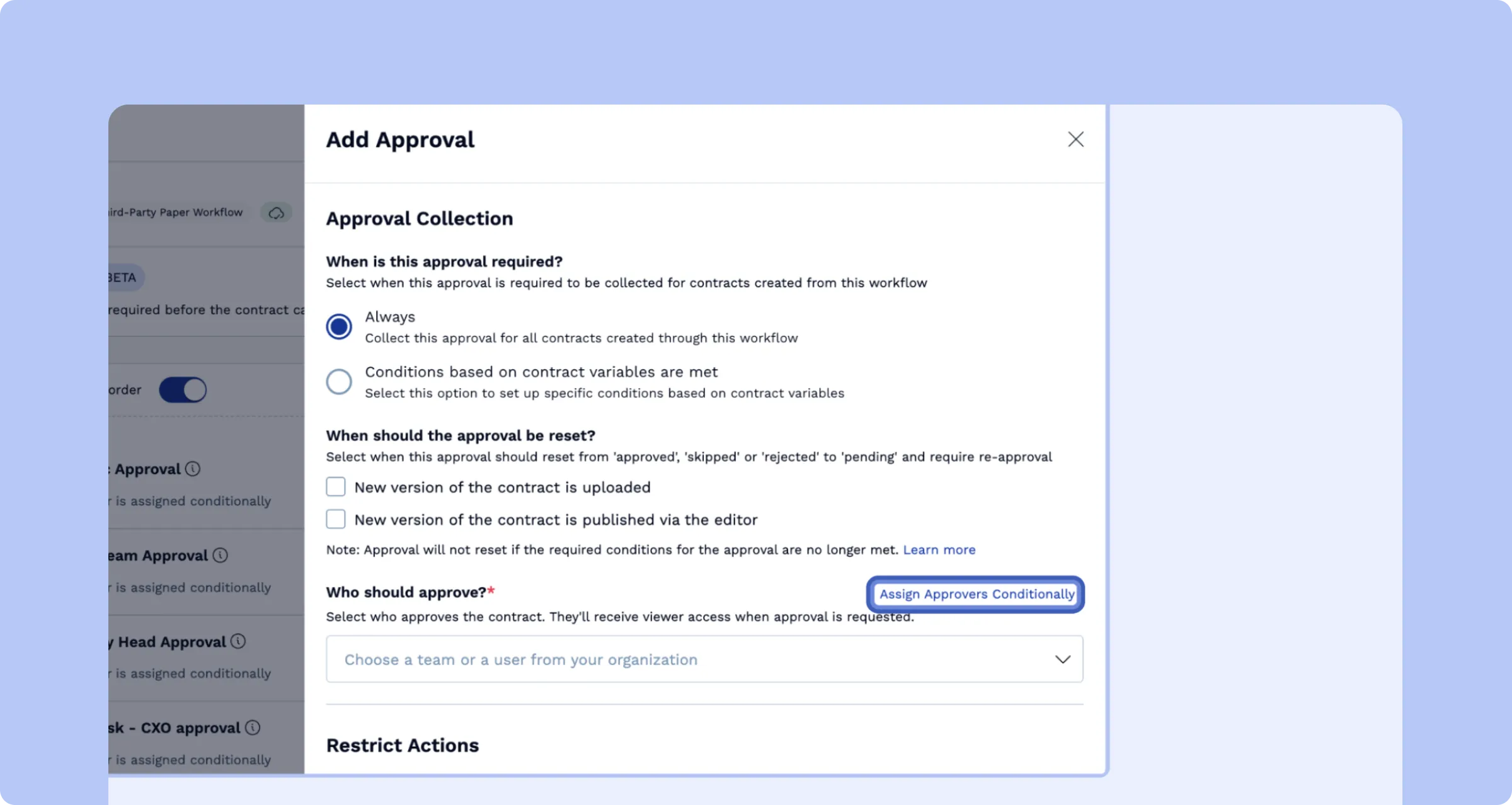
For teams that prefer Microsoft Word for template administration, DraftMate lets admins create and edit contract templates in the Word desktop application.
Sidebar supports AI-assisted legal work during review. Legal teams can use it to review contracts, ask questions against approved company material, identify non-standard language, and work through contract questions while keeping the broader legal context available.

Once agreements are executed, the Contract Repository centralizes agreements and contract data so teams can search contract text, save filtered views, and connect master agreements with amendments and addenda. This keeps post-signature work connected to the same contracting process instead of leaving executed agreements spread across separate folders and systems.
Reporting then builds on that repository data. Teams can create recurring reports from saved views, while Contract Analytics tracks lifecycle, approval, review, and turnaround-time data. That gives Legal more visibility into how contracts move through the entire lifecycle and creates a practical reporting comparison with Leah.
The implementation model is also worth putting side by side. Leah provides a structured implementation program with migration, configuration, training, partner options, and post-launch support. Its commercial terms allow Professional Services and certain later modifications to be scoped separately. SpotDraft states that its in-house implementation, workflow and integration setup, migration, dedicated customer success, and 24/7 support are included.
That gives buyers a concrete comparison to make: which platform fits the contract workflows you need, and how much work is included in the commercial proposal before your internal team has to take over?
Also read: Best contract lifecycle management software in 2026