Women Shaping The Future Of Legal


“We’re going to learn FORTRAN.”
Dorothy Vaughan wasn’t talking about code. She was making a decision. A moment when waiting to be invited stopped being an option, and moving together became the strategy.
Women-led communities in legal are formed at exactly this moment. Change is already underway. Technology is reshaping how legal work is done, how judgments are exercised, and how value is measured. And women are not waiting for institutions to catch up. They are building shared knowledge, collective confidence, and practical fluency to stay indispensable.
The communities we’re featuring reflect that intent. Some are inclusive by design, open to anyone willing to listen, learn, and contribute. Others are deliberately women-only, private spaces where candour is possible and context is shared. Both matter. Together, they are shaping the future of legal leadership.
Excited to showcase the ones we love!
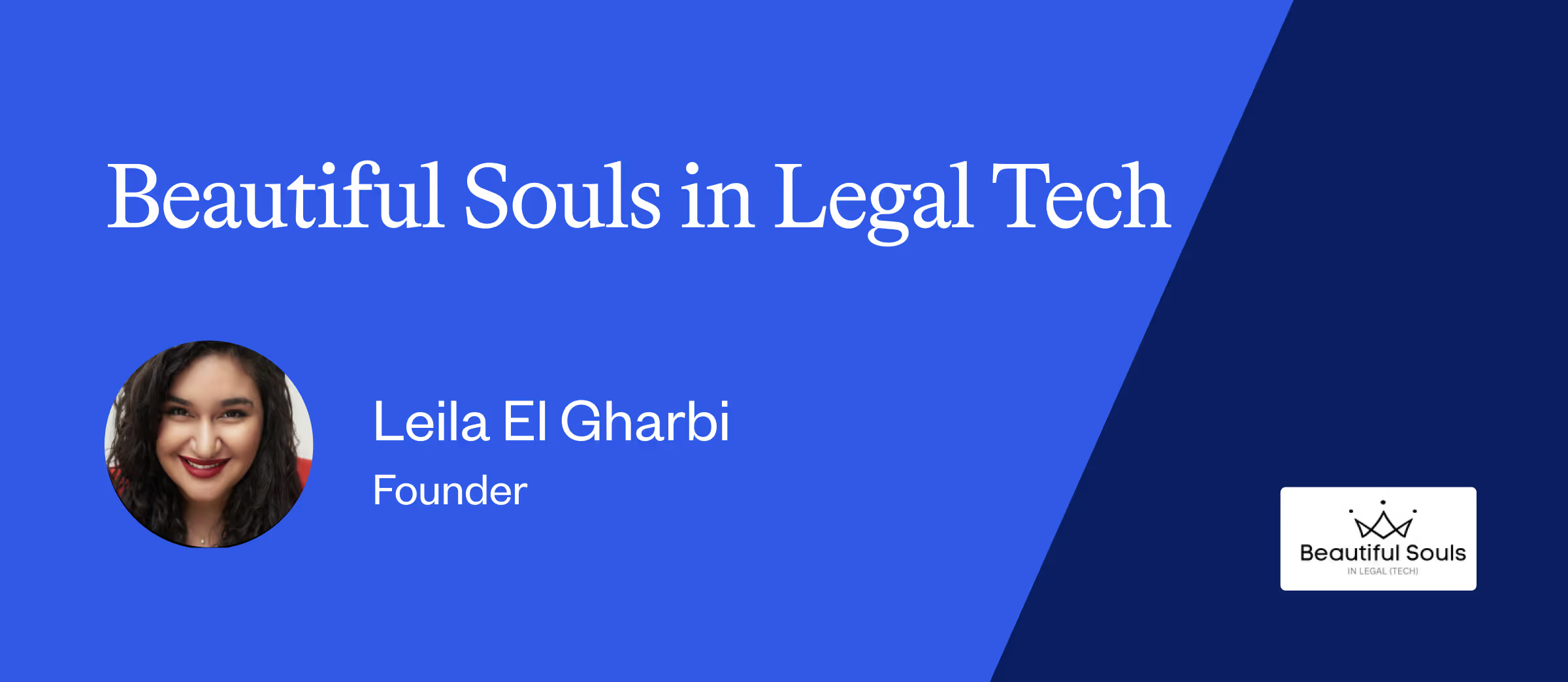
Trained as an employment lawyer in France, Leila El Gharbi followed what once felt like a prescribed path, until life disrupted it. A short move to the UK turned into a permanent shift, bringing cultural dislocation and the need to start again. Legal tech entered her life almost by accident, but it became the space where everything clicked.
For the first time, Leila was encouraged to be creative: to simplify complexity, tell stories, and make legal work feel human. Her career, shaped by detours and experimentation, became a living proof that success in law doesn’t require a linear plan, only the courage to adapt, learn, and show up authentically.
That belief gave rise to Beautiful Souls in Legal Tech. A community founded to offer what Leila herself once needed: a safe, visible, and emotionally intelligent space within legal and legal tech. Beautiful Souls is not about hierarchy or polished personas. It brings together lawyers, legal technologists, operators, and innovators who believe in shared visibility, generosity, and collective growth.
The community embraces non-linear careers, celebrates reinvention, and creates room for honest conversations about confidence, fear, ambition, and belonging. At its core, Beautiful Souls reflects Leila’s conviction that progress, whether through AI or leadership, starts with trust.
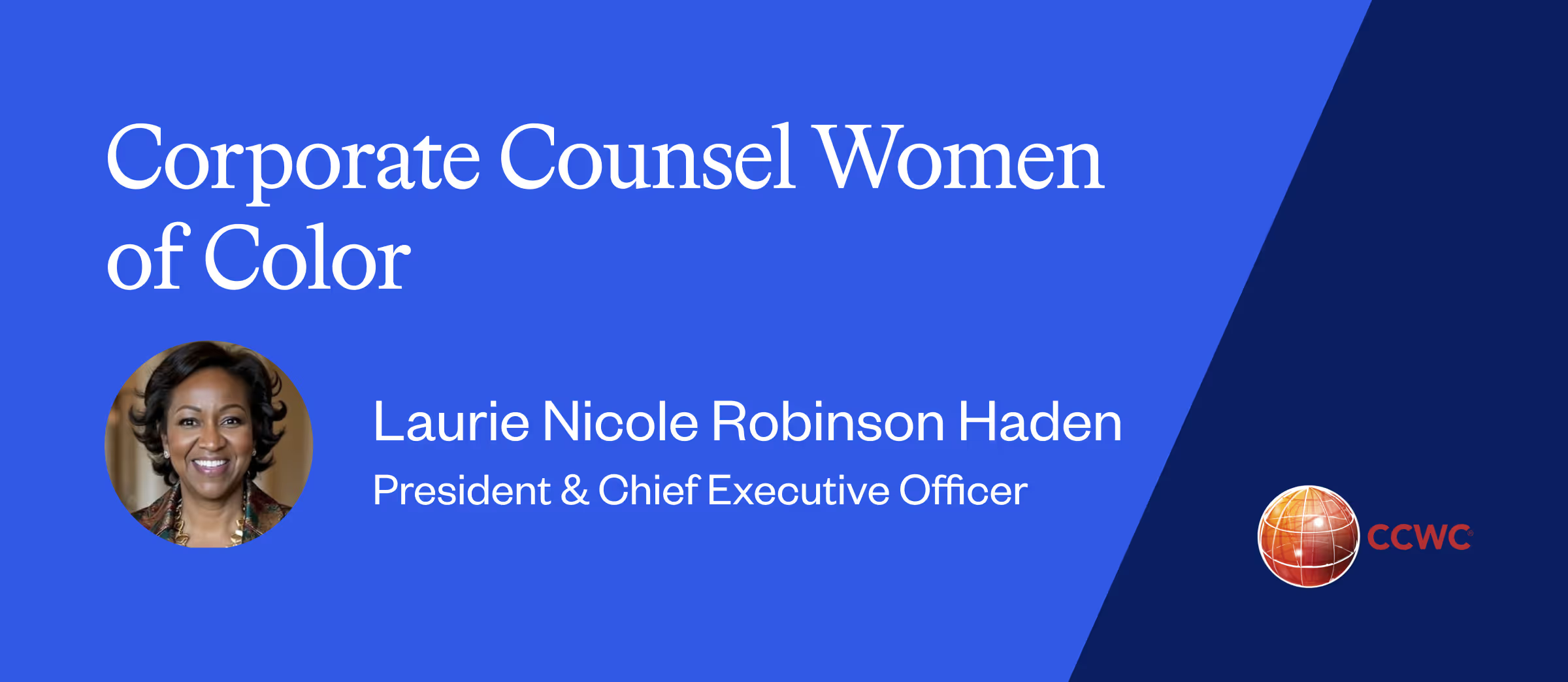
Laurie Robinson Haden did not set out to build a movement, but lived experience demanded it. Shaped by the influence of her father and the loss of him during her first year of law school, Laurie’s career has been driven by purpose as much as excellence. Trained as a labor and employment lawyer, she worked at major New York law firms before spending nearly two decades in-house at CBS Corporation.
Alongside professional success, she witnessed a persistent truth: women of color in corporate legal roles were often isolated, overlooked, and left to navigate systemic barriers alone. In 2004, she responded by founding a nonprofit rooted in resilience, continuous learning, and collective advancement.
That vision became Corporate Counsel Women of Color, a community built specifically for women of color navigating in-house legal careers. Laurie’s leadership philosophy centres on courage, faith, networking, and self-belief, paired with a deep commitment to creating pathways for others to thrive.
CCWC exists for corporate counsel, legal leaders, and law students who want more than representation; they want strategy, sponsorship, and sustained support. What began with ten members has grown into a global network serving over 10,000 professionals through career strategy conferences, research, leadership development, and advocacy.
It is not a short-term network, but a professional home, one that equips women of color to lead with confidence, visibility, and purpose, while reshaping what leadership in corporate law can and should look like.
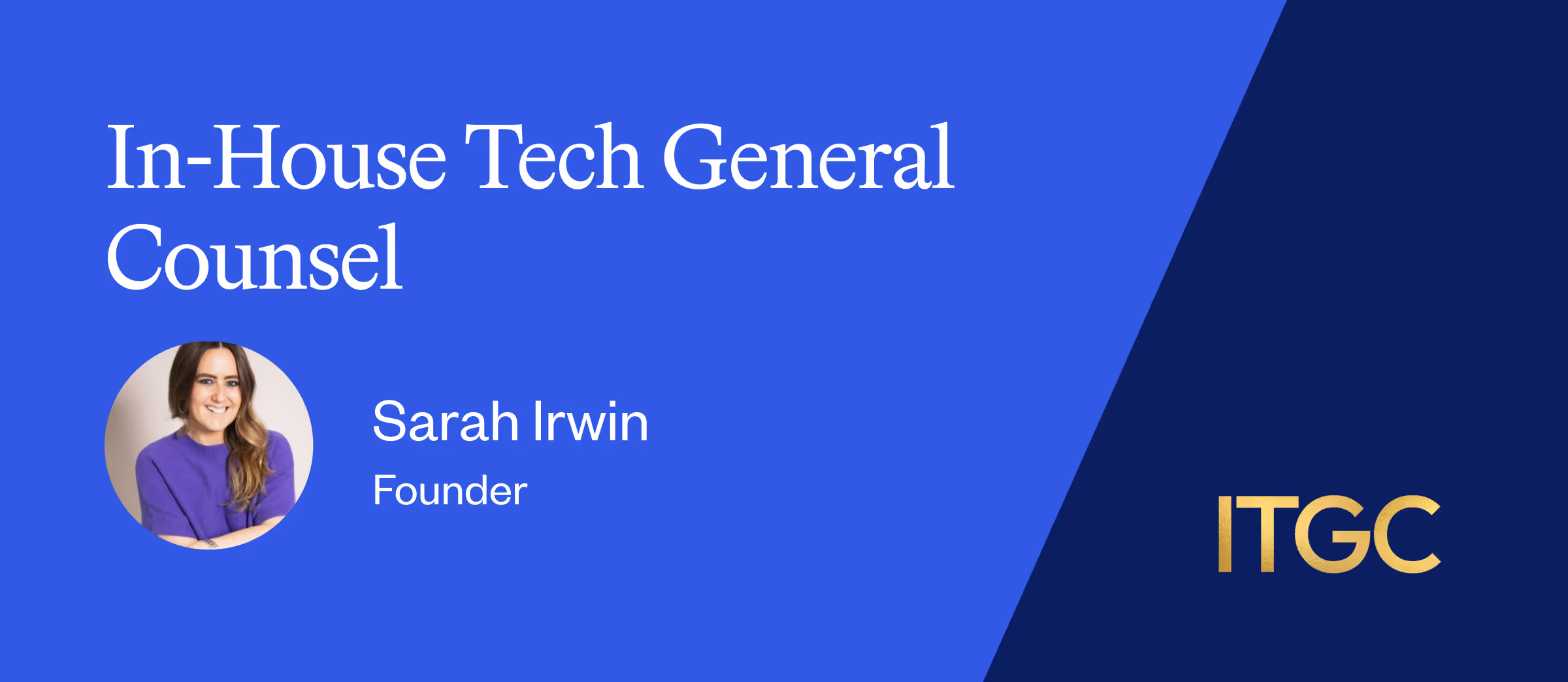
In-House Tech General Counsel (ITGC) began as a response to a feeling many in-house lawyers know well: professional isolation at moments when the stakes are highest.
Originally founded in Ireland, ITGC has grown into a trusted global peer community for senior in-house lawyers working in high-growth tech companies. Its focus is deliberately practical: how to be a first legal hire, how to scale without burning out, how to introduce legal tech and AI responsibly, and how to operate as a true business partner rather than a blocker. ITGC is not built around panels or platitudes, but around candid peer exchange, closed-door conversations, and shared learning from people doing the job in real time. This practitioner-led approach has made ITGC a reference point for modern in-house leadership across Europe and beyond.
ITGC was founded by Sarah Irwin, a former SaaS General Counsel and first legal hire at Tines, who experienced firsthand how lonely and high-pressure the GC role can be. In her interviews, Sarah has spoken openly about navigating ambiguity, board expectations, and rapid growth without a ready-made peer network to lean on.
Rather than accept that isolation as “part of the job,” she built ITGC to give in-house lawyers what she wished she had: a trusted community where judgment, experience, and uncertainty could be shared honestly. Sarah describes ITGC as career infrastructure, something that sharpens decision-making, builds confidence, and helps legal leaders grow alongside their businesses, not behind them.
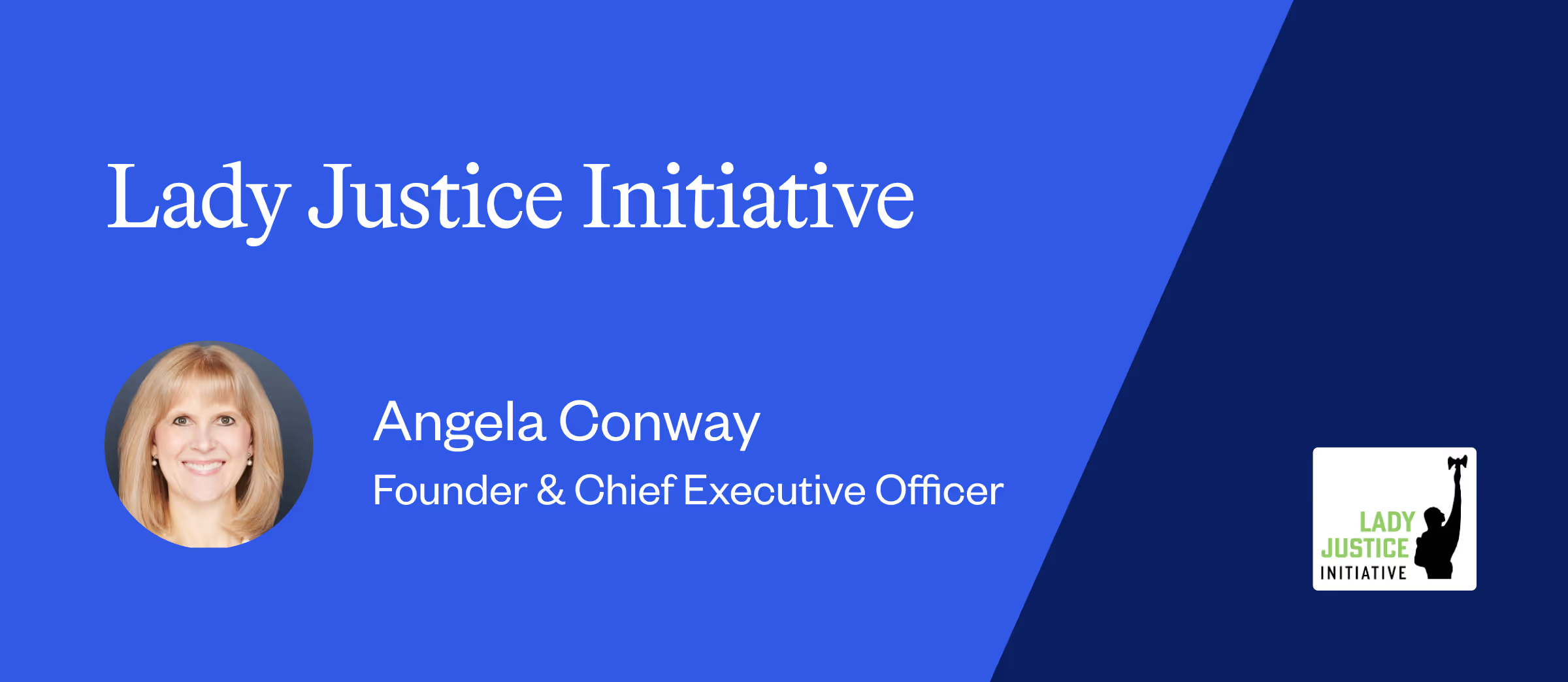
Lady Justice Initiative (LJI) is a global, non-profit community built at the intersection of women’s leadership, law, and the AI-driven transformation of justice. LJI believes the rapid rise of AI in law is a rare leadership moment, and without intentional action, power and decisions could become even more concentrated.
Through research-backed thought leadership the Initiative centres justice, equity, and public interest in innovation, treating AI not as an end in itself, but as a tool that must be governed responsibly.
Founded by Angela Conway, an internationally recognised legal innovator and social entrepreneur, the community focuses on building real decision-making capacity rather than symbolic inclusion.
Its flagship programmes Lex 2X Exec supports senior women through mentoring, leadership development, and AI fluency. AI for Breakfast City Circles create local learning communities that connect global ideas with on-the-ground leadership.
Together, these initiatives position women’s leadership as essential infrastructure, critical to ensuring that the future of law in an AI-enabled world is not only innovative, but just.

Sarah Ouis didn’t arrive at entrepreneurship through a neat, linear career arc. Her journey is marked by detours, resistance, and quiet resilience. Trained as a business lawyer, she built her career in-house, working across commercial, corporate, and data protection matters in fast-moving industries.
Along the way, she faced barriers familiar to many: a non-elite educational background, migration from France to the UK, and the pressure to conform in a profession that often rewards sameness. She began translating complex legal concepts into visuals, tables, and stories, making the law clearer, more human, and more usable. That instinct to demystify law, led her to step away from corporate life and build something entirely her own.
That something is Law But How?, a growing community rooted in visibility and agency.
Sarah believes that technical excellence alone is no longer enough for lawyers to thrive. Through Law But How?, she helps legal professionals build personal brands, grow audiences, and stand out on platforms like LinkedIn using visual legal content.
The community is about more than growth tactics. It’s a space that encourages lawyers to be practical, creative, and human, to see law as a tool to achieve outcomes, not an end in itself. At its core, Law But How? exists to remind lawyers that they don’t have to wait for permission to be seen, heard, or impactful.
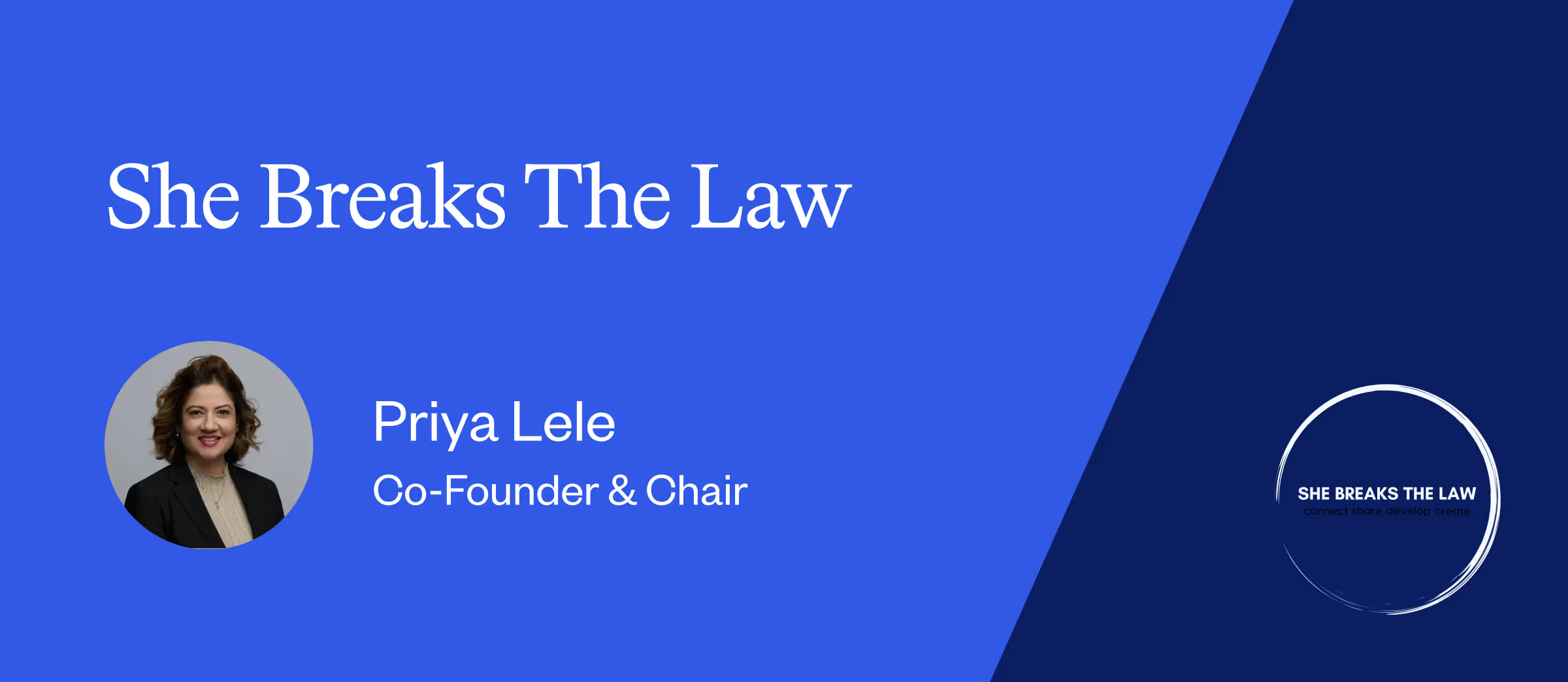
Founded in the mid-2010s by Priya Lele, She Breaks The Law emerged from a quiet but persistent truth: women lawyers were present, capable, and accomplished, yet too often unheard. A consultant and long-time advocate for women’s visibility, Priya created the community to help women step into full voice in a profession that has historically rewarded restraint over authenticity. The community encourages women not merely to show up, but to lead; not simply to listen, but to speak with confidence and authority. I
Its broader impact is cultural, normalising women’s visibility across legal tech, innovation, and leadership, and expanding the space for women to be seen, heard, and celebrated across the legal ecosystem.
Priya’s story reads like a rebel with a purpose. She didn’t take the traditional route into law; she fought her way into law school despite early opposition, turning doubt into fuel.
Beginning as a corporate finance lawyer, she evolved into a global change-maker, leading major transformation initiatives for global law firms and multinational organisations, including Fortune 50 and FTSE 100 clients. On International Women’s Day 2019, she co-founded She Breaks The Law as a global movement, now connecting 4,000+ women across 50+ countries.
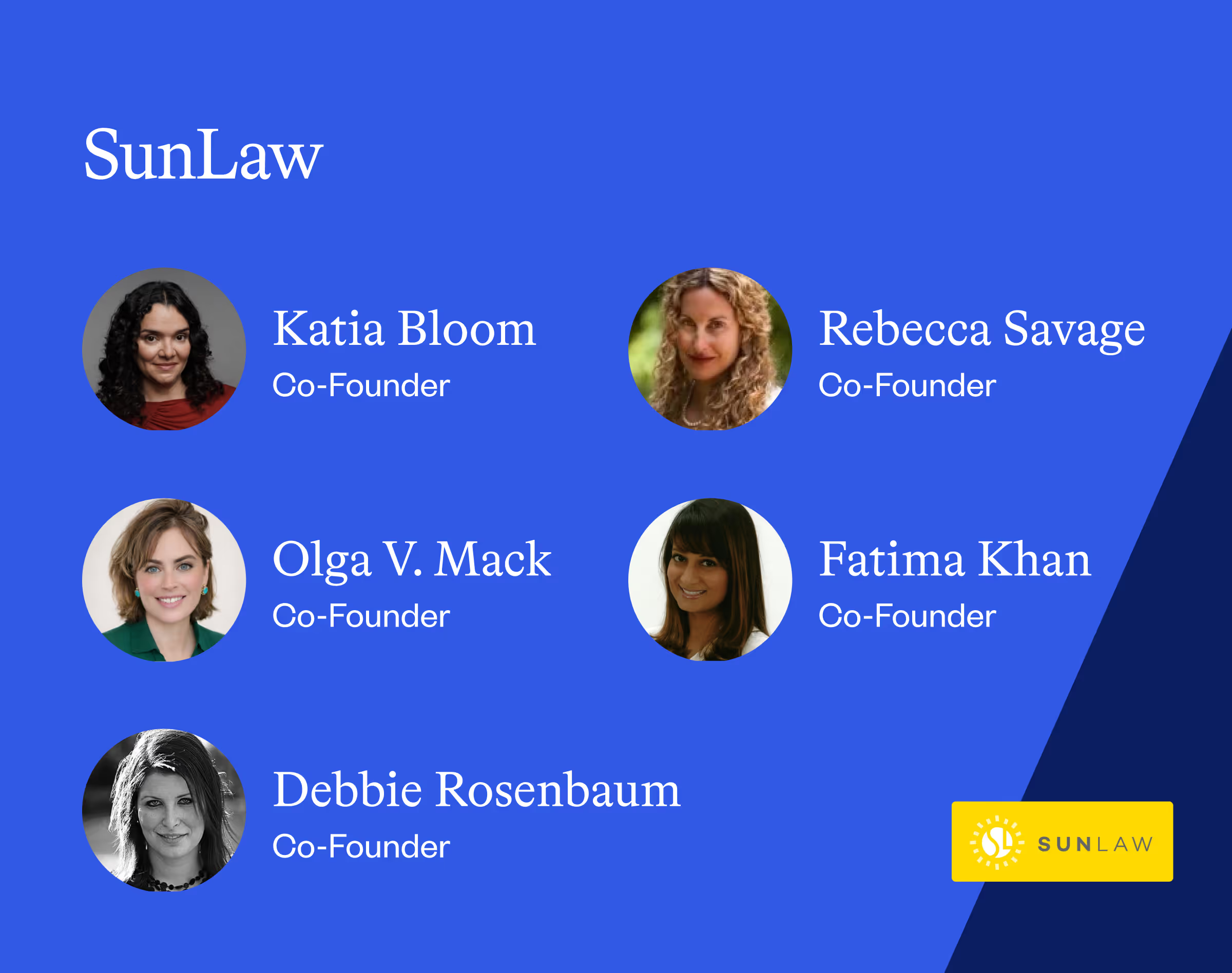
SunLaw was founded in response to a very specific gap: while in-house legal roles were growing in influence and complexity, women occupying those roles often lacked a peer network designed for their realities.
SunLaw emerged to change that. Built as a peer-led community, its purpose is to support, educate and inspire women in-house counsel so they can reach their full professional and personal potential. Its principles are rooted in generosity and collective growth, creating a space where women can learn from one another and step confidently into senior legal leadership roles.
The community was co-founded by Olga V. Mack, alongside peers such as Katia Bloom, Fatima Khan, Debbie Rosenbaum, and Rebecca Savage, women who understood firsthand what it takes to build influence from inside an organisation.
Their shared belief was simple but powerful: women in-house counsel thrive when they have access to community. The founders embedded principles of trust, inclusion, and leadership readiness into SunLaw’s DNA, ensuring the community would outlast individual careers.
Today, SunLaw spans multiple regions and career stages, supporting women from mid-career counsel through first-time General Counsel roles. It stands as a sustainable, values-driven network, one that equips women not just to succeed in-house, but to lead boldly and shape the future of corporate legal practice.
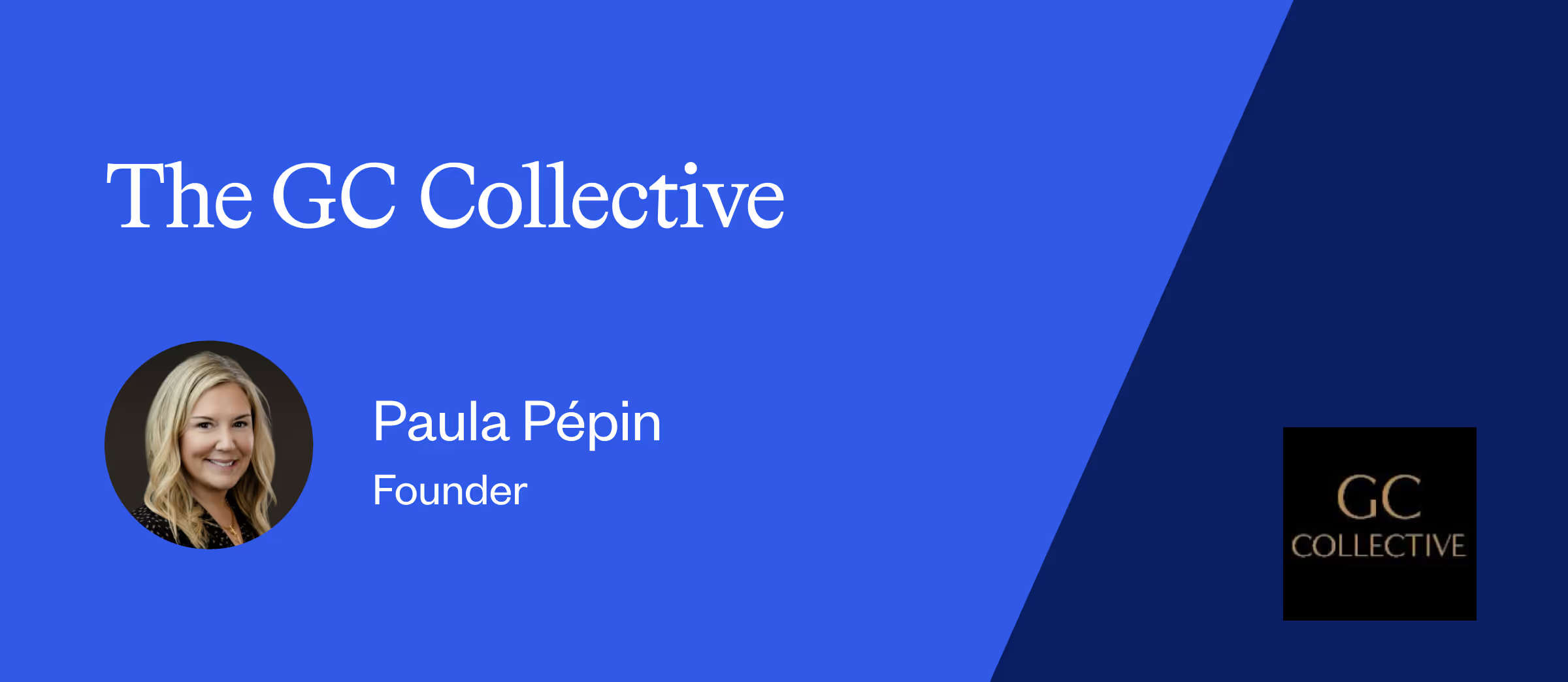
Paula Pepin created The GC Collective out of a lived experience many general counsel know too well: isolation at the top. While leading legal at a high-growth tech company, she felt the pressure of being the trusted advisor, strategic leader and problem-solver without peers who truly understood the role. That experience stayed with her. After transitioning from GC to executive coach, she recognised the same gap everywhere she looked: talented legal leaders without a community to test ideas, share practical insight, or grow together. The GC Collective launched in 2023 to fill that gap with connection, growth, leadership and well-being at its core.
The Collective is a peer network exclusively for GCs and CLOs. It focuses on high-impact learning, practical leadership skills and deep peer support instead of passive panels and generic content. Workshops are interactive, small and solution-oriented, and members share real challenges with peers who’ve lived them.
Paula’s agenda is clear: elevate in-house counsel from isolated advisors to confident, strategic business leaders who shape organisations and legal teams with purpose. The Collective creates space for honest conversation at the highest level, where complexity, pressure, and uncertainty can be shared without performance.
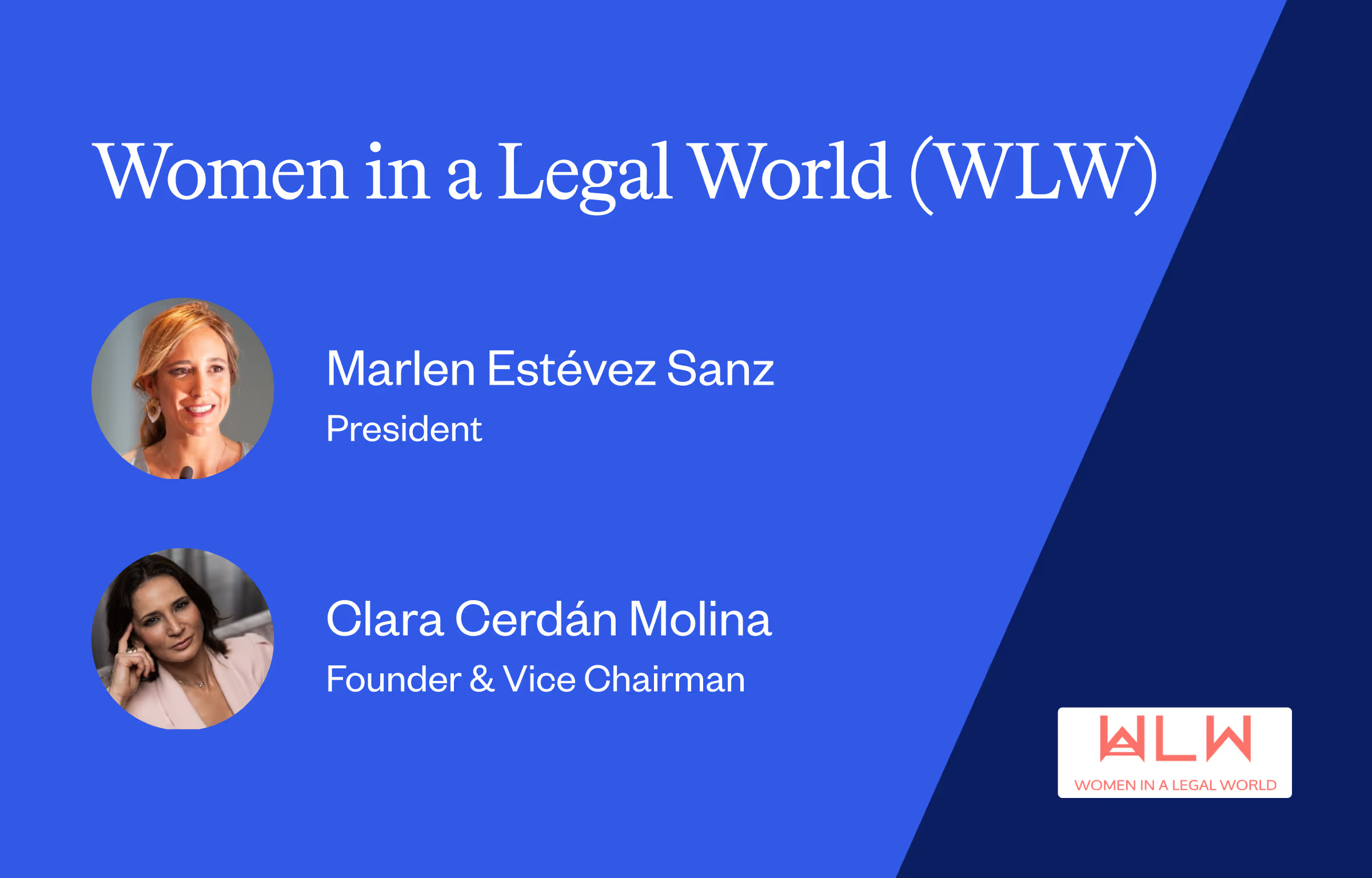
Women in a Legal World (WLW) is a non-profit, international community founded to increase visibility, leadership, and equal opportunities for women across the legal profession.
Created in Spain and built with a strong European and global outlook, WLW brings together women from law firms, in-house teams, academia, institutions, and legal innovation. More than a networking platform, WLW operates as a structured ecosystem, combining leadership programmes, expert commissions, mentoring, and public-facing initiatives that place women lawyers in positions of influence.
Its philosophy, “lead by inspiring and learn by teaching,” reflects a deliberate shift away from transactional networking toward collective growth and long-term impact.
Co-founded by Marlen Estévez Sanz and Clara Cerdán Molina, both accomplished legal professionals, they recognised that talent alone was not enough to overcome structural barriers in law. Rather than centring WLW around individual visibility, the founders intentionally designed a decentralised, governance-led model powered by boards, advisory councils, and specialised commissions. Under their leadership, WLW has grown into a respected platform, positioning women not just as participants but as decision-makers shaping the future of the legal profession.

Jan Kang never set out to build a network, she was simply trying to solve a problem she felt deeply. As a general counsel, she understood the quiet isolation that comes with senior in-house leadership: high-stakes decisions, limited peers, and few truly safe spaces to speak openly.
In 2009, she acted on a hunch. She invited four women GCs to dinner, with no agenda, no sponsors, and no expectation beyond honest conversation. That evening revealed something powerful. Building the community pushed Jan outside her comfort zone, cold calls, follow-ups, and gentle nudges from someone who prefers substance over spotlight.
In the process, Jan found herself becoming an advocate for women in leadership, almost unintentionally, by leading with empathy, trust, and conviction rather than visibility.
That first dinner became the foundation of the Women’s General Counsel Network (WGCN), now one of the most trusted peer communities for senior women in-house legal leaders. WGCN grew through word of mouth, one trusted introduction at a time. Membership is intentionally selective.
Inside WGCN, conversations are candid and generous. Members exchange unfiltered advice, compare notes on leadership challenges, and support one another through pivotal career moments. An active listserv keeps the community alive between gatherings, turning individual experience into collective wisdom. The result is a community that feels less like a network and more like a room full of peers who speak the same language and mean it.
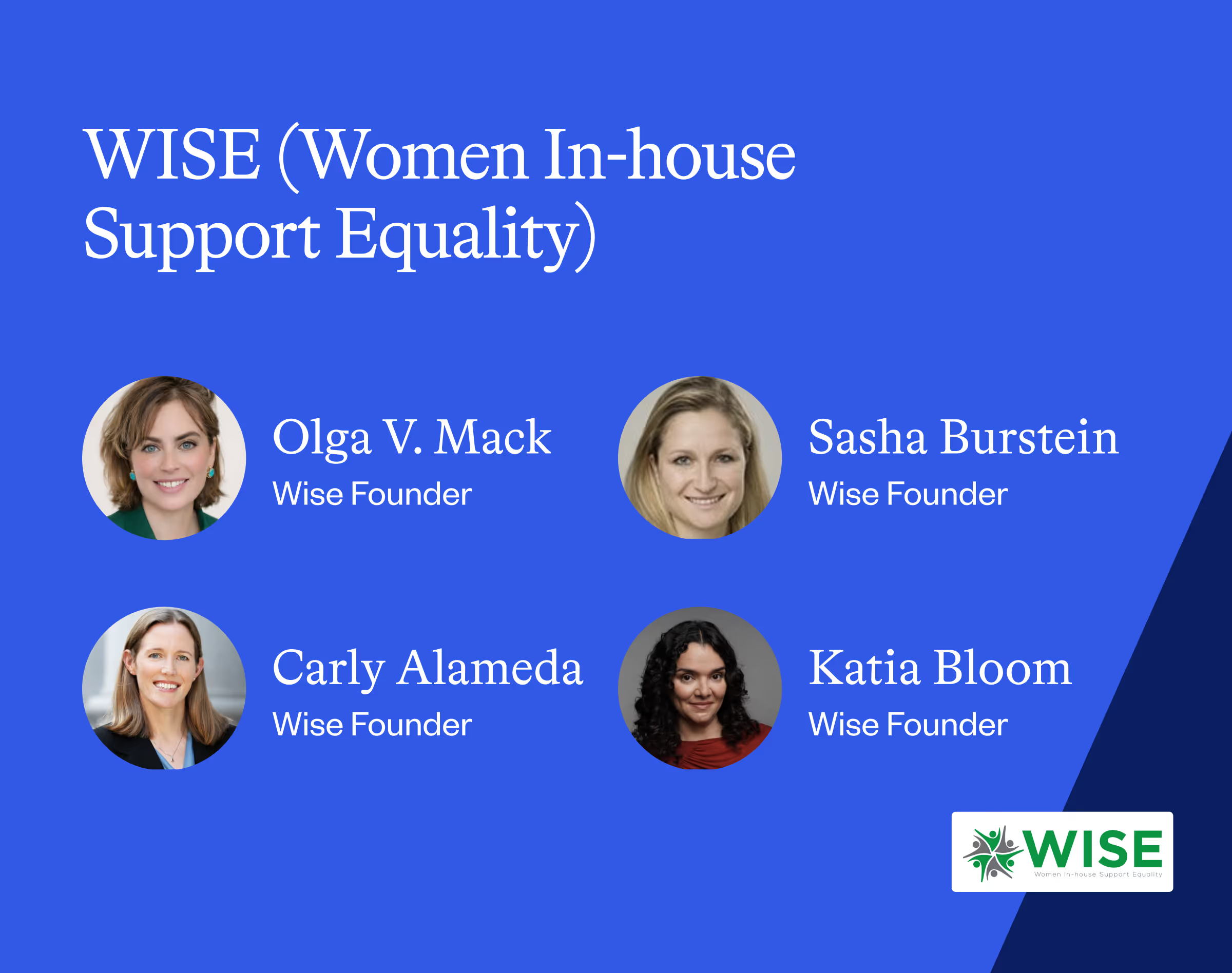
WISE (Women In-house Support Equality) was created to tackle a structural imbalance many women in law experience but rarely see addressed directly: access to opportunity.
Its mission is practical and outcome-driven, strengthening alliances between women in-house counsel and women law firm partners. WISE operates as a coalition, not a club. By bringing women on both sides of the client–firm relationship into the same community, WISE reframes equality as a shared responsibility, grounded in real economic and professional outcomes rather than performative inclusion.
The community was co-founded by Olga V. Mack, Katia Bloom, Carly Alameda, and Sasha Burstein, a group of senior women leaders with complementary perspectives from in-house legal teams, law firms, and legal innovation. Each brought firsthand insight into how influence and opportunity actually operate in practice. Olga’s systems-driven approach, combined with the founders’ shared experience navigating leadership, client relationships, and career progression, shaped WISE into an intentionally cross-role, action-oriented community.
Together, they built WISE to move beyond mentorship alone and toward sponsorship, accountability, and alliance-building.
The communities featured here are not side projects or support groups; they are the scaffolding of a new legal future. Each was born from lived experience, moments of exclusion, isolation, or quiet frustration, and transformed into something collective, intentional, and enduring.
Together, they reveal a shift in how power is built in law: not through gatekeeping, but through trust; not through hierarchy, but through shared leadership; not through waiting for permission, but through creating the rooms that never existed.
These women are not simply advancing their own careers; they are redesigning the conditions under which others can lead, innovate, and belong. In doing so, they remind us that the future of legal is not an abstract destination. It is already being built, community by community, by women who chose to step forward and shape it themselves.