What is the difference between CLM and Contract Analytics?
CLM (Contract Lifecycle Management) manages the entire process—creation, negotiation, signing, and storage. Contract Analytics is a specific technology (often inside a CLM) that uses AI to "read" the text of those contracts to extract data and find risks.
Can AI actually review contracts?
Yes, but with a "human in the loop." AI contract review is excellent at flagging standard deviations (e.g., "This NDA is missing a jurisdiction clause") and extracting data (e.g., "Termination Date: Dec 31, 2026"), but a lawyer should always make the final judgment call on high-risk negotiation points. Learn more about AI contract analysis software.
Ashish Upadhyay is an Ex-Senior Writer at SpotDraft, where he covers AI in contracting and helps unpack CLM best practices. He has 6+ years of experience writing for B2B SaaS, LegalTech, and Fintech, and previously worked at Gartner.
TL;DR
Contract analytics has hit Gen 3. Modern AI-native platforms now use LLMs that work out of the box — they don't just extract data, they understand context, flag risks, and recommend actions. No months of training required. SpotDraft
If you manage 100+ contracts, this isn't optional. Teams using AI-powered analytics are closing deals faster, reducing risk, and making data-driven decisions that directly impact revenue. SpotDraft
SpotDraft is the article's top pick for agile teams. It's an AI-native CLM that unifies analytics with the actual drafting workflow — so you're not toggling between a separate analytics layer and where you actually work. SpotDraft
Four criteria matter when evaluating tools. AI accuracy, time-to-value, workflow integration (Word, Salesforce, etc.), and how well the tool handles OCR for scanned PDFs. SpotDraft
The market has strong alternatives depending on your scale. Enterprise teams lean toward platforms like Icertis for depth of analytics and compliance support, while fast-scaling mid-market teams prioritize UX, speed, and pricing flexibility
In a hurry?
If you need a quick answer, here is the "TL;DR" comparison of the top contract analytics tools for 2026.
Software
Best For
Implementation
AI Strength
SpotDraft
Agile Teams & Speed
4-6 Weeks
Unified (Pre & Post Signature)
LinkSquares
Post-Signature Extraction
2-4 Months
Repository Analysis
Ironclad
Enterprise Workflows
4-8 Months
Custom Reporting
DocuSign
Existing DocuSign Users
Varies
Risk Visualization
Evisort
AI-First Intelligence
4-8 Weeks
External Repo Connection
Icertis
Global Compliance
6-12 Months
Supply Chain Risk
Kira Systems
M&A Due Diligence
Immediate (SaaS)
Clause Extraction
Introduction
Picture this: Your CFO walks into your office and asks, "How many of our vendor contracts have auto-renewal clauses that could hit us next quarter?" You know the answer is buried somewhere in your contract repository—but finding it means manually opening hundreds of PDFs, one by one.
This scenario plays out in legal departments every day. The average company manages thousands of contracts containing critical business data—payment terms, renewal dates, liability caps, compliance obligations—yet most of that intelligence is locked away in static documents, inaccessible until someone has time to read through them.
Enter contract analytics software.
Modern contract analytics tools use Artificial Intelligence to transform your contracts from "documents you store" into "data you can act on." Instead of spending days manually reviewing agreements, legal teams can now answer complex questions in seconds: Which contracts expire this quarter? Where are we exposed to unlimited liability? Which customers are on non-standard payment terms?
In 2026, contract analytics has evolved from a "nice-to-have" luxury into a competitive necessity. Companies using AI-powered analytics are closing deals faster, reducing risk more effectively, and making data-driven decisions that directly impact revenue.
But with dozens of vendors claiming to offer "AI-powered contract intelligence," how do you choose the right one?
This guide cuts through the marketing noise. We've analyzed the top 7 contract analytics platforms based on real-world criteria—implementation speed, AI accuracy, workflow integration, and actual user feedback—to help you make an informed decision for your team.
Whether you're a lean startup looking to implement your first CLM system, or an enterprise replacing a legacy platform, this comparison will show you exactly what each tool does well (and where it falls short).
Let's dive in.
What is Contract Analytics?
The Problem with Contracts as "Dark Data"
Every organization has a contract repository—whether it's a sophisticated document management system, a series of SharePoint folders, or (let's be honest) someone's desktop folder labeled "CONTRACTS_FINAL_v2."
These repositories contain enormous business value:
Revenue data (payment terms, pricing schedules, volume discounts)
But here's the problem: This data is unusable in its current form.
When your CFO asks, "What's our total recurring revenue from auto-renewal contracts?" or your General Counsel asks, "Which agreements lack our standard limitation of liability?" the answer requires someone to manually read through hundreds or thousands of documents. This isn't just slow—it's often impossible at scale.
Industry research shows that legal teams spend up to 50% of their time on contract review and data extraction—activities that don't require legal judgment, just pattern recognition. This is exactly the type of work AI excels at.
2. Natural Language Processing The AI reads the contract text using NLP—the same technology that powers tools like ChatGPT. But unlike general-purpose AI, contract analytics tools are specifically trained on legal language, so they understand that "Force Majeure" isn't a Star Wars character, and "Evergreen Clause" isn't about trees.
3. Data Extraction The system identifies and extracts key data points:
4. Classification & Tagging The AI automatically categorizes contracts by type (NDA, MSA, SOW, etc.) and tags them with relevant metadata, making them searchable and filterable.
5. Analysis & Insights Advanced platforms go beyond extraction to provide actionable intelligence:
"You have 47 contracts expiring in Q2 2026"
"12 agreements lack your standard indemnification language"
"This vendor contract has 23% more favorable payment terms than your average"
Real-World Applications: Why This Matters
Contract analytics isn't just a technical curiosity—it solves real business problems:
Revenue Protection Automatically track auto-renewal clauses and expiration dates so you never miss a renewal opportunity (or get trapped in unwanted commitments).
Risk Mitigation Instantly audit your entire portfolio for compliance issues, missing liability caps, or non-standard indemnification language. This is critical during M&A due diligence or regulatory audits.
Faster Deal Cycles When reviewing third-party contracts, AI can analyze incoming agreements in seconds and flag every clause that deviates from your playbook, reducing review time from hours to minutes.
Data-Driven Negotiation Want to know your average payment terms across all vendor contracts? Or which customers have negotiated volume discounts? Contract analytics gives you benchmarking data to negotiate from a position of strength.
Operational Efficiency Stop relying on "tribal knowledge" or Excel trackers maintained by someone who might leave the company. Analytics platforms create a single source of truth that's always up-to-date and accessible to the right stakeholders.
Contract Analytics vs. Traditional Contract Management
Modern CLM platforms like SpotDraft integrate analytics directly into the workflow, so you get both storage and intelligence in one unified system.
The Evolution: From Basic Search to Predictive Intelligence
Contract analytics has evolved significantly:
Generation 1 (2010-2015): Keyword Search Early tools were essentially fancy search engines. You could find contracts containing the word "indemnity," but the software couldn't tell you if the indemnity clause was favorable or risky.
Generation 2 (2016-2020): Machine Learning Extraction The second wave used machine learning to extract structured data (dates, dollar amounts, parties). This was a massive improvement, but required extensive "training" on your specific contract types.
Generation 3 (2021-Present): AI-Native Intelligence Modern platforms like SpotDraft's VerifAI use Large Language Models (LLMs) that work "out of the box" with minimal training. They don't just extract data—they understand context, identify risks, and provide actionable recommendations.
Generation 4 (2025+): Predictive & Proactive The cutting edge now includes predictive analytics: "Based on your historical patterns, this counterparty will likely push back on the termination clause" or "Contracts with this supplier typically take 18 days longer to negotiate than average."
Who Needs Contract Analytics?
You need contract analytics if you answer "yes" to any of these:
✅ Your legal team spends hours searching for contracts or specific clauses
✅ You can't quickly answer executive questions about your contract portfolio
✅ You've missed renewal deadlines or auto-renewal windows
✅ You're preparing for M&A due diligence or an audit
✅ You have contracts stored across multiple systems (email, drives, CRM)
✅ Your sales or procurement teams negotiate without visibility into standard terms
Verdict:Best for Agile Teams & Fast Implementation
SpotDraft is a modern, AI-native CLM (Contract Lifecycle Management) platform that unifies analytics with the actual drafting workflow. Unlike legacy tools that treat analytics as an "afterthought" or a separate module, SpotDraft embeds intelligence into every stage of the contract lifecycle.
Its standout capability is "Actionable Analytics." While other tools just show you a dashboard of expired contracts, SpotDraft helps you prevent them. For example, during the contract review phase, the AI actively flags non-standard clauses against your playbook, helping sales and legal teams close deals faster without skipping risk checks.
Key Analytics Features:
·AI Risk Assessment: Instantly highlights risks in third-party paper (e.g., "This indemnity clause deviates by 15% from your standard").
·Repo Intelligence: A "Google-like" search for your contracts. You can ask, "Show me all SaaS agreements with net-60 payment terms signed in 2024," and get an instant list.
· Turnaround Time Reports: Granular data on exactly where contracts are stalling (e.g., "Sales is holding this up," or "Counterparty legal is taking 4 days").
Pros:
· Fastest Implementation: Go live in weeks, not months. The platform is designed for rapid adoption.
· High Adoption: Because it lives natively in tools like Salesforce and Word, business teams actually use it.
· Unified Data: No need to sync data between a "drafting tool" and an "analytics tool"—it's all one system with contract automation built-in.
Cons:
· Enterprise Legacy: Extremely large Fortune 100 companies with 20+ years of on-premise data might find the migration less "customizable" than a heavy tool like Icertis.
🗣️ What Users Say (2025 Reviews)
· The Good: Users consistently praise the "intuitive interface" and "excellent customer support." One G2 reviewer noted that SpotDraft "moved us from reactive firefighting to proactive strategy" by making contract data visible instantly.
2. LinkSquares
Verdict:Best for Post-Signature Data Extraction
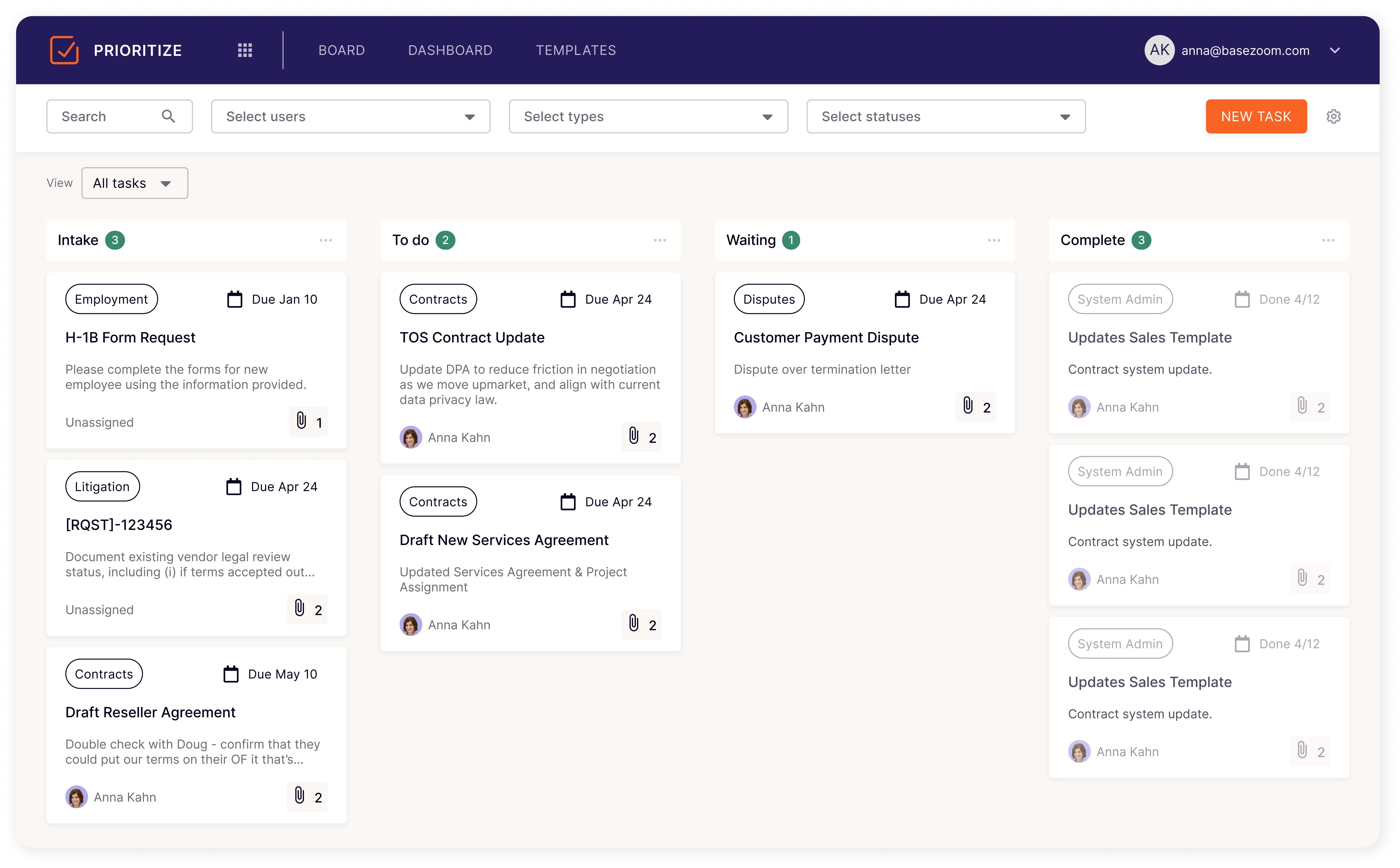
LinkSquares made its name with "Analyze," a powerful tool designed specifically to make sense of messy contract repositories. If your primary problem is a shared drive full of 10,000 unorganized PDFs, LinkSquares is a strong contender for organizing that chaos.
Linksquares Dashboard
Key Analytics Features:
· Smart Values: Automatically extracts key dates, names, and terms from signed PDFs.
· Global Search: Strong OCR capabilities allow you to search for text even within scanned image files.
Pros:
· First-Pass Review: Their "Finalize" product offers a solid first-pass review for pre-signature contracts.
· OCR Quality: Excellent at reading poor-quality scans that other tools miss.
Cons:
· Disjointed Experience: The "Analyze" (Repository) and "Finalize" (Drafting) products can sometimes feel like two different tools glued together.
· Cost: Can be expensive for mid-sized teams, as pricing often scales aggressively.
🗣️ What Users Say (2025 Reviews)
· The Good: LinkSquares holds a strong reputation for mid-market legal teams. Users love the "Analyze" product for cleaning up messy shared drives.
· The Bad: A common complaint in recent reviews is the "upload process time" for executed contracts—it can take time for files to appear in the system. Pricing is also frequently mentioned as being on the higher end ("$$$$$").
3. Ironclad
Verdict:Best for Enterprise-Grade Custom Workflows
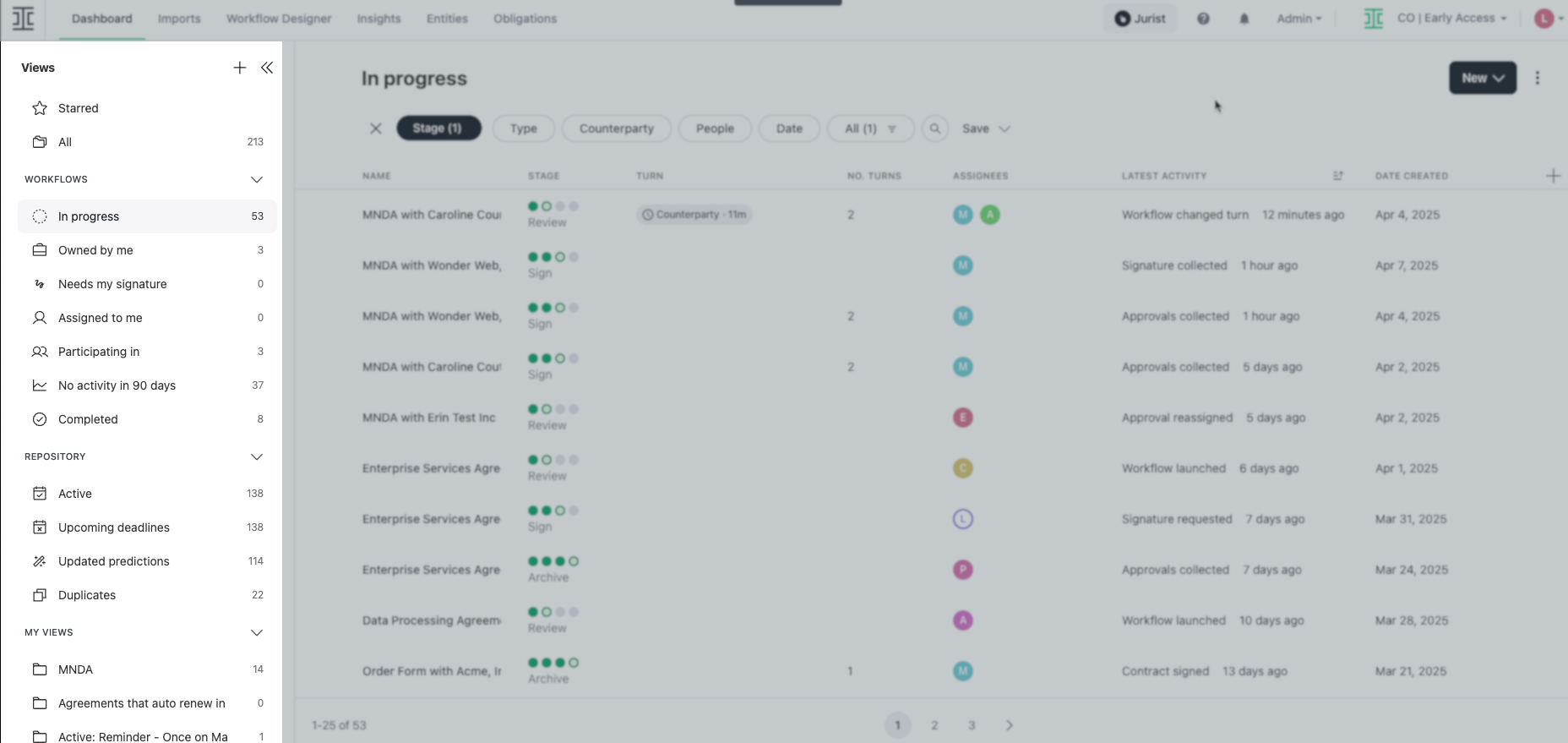
Ironclad is the heavyweight champion for large enterprises (Salesforce, L'Oréal, etc.). It offers deep, highly customizable analytics, but it comes with a trade-off: complexity. Ironclad is best suited for teams that have a dedicated "Legal Engineer" or Operations Manager to build and maintain the system.
Ironclad Dashboard
Key Analytics Features:
· Custom Dashboards: You can visualize almost any data point if you spend the time configuring the widgets.
· AI Assist: A generative AI feature that helps redline clauses based on your previous negotiation history.
Pros:
· Deep Customization: If you have a unique, complex workflow, Ironclad can probably build it.
· Community: Large user base and community ("Ironclad Community") for troubleshooting.
Cons:
· Implementation Drag: Setup often takes 6+ months and requires third-party consultants.
· Maintenance: Changes to workflows or analytics reports often require technical expertise, creating a bottleneck.
🗣️ What Users Say (2025 Reviews)
· The Good: Enterprise users love the "flexibility"—if you can dream up a workflow, Ironclad can build it. It is widely respected as a robust solution for large legal ops teams.
· The Bad: The most frequent complaint is the "steep learning curve." Users report that setting up templates and workflows is heavy and often requires paid external consultants. Some users also felt that new AI features (like Smart Import) sometimes "underdelivered" on accuracy.
4. DocuSign Analyzer (Insight)
Verdict:Best for DocuSign Ecosystem Users
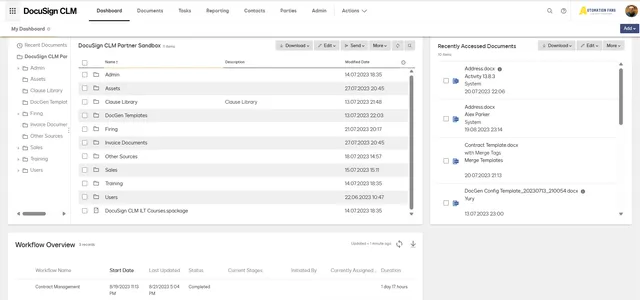
DocuSign Analyzer (formerly Seal Software) is a powerful add-on for teams already deeply invested in the DocuSign agreement cloud. It leverages advanced AI to break down contracts by risk level, using a "traffic light" system (Red/Green/Yellow) to visualize risk.
Docusign Dashboard
Key Analytics Features:
· Risk Scoring: Assigns a risk score to incoming contracts based on your policies.
· Clause Library: Suggests pre-approved replacement language directly within the review window, similar to using contract templates and playbooks.
Pros:
· Ecosystem Fit: If you use DocuSign CLM and eSignature, the data flows seamlessly.
· Visualization: The visual risk scoreboards are excellent for non-legal stakeholders (like CFOs).
Cons:
· Support: Support for non-enterprise tiers is often cited as slow or automated.
· Integration Limits: It can feel clunky if you try to use it with a non-DocuSign storage system or CRM.
🗣️ What Users Say (2025 Reviews)
· The Good: Users appreciate the "trust factor" and security compliance of the DocuSign brand. The signing experience remains the industry standard.
· The Bad: Reviews often cite "hidden fees" and "aggressive upselling" as frustrations. Many users find the advanced CLM features difficult to use without significant training, noting the UI "becomes complex" outside of simple e-signing.
5. Evisort
Verdict:Best for AI-First Contract Intelligence
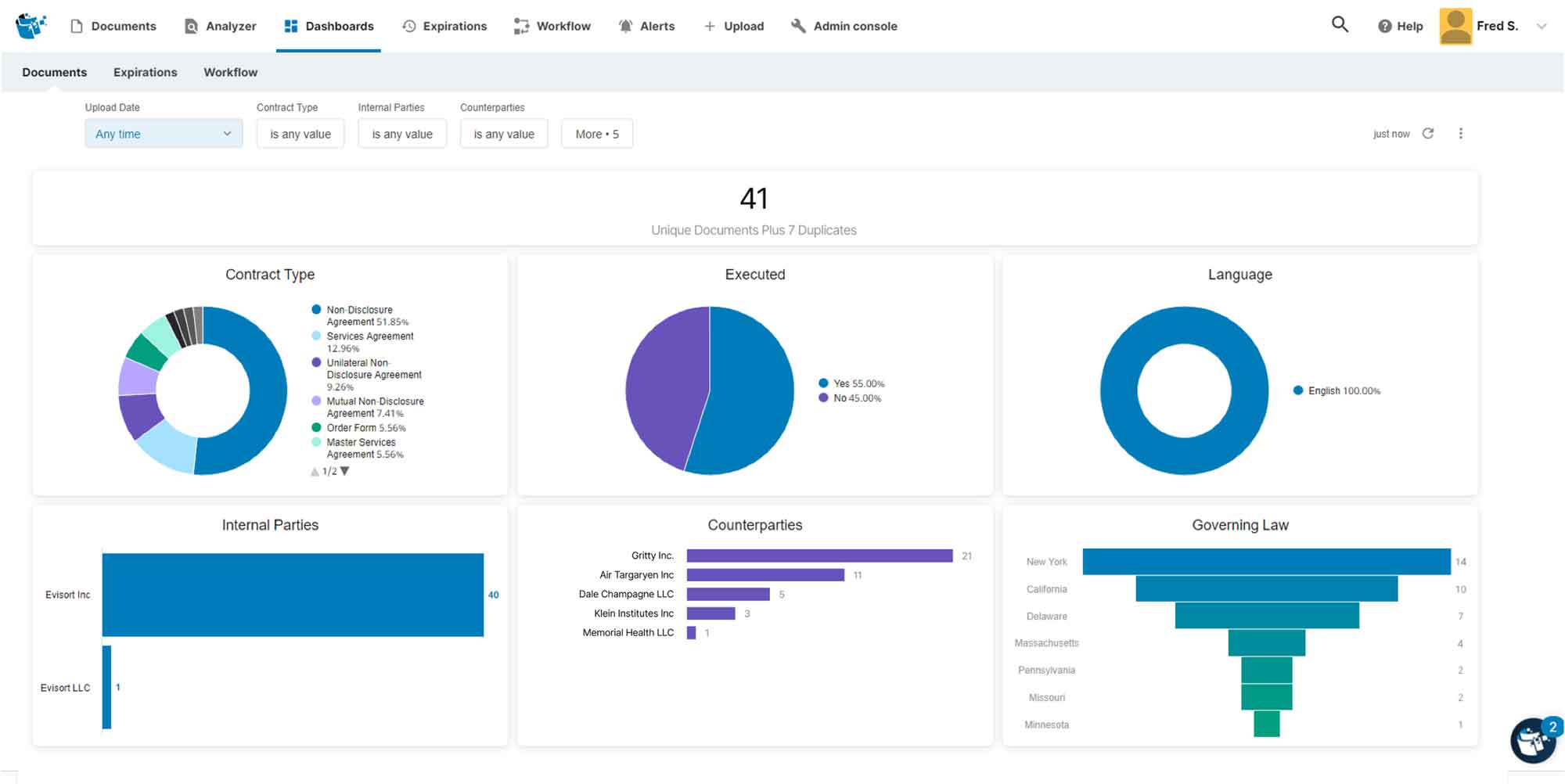
Evisort (now part of Workday) positions itself as an "AI-first" platform. Its unique selling point is that it can connect to your existing storage (Google Drive, SharePoint, Box) and analyze contracts where they live, without forcing you to migrate them into a new repository first.
Evisort Dashboard
Key Analytics Features:
· Intelligent Sync: Ingests data from external folders and keeps the metadata in sync.
· Auto-Classification: Automatically determines if a document is an NDA, MSA, or SOW with high accuracy.
Pros:
· Low Friction Setup: You don't have to move 50,000 files to start getting analytics; just connect the API.
· Workday Integration: Now offers deep integration with Workday financials for spend management.
Cons:
· Drafting Maturity: Its pre-signature workflow tools are generally considered less robust than SpotDraft or Ironclad.
🗣️ What Users Say (2025 Reviews)
· The Good: Users love the "ease of ingestion"—being able to connect to Google Drive and analyze files without moving them is a major plus.
· The Bad: Recent reviews highlight that "pre-signature workflows" (drafting and negotiating) are less mature than competitors. Some users also noted struggles with OCR accuracy on low-quality PDFs.
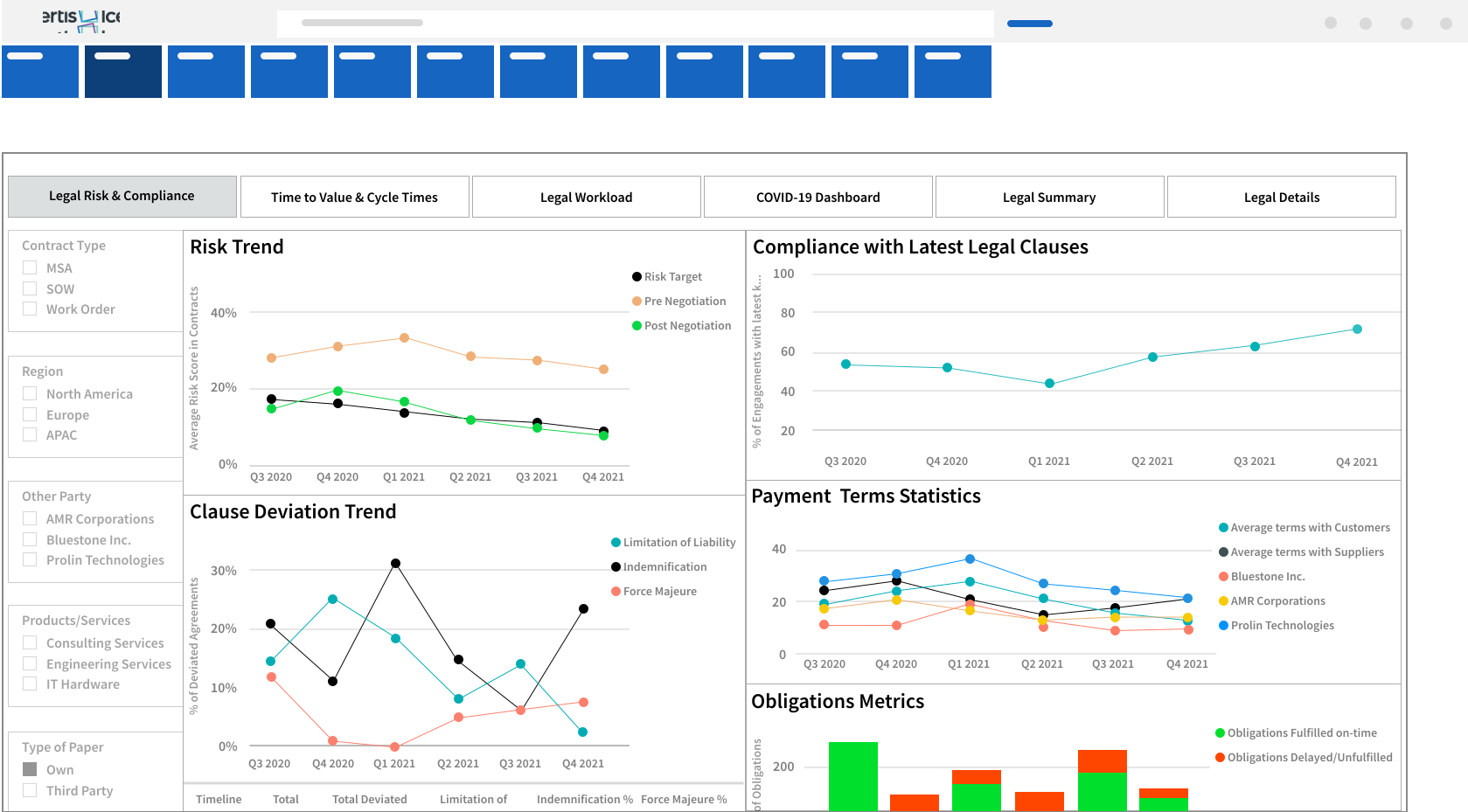
6. Icertis
Verdict:Best for Global Compliance & Governance
Icertis is designed for the world's largest companies with complex supply chains. If you are tracking conflict minerals in manufacturing contracts or GDPR compliance across 40 countries, Icertis is the tool.
Icertis Dashboard
Key Analytics Features:
· Compliance & Risk: Deep analytics specifically for regulatory compliance and supply chain governance.
· Financial Integration: Strong connections to SAP and Oracle for procurement analytics.
Pros:
· Scale: Handles millions of contracts without breaking a sweat.
· Depth: Unmatched granularity for compliance tracking.
Cons:
· UX/UI: The interface is frequently described as dated, "click-heavy," and complex.
· Overkill: For 95% of companies, Icertis is too expensive and too heavy to be practical.
🗣️ What Users Say (2025 Reviews)
· The Good: It is the "Customers' Choice" for Fortune 500 companies. Users praise its ability to handle "mass changes" and bulk updates across thousands of contracts.
· The Bad: Almost universally described as "complex" and "dated." Users report a very heavy implementation process that relies on IT teams, and the UI is often called "unintuitive" compared to modern SaaS tools.
7. Kira Systems (Litera)
Verdict:Best for M&A Due Diligence
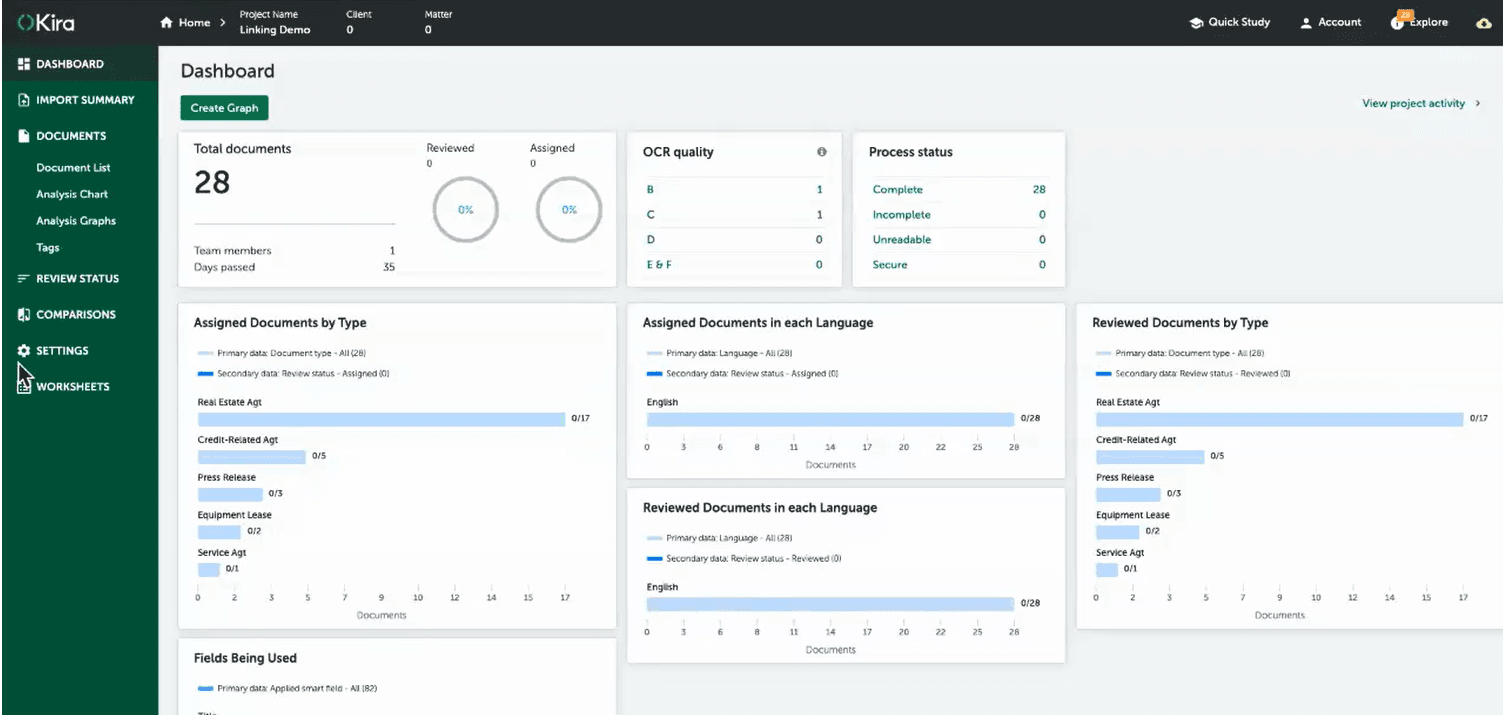
Kira Systems is not a traditional CLM. It is a specialized extraction engine used primarily by law firms during Mergers & Acquisitions (M&A). If you have 5,000 contracts that need to be reviewed in 48 hours for a deal, Kira is the gold standard.
Kira dashboard
Key Analytics Features:
· Clause Extraction: Pre-trained to identify over 1,000+ specific legal concepts (e.g., "Change of Control").
· Comparison: Instantly compares clauses across a massive batch of documents.
Pros:
· Accuracy: Widely regarded as the most accurate tool for strict legal due diligence.
· Law Firm Trust: Used by the majority of the Am Law 100.
Cons:
· One-Trick Pony: It is an analysis tool, not a management tool. You cannot draft, negotiate, or sign contracts within Kira.
🗣️ What Users Say (2025 Reviews)
· The Good: Kira remains the "gold standard" for law firms. Users trust its accuracy implicitly for high-stakes M&A reviews.
· The Bad: It is a "niche" tool. Users looking for a full lifecycle manager (drafting, approvals, repository) will find it insufficient, as it is purely an extraction engine.
Comparison: SpotDraft vs. Others
For most legal teams in 2026, the choice comes down to Speed vs. Scale.
Feature
SpotDraft
Ironclad
LinkSquares
Best For
Speed & Adoption
Enterprise Customization
Post-Sig Analysis
Implementation
4-6 Weeks
6-9 Months
3-5 Months
AI Architecture
Unified (End-to-End)
Workflow Focused
Repository Focused
Sales Adoption
High (CRM Native)
Medium
Low/Medium
Support
24/7 Included
Tiered / Paid
Standard Business Hrs
Why SpotDraft Wins on "Actionable" Analytics:
Many tools (like LinkSquares) are great at telling you what went wrong in the past. SpotDraft's analytics are designed to tell you what to do now to prevent risks and close deals faster.
Buyer's Guide: Frequently Asked Questions
Frequently Asked Questions
What is the difference between CLM and Contract Analytics?
Can AI actually review contracts?
Related content
latest
Top 12 Conga Competitors & Alternatives for Contract Management
Compare 12 Conga competitors & alternatives for contract management in 2026 by use case, workflows, migration, and fit for your Conga setup.
“Before using SpotDraft, executing a contract would take up to weeks. Now, contracts are signed within minutes, with better data security and tracking. The whole process takes us less than a day!”
Arti Singh
Founder’s Office, Growth, UrbanVault
“Before using SpotDraft, executing a contract would take up to weeks. Now, contracts are signed within minutes, with better data security and tracking. The whole process takes us less than a day!”