What is a CLM RFP template?
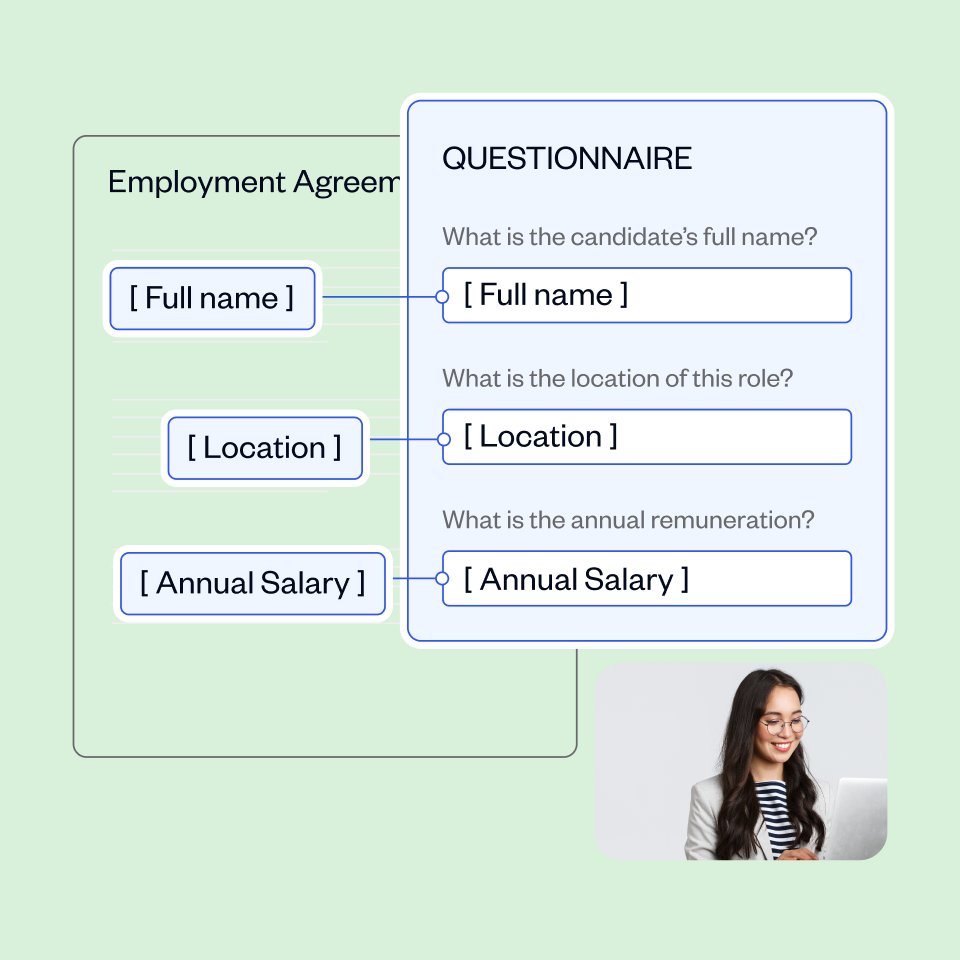
A CLM RFP template is an objective way to evaluate various contract lifecycle management vendors. A well designed template scores across implementation, function, AI, integrations, security and pricing. This ensures there is no room for ambiguity, all vendors are evaluated in a structured, consistent manner. It also allows evaluating teams to go deeper than a polished demo, allowing the highest chance of adoption and actualized value.
There is no dearth of information, what seems to be lacking is a functional way to compare features and their application, in context to existing challenges.
Get a personalized demo on your contracts and context today.
Best practices of running a CLM evaluation
- Shortlist up to five vendors. Excessive demos are time intensive and can cloud judgment.
- Share a consistent questionnaire and expect written answers. This reduces sole dependency on verbal demos.
- Prioritize your wants and score written answers pre-demo. This sets the tone and eliminates deviation toward unwanted feature deep dives.
- Always run demos on your actual workflows. A polished demo may not cover your reality.
- Confirm total cost of ownership. Add-ons and tiers are often masked in demos and quickly add up.
Common CLM RFP mistakes to avoid
- Entertaining too many vendors.
- Using an un-weighted generic template.
- Settling for unclear total cost of ownership breakdowns.
- Skipping reference calls.
Domain led CLM RFP questions
This extensive, expertly crafted template spans over 150+ questions across various domains. You can find a shortlisted version containing the highest signal questions below:
Implementation:
- Is implementation run by your team or a third-party consultant with additional billing expectations?
- What is a typical go-live timeline?
- Is data migration of legacy contracts included?
- Is a dedicated CSM provided? If yes, is this part of the base plan or a premium add-on?
- What are guaranteed response times?
- Is training and support included? If yes, is this part of the base plan or a premium add-on?
Function:
- Does the CLM span the entire contract lifecycle? (Intake, drafting, negotiation, approval, signature, storage and renewal)
- Are all the stages native or dependent on a third-party tool? If the latter, do they include any add-on charges?
- Is full text and metadata search across contracts and PDFs and images offered?
- Is there an option to build custom templates?
- Is there an option to build a reusable, access-controlled clause library?
- How are workflows configured?
- Are conditional, parallel and sequential routing with escalation and OOO delegation supported?
- Can teams self-serve standard contracts without leaving their own tools?
- How is renewal and obligation tracking set-up?
- How are alerts triggered?
AI Capability:
- Is AI desktop native or available on mobile too?
- Can the AI learn from our contracts and playbook or is it a generic model?
- Can it review counterparty redlines? If yes, can it perform inside Microsoft Word or is it restricted to your CLM?
- Which of these does the AI extract automatically: parties, dates, values, obligations, liability caps?
- How many fields is this spread across?
- How do you handle AI accuracy and hallucination?
- What features cater to human review post AI involvement?
Integrations:
- How many integrations are offered in total? How many are native? How many are third-party?
- Does the CLM integrate natively with our CRM (Salesforce, HubSpot), cloud, Slack, Teams (and so on)?
- Does an open API exist? What is and what isn’t exposed through it?
- Are eSignatures native or offered via a third-party tool? Are they unlimited or billed per envelope?
Security:
- Do you hold a SOC 2 Type 2 certification?
- Do you hold an ISO 27001 certification?
- How is data encrypted at rest and in-transit?
- What regions is hosting offered in?
- Describe your data residency, retention and deletion policy.
- Is role-based access control offered?
Pricing:
- Is pricing all-inclusive? If no, what isn’t included or locked behind paid upgrades?
- Are paid seats required for viewers and approvers?
- Does pricing scale when new users need to be added or when contract volume surges?
- What AI features are included and which are locked behind paid upgrades?
Specifics to look out for and red flags to avoid
Grey areas start popping up when specifics are not chased. This breakdown enables you to demand clarity.
| Question |
Red flag |
What a strong answer looks like |
| Is e-signature included? |
We integrate with “a third-party tool”.
Follow up with: Is signing billed per envelope, separately by a third-party?
|
Native, unlimited, no per-signature or per-envelope charge. |
| Who runs implementation? |
Our certified partner network.
Follow up with: What does that cost, and how long does it take?
|
Our in-house team that takes things live in about 6 weeks at no additional cost. |
| Is AI trained on our playbook? |
Our AI is very advanced.
Follow up with: Does it learn from our contracts, or is it generic?
|
Yes, trained on your templates and playbook from day one with the ability to redline in Word. |
| Is data migration included? |
We can scope that for you.
Follow up with: As an added cost, or included?
|
Yes, we migrate and OCR your legacy contracts as part of onboarding. |
| Do viewers need a paid seat? |
Our sales team will be able to help.
Follow up with: Can you give the answer in writing?
|
No, viewers and approvers are free; you only pay for power users. |
| What is the price at renewal? |
We extend custom pricing.
Follow up with: What changes at renewal and what modules are billed separately?
|
Here is a clear structure tied to users or volume: |
Questions to uncover hidden costs
Vendors with similar headline pricing can translate into a massive difference when it comes down to total cost of ownership. Use the below grid to skip surprises:
| Is implementation included or billed additionally? |
Are eSignatures billed per envelope via a third party tool? |
Is legacy data migration included or billed additionally? |
| Do viewers and approvers require paid seats for access? |
What AI features are offered in the base plan and are there any usage limits? What are locked behind paid upgrades? |
Can the renewal uplift be defined? |
Build your scorecard
The first step is to weigh each criterion based on your organization's needs and priorities. The following scale can be utilized:
1-2: Does not meet expectations
3: Average
4: Strong
5: Exceeds expectations with clear evidence
The below system is a sample and can be re-ordered based on priority.
| Criteria |
Weight |
Vendor A |
Vendor B |
| Implementation |
25% |
|
|
| Function |
20% |
|
|
| AI |
15% |
|
|
| Integration |
15% |
|
|
| Security |
15% |
|
|
| Pricing |
10% |
|
|
Once locked, multiply weight by scores. Example, if Vendor A scores 4 on implementation (weight 25%) it contributes 1.00 to its weighted total.
Across multiple demos and presentations, this system emerges with an objective answer based on application as opposed to demo quality.
Why SpotDraft consistently scores well
A well-designed CLM RFP rewards specifics. SpotDraft offers rapid, in-house implementation that takes up to 6 weeks as opposed to months. Native, unlimited eSignature, a dedicated CSM with 24/7 global support at no added cost. Its context rich AI is trained on your playbook from the first day and reviews redlines against your playbook inside Microsoft Word. Smart Data Capture extracts over 1,000 field types. Robust certifications and data-residency details can be accessed in the Trust Center. Transparent pricing ties everything together.
Book a personalized demo and put SpotDraft through your own RFP.