13 Best Workday CLM/Evisort Competitors and Alternatives in 2026

Huzaifa Sultana is a Marketing Associate at SpotDraft focusing on Organic Growth through SEO and AEO.
Evisort is no longer a standalone CLM company. Workday acquired Evisort on October 8, 2024, and its technology now powers Workday Contract Lifecycle Management, powered by Evisort AI. The current product covers contract requests, drafting, negotiation, approvals, execution, search, contract intelligence, and post-signature management.
That changes what teams are comparing when they search for Evisort competitors in 2026. If your company already uses Evisort or Workday CLM, you need to know whether the CLM software still fits your legal operations, approval rules, connected business tools, and contracting process outside Legal.
This guide compares 13 Workday CLM alternatives across contract review, workflow configuration, contract intelligence, integrations, implementation, migration, administration, and business-user adoption. If SpotDraft and Workday CLM are already on your shortlist, the direct SpotDraft vs. Evisort comparison takes a closer look at the two platforms.
See SpotDraft with your own contract workflows
Buyers consider Evisort competitors when they want a different CLM solution for workflow configuration, contract review, integrations, contract intelligence, implementation, or pricing.
Workday CLM already supports work across the entire contract lifecycle, including AI-powered workflows, automated redlining, clause libraries, contract templates, Ask AI, custom AI models, advanced search, dashboards, and integrations. So the useful question is whether those capabilities fit the contracts, approval rules, systems, and users your team already has.
Workflow configuration becomes a key comparison point when approval workflows take different routes based on contract type, deal value, entity, region, risk level, or another business rule.
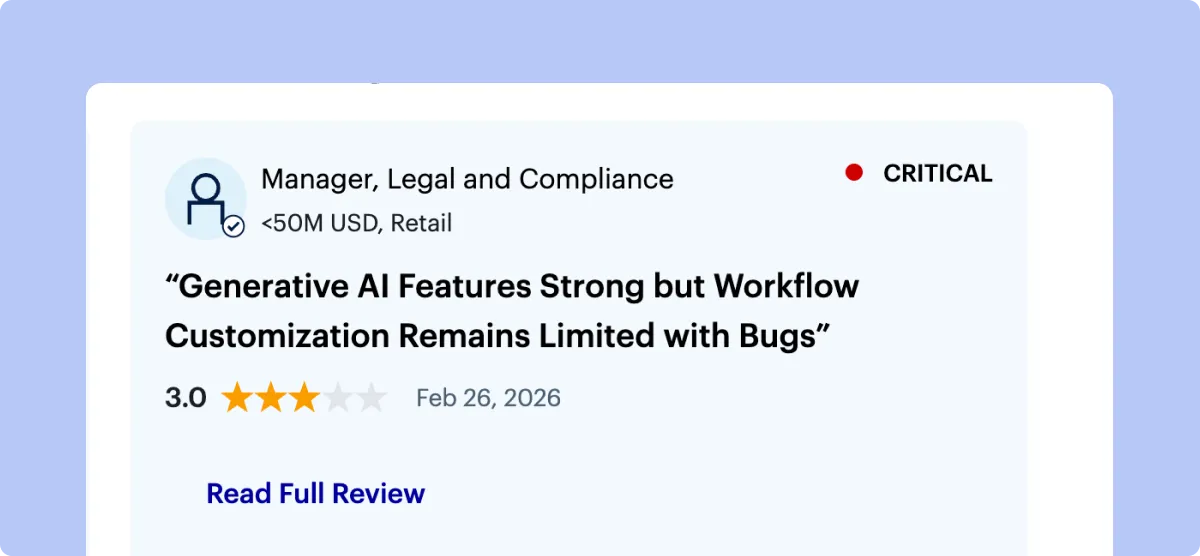
One February 2026 Workday CLM review gives a concrete example. The reviewer said the workflow and approval build-out lacked the customization their team needed, so they relied on workarounds. They also described AI training as requiring substantial work, returning limited results during training, and reported numerous bugs. This is one customer’s experience, so use it as a test case rather than a universal Workday limitation.
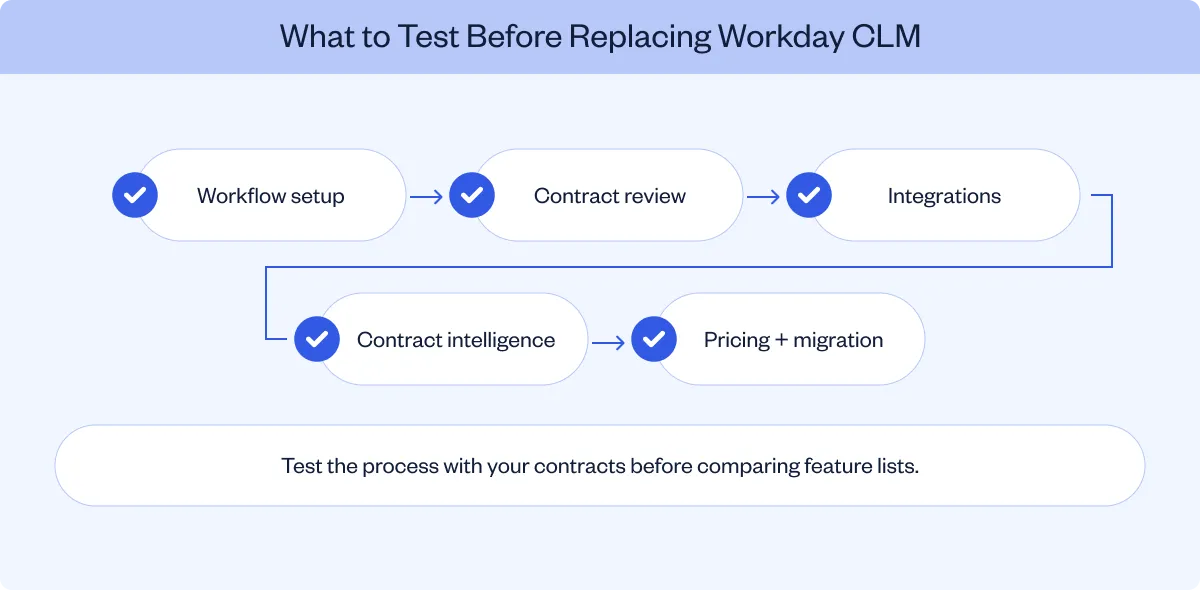
During evaluation, rebuild one of your current Workday CLM workflows from scratch. Include the request form, conditional routing, reviewers, approvers, permissions, signature steps, and at least one exception so you can test the full approval process with the right stakeholders. Then change one of the rules and see whether Legal Ops can handle the update without vendor or technical support.
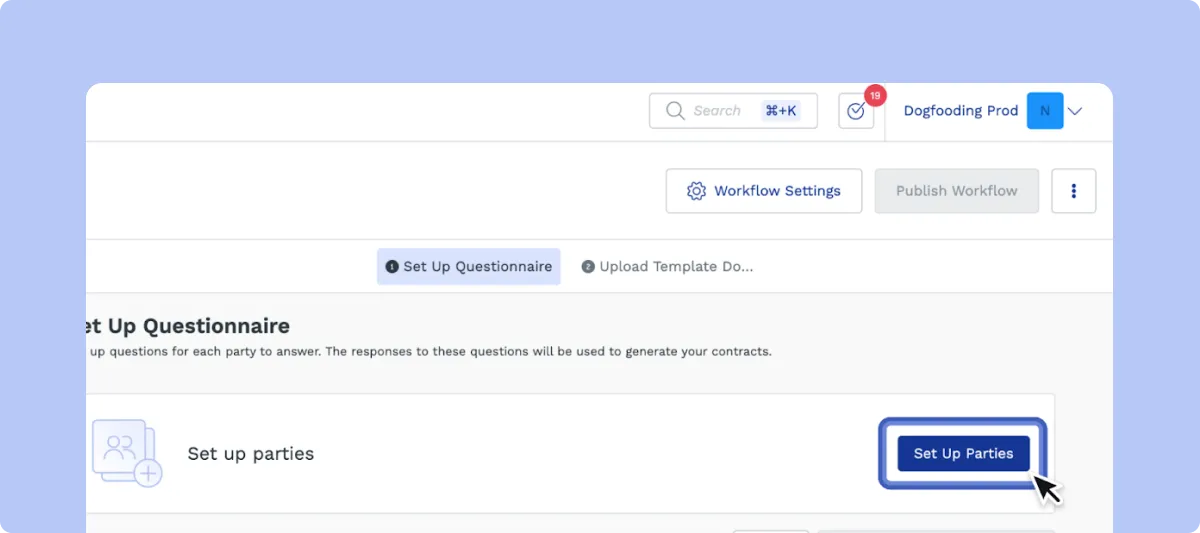
SpotDraft’s Workflow Manager provides a no-code environment for template and third-party-paper workflows. Recreate the same process in each platform and compare how workflow changes, permissions, approvals, and exceptions are administered.
Contract editing and version control should be tested from the first third-party draft through internal review, counterparty redlines, approvals, and contract execution.
Workday CLM currently supports automated redlining, edits, tracked changes, version comparisons, and AI-assisted drafting and negotiation. When comparing Workday CLM competitors, run the same non-standard agreement through each platform and check Microsoft Word support, internal comments, version history, approval resets, permissions, and how the latest counterparty version returns to the process.
This shows how lawyers will actually work after implementation. A product can support contract review while still introducing extra downloads, uploads, version checks, or editor switches that add manual processes and extend cycle times.
Integration testing should follow an actual contract workflow from the business system into Legal and back again.
Workday CLM has native integrations with Docusign and Adobe Sign for e-signature, repositories including SharePoint, Box, and Google Drive, and Salesforce for CRM workflows. Other systems can connect through its REST API. Its Salesforce connector supports two-way synchronization between Salesforce and Contract Management and Document Intelligence.
So, if Sales starts an agreement from Salesforce, check which fields populate the contract, whether contract status flows back, where the signed agreement is stored, and which system remains the source of truth.
SpotDraft takes the same workflow-level approach to CRM integrations. Teams can create contracts from Salesforce or HubSpot, populate deal information, and request approvals without leaving the connected system, while Legal controls the template and workflow behind the process.
Contract intelligence and metadata extraction should be tested against the documents already sitting in your repository.
Workday Contract Intelligence supports OCR, Custom AI, Ask AI, search, contract-data extraction, and synchronization with repositories and Salesforce. Workday specifically documents OCR support for scanned PDFs and image formats, making legacy documents an important part of the proof of concept.
Use older agreements, amendments, image-based PDFs, unusual clauses, and inconsistent formatting during evaluation. Then check what happens after extraction. Legal still needs to validate important information, correct it where necessary, search across agreements, report on it, use it for obligation tracking and risk management, and control access to the resulting data.
No self-serve Workday CLM rate card was found on the vendor site; its public product pages direct buyers to contact Sales. Compare quotes only after giving each vendor the same contract volume, users, integrations, AI requirements, implementation scope, and migration scope.
Ask every shortlisted vendor to price the same contract volume, user requirements, integrations, AI use cases, implementation work, and migration scope so you can compare total cost on equivalent inputs. SpotDraft uses either user-based or contract-volume pricing. Its public pricing page states that in-house implementation, workflow and integration setup, and legacy-contract migration are included. Confirm the customer success and support coverage included in the applicable proposal or Order Form.
The 13 Evisort competitors below address different parts of the replacement decision. A Legal-led team may prioritize an end-to-end contract management solution, while enterprise organizations may place more weight on integrations, post-signature performance, Salesforce workflows, or vendor management.
Here is a quick view of where each platform belongs on the shortlist.
.webp)
SpotDraft is built primarily for in-house Legal teams that want contract automation across creation, approvals, execution, repository management, reporting, and business self-service in one CLM. It fits teams that want Legal to define the process while Sales, Procurement, Finance, HR, and other departments complete routine contract work within those rules.
Key features
Here are the capabilities most relevant to an Evisort replacement:
Limitations
Before shortlisting SpotDraft, check these boundaries:

.webp)
Ironclad is an enterprise CLM built around configurable contract workflows, repository management, AI, and cross-functional contracting. It is particularly relevant when Legal Ops wants extensive control over different agreement processes and needs configurable workflows, integrations, and enterprise deployment options. Teams that expect heavy API, integration, or AI-agent usage should price those requirements before comparing the platform with other Evisort competitors.
Key features
Here are the capabilities to examine during evaluation:
Limitations
The main commercial boundaries to check are:
For a closer comparison of the two approaches, see SpotDraft vs. Ironclad.
.webp)
Sirion is most relevant when contracts drive substantial operational work after signature. Its Manage layer connects obligation management and SLAs with performance and financial data, making it particularly relevant for enterprises that need contract-performance management alongside core contracting. A Legal team mainly replacing drafting, approvals, and repository workflows should first define whether those post-signature performance and financial workflows are part of the replacement project.
Key features
Here are the capabilities that distinguish its scope:
Limitations
The main fit questions are:
See SpotDraft vs. Sirion for a direct comparison.

Icertis is designed for enterprise contract operations across Legal, Procurement, Sales, Finance, and major business systems. It fits large organizations that want contract data connected with platforms such as SAP, Salesforce, Microsoft, and Workday. A narrower Legal-only replacement should define the exact modules and integrations required before evaluating the wider enterprise platform.
Key features
Here are the capabilities most relevant to an Evisort migration:
Limitations
The evaluation should account for these boundaries:
For more enterprise alternatives around this category, see SpotDraft’s Icertis competitors guide.
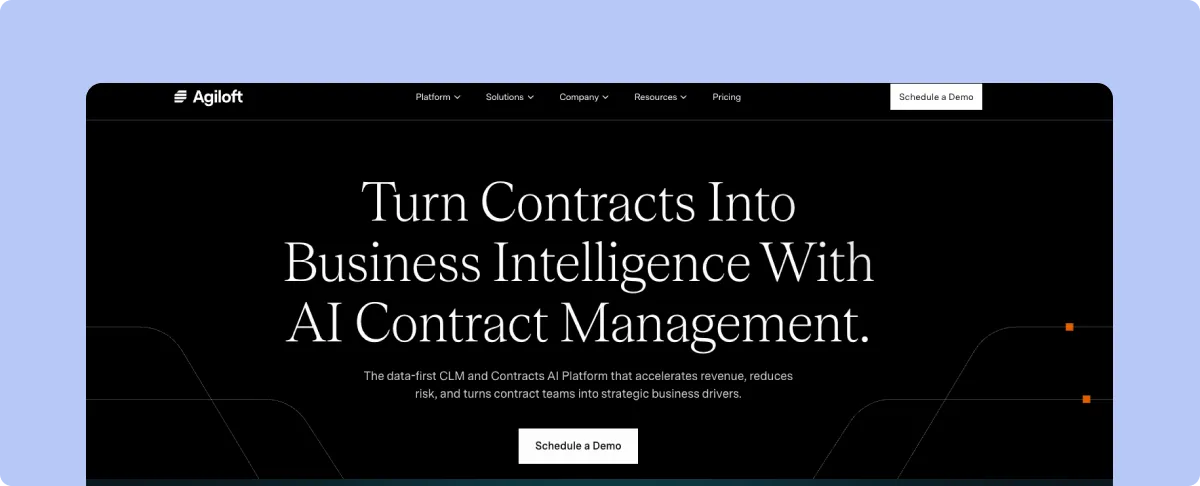
Agiloft is a good fit when the existing contract process contains detailed approval rules, custom data structures, and workflows that need extensive configuration. Its no-code model gives business administrators substantial control, while its integrations connect the CLM with a broad enterprise stack. During evaluation, compare that flexibility with the configuration, integration, and migration scope in your proposed deployment.
Key features
Here are the main capabilities to evaluate:
Limitations
The main implementation consideration is:
Compare SpotDraft using your current workflows
.webp)
Docusign CLM is most relevant for organizations that already use Docusign eSignature or run sales contracting closely through Salesforce. Its CLM product extends the agreement process into contract generation, collaboration, workflow automation, repository management, and AI-assisted contract data. Buyers should keep CLM and the better-known Docusign eSignature product separate during commercial comparison.
Key features
Here are the capabilities worth testing:
Limitations
The main purchasing questions are:
See SpotDraft vs. Docusign CLM for the direct comparison.
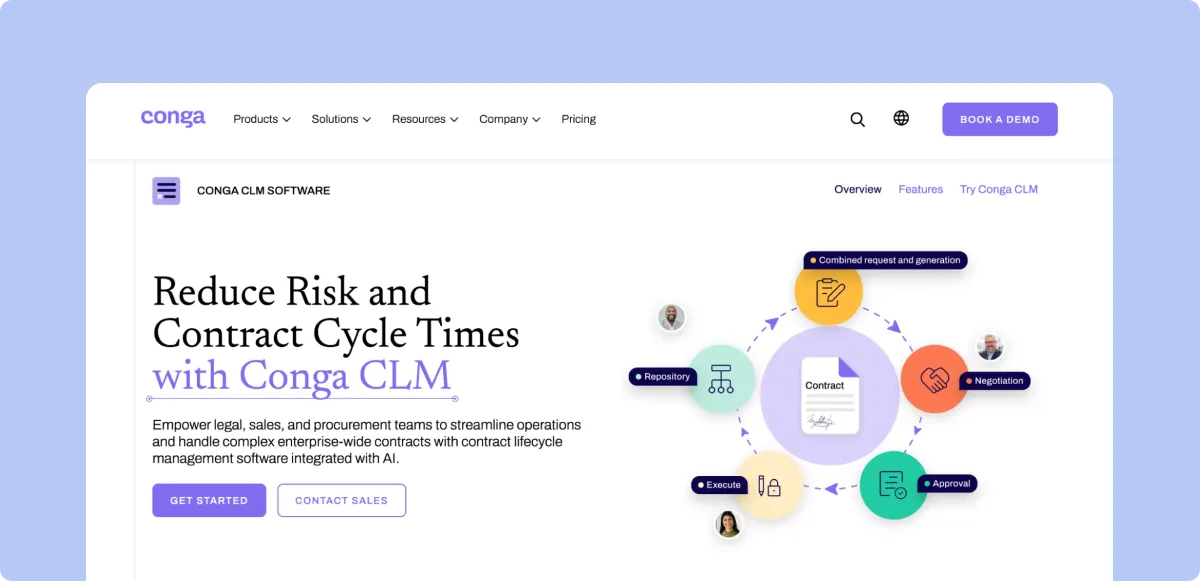
Conga CLM fits organizations where contracts sit inside broader Salesforce and commercial processes. However, buyers need to identify which Conga architecture they are evaluating. Conga’s current Advantage Platform integration embeds CLM inside Salesforce Lightning, while contract data remains on the Advantage Platform and Workato handles synchronization. That architecture deserves particular attention during a migration from Evisort.
Key features
Here are the relevant capabilities:
Limitations
The current Salesforce integration has some specific boundaries:
Once Conga reaches the pricing stage of your shortlist, SpotDraft’s Conga CLM pricing guide breaks down the commercial model separately.

LinkSquares is a useful option for Legal teams that want pre-signature contract work connected with a repository and post-signature analysis. Much of that journey runs through Finalize for active agreements and Analyze for completed agreements. Teams leaving Evisort should test document management across those products, especially what moves between Finalize and Analyze when the existing repository relies on related contracts, attachments, and editable metadata.
Key features
Here are the main capabilities to compare:
Limitations
The Finalize-to-Analyze handoff has documented boundaries:
For the wider product comparison, see SpotDraft vs. LinkSquares.
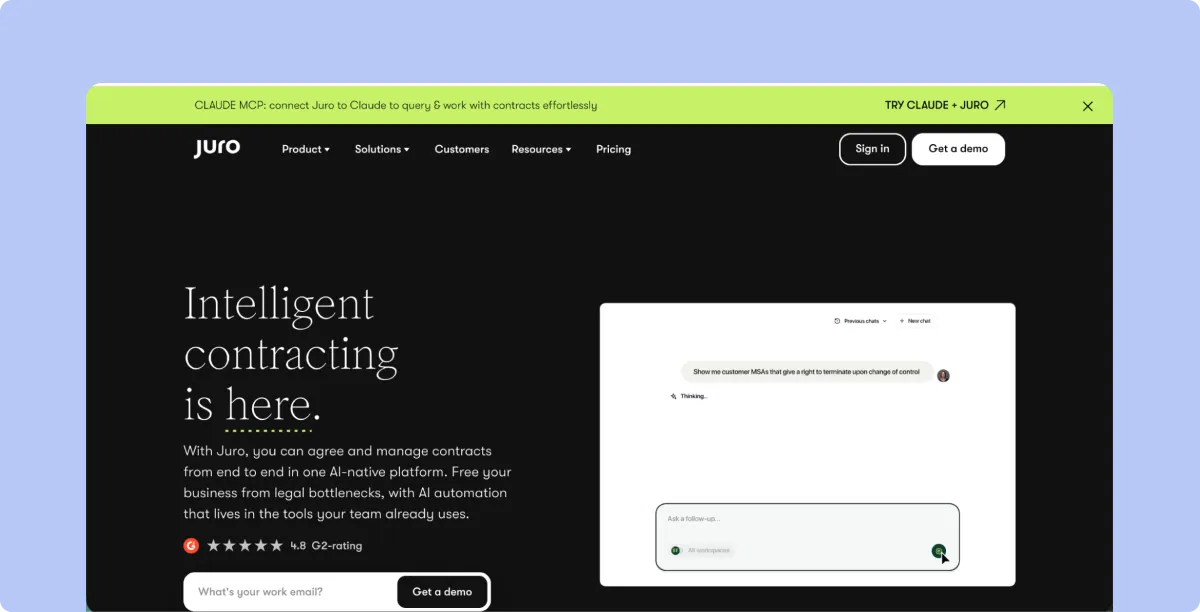
Alt: Juro intelligent contracting platform with digital contract workflow interface
Juro is an end-to-end contract platform suited to Legal-led teams that want broad business participation without pricing every occasional participant as a separate user. All current Juro plans include unlimited users, workflows, and templates, while the quote is shaped by contract volume and integration complexity.
Key features
Here are the capabilities most relevant to an Evisort replacement:
Limitations
The commercial boundaries are straightforward:
For a direct product comparison, see SpotDraft vs. Juro.
Run your contracts through SpotDraft
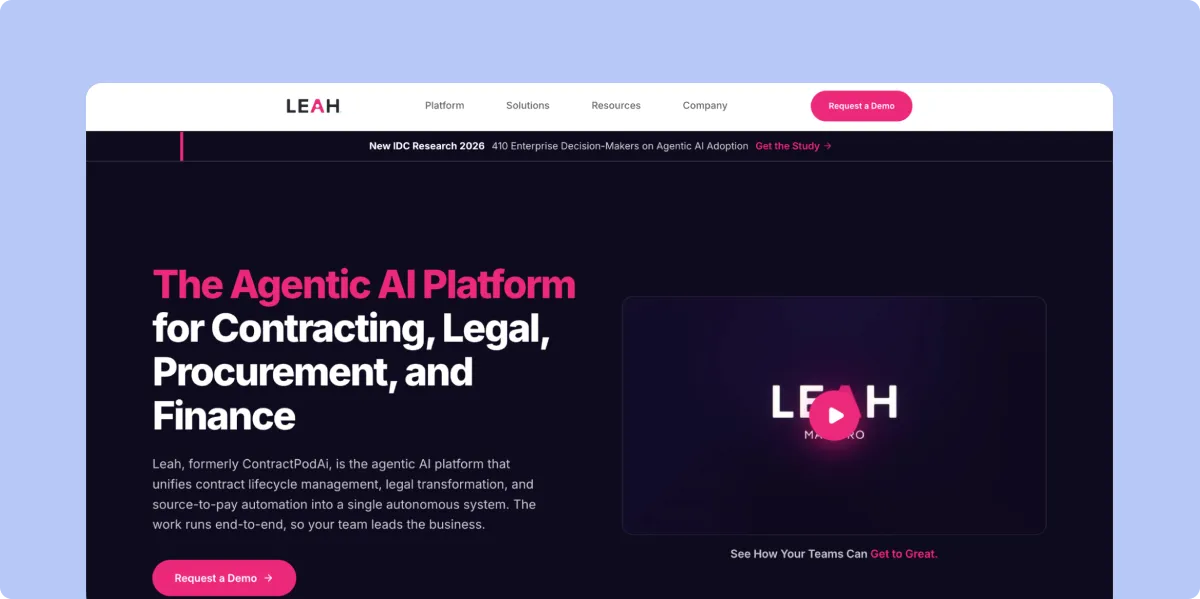
Leah, formerly ContractPodAI, has shifted its positioning beyond conventional CLM. In September 2026, the company launched Leah Contracting on Leah Maestro and described the product as an agentic system for enterprise contract work. That makes it relevant when the buying project extends beyond conventional generative AI assistance into broader AI orchestration across Legal, Procurement, Finance, and other teams. Buyers seeking a conventional CLM replacement should first understand how their existing workflow maps to the new product direction.
Key features
Here are the main areas to evaluate:
Limitations
The main evaluation questions follow from that repositioning:
SpotDraft’s ContractPodAI alternatives guide provides a wider shortlist around this category.
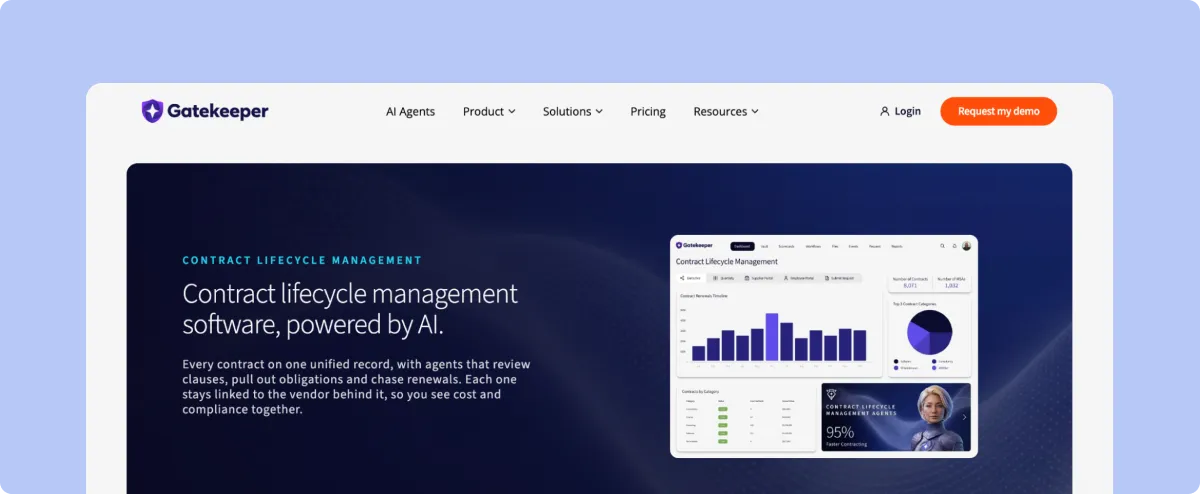
Gatekeeper combines contract lifecycle management with vendor management, third-party risk, spend, renewals, and supplier performance. It is most relevant when procurement teams and Legal share responsibility for the replacement project and want contract records connected directly with vendor data. A Legal-only team focused mainly on drafting and negotiation should decide how much of that wider vendor-management layer belongs in the project.
Key features
Here are the capabilities that shape its fit:
Limitations
The main scope questions are:
Malbek fits cross-functional teams that want Microsoft Word to remain central to contract authoring and negotiation while the CLM connects with a broader business stack. Its current integration catalog lists more than 50 integrations across CRM, ERP, Procurement, e-signature, identity, storage, and other systems.
Key features
Here are the capabilities worth testing:
Limitations
The integration architecture needs practical testing:
HyperStart is relevant for growing and mid-market teams evaluating implementation speed and a pricing model based on either users or contract volume. Its current pricing page says customers are priced by either users or contract volume, never both at once, and that workflows, integrations, and contract migration are included in implementation.
Key features
Here are the commercial and deployment points to compare:
Limitations
The main checks are:
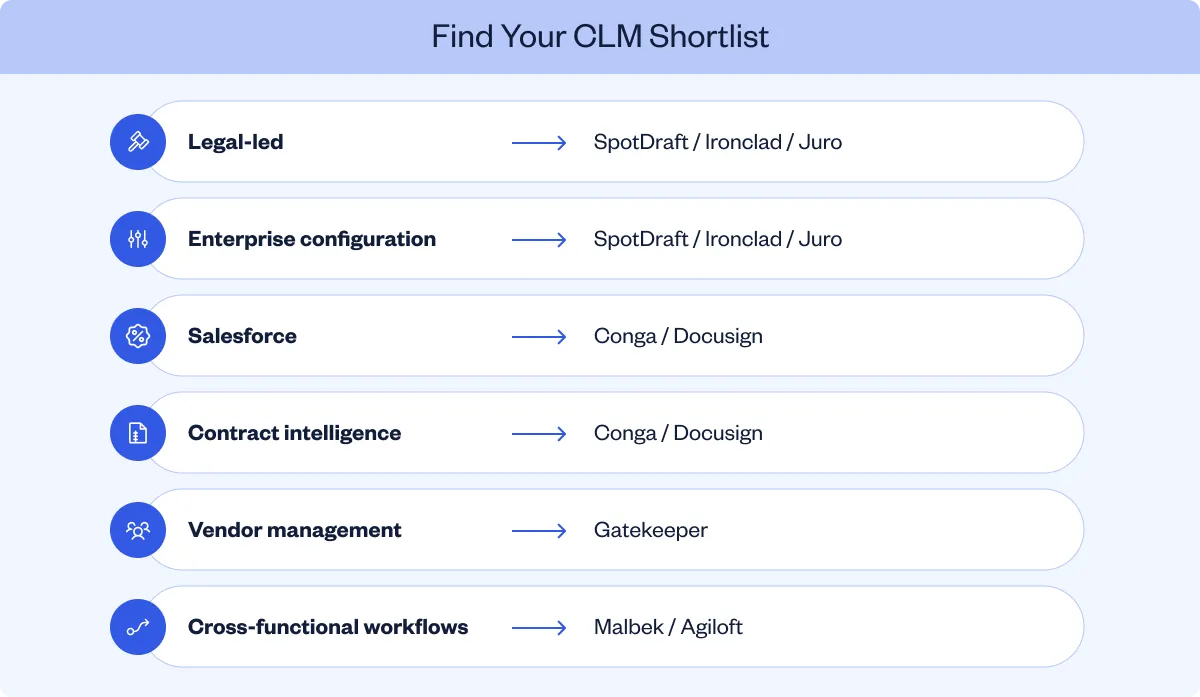
SpotDraft, Ironclad, and Juro are useful starting points for Legal-led end-to-end contracting, while Icertis, Agiloft, and Sirion fit evaluations with broader enterprise configuration or post-signature requirements. Salesforce-centered teams should examine Conga CLM and Docusign CLM more closely, while Gatekeeper becomes more relevant when vendor management sits inside the same project.
Here is a simpler way to narrow the 13 Evisort competitors by specific needs before testing each Workday CLM competitor in product demonstrations.
Once the shortlist is smaller, give each vendor the same agreement, approval chain, integration requirements, and migration sample. That exposes differences in workflow behavior and administration that are difficult to see when every vendor demonstrates its own ideal use case.
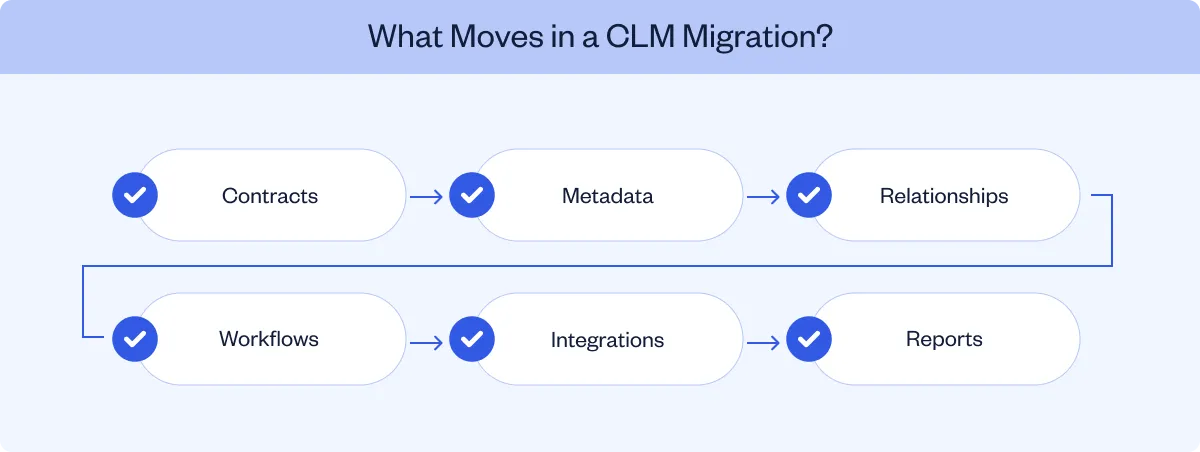
Before replacing Evisort or Workday CLM, identify what has to move, which processes need to be rebuilt, and which historical information must remain accessible after the old platform is retired.
Map executed agreements, amendments, attachments, current contract storage locations, custom fields, extracted metadata, contract relationships, dashboards, saved searches, and information that feeds other business systems.
Then create a representative migration set. Include standard agreements alongside amendments, old scans, contracts with custom metadata, and records with incomplete information. That shows which data transfers directly, what requires field mapping, and where records need validation before the full repository moves.
SpotDraft includes legacy-contract migration in implementation. Once those agreements enter the Repository, teams can search full contract text and metadata, build custom views, link related agreements, apply access controls, and schedule reports.
For the preparation stage, use SpotDraft’s legacy contract migration guide and contract data migration guide.
Document the logic behind each important workflow before rebuilding it.
That includes request questions, templates, contract variables, approval thresholds, permissions, internal reviews, signing rules, and exceptions. Test one routine agreement and one exception-heavy contract during the proof of concept. The routine contract shows how everyday work feels; the second reveals how the system handles the situations that usually need Legal involvement.
SpotDraft’s contract workflow tools let Legal build the workflow without code, while questionnaires give business teams a structured path into the process. Conditional assignment can also route an approval according to variables such as department, contract value, or region.
List the contract information your team actually uses before comparing AI extraction.
Renewal dates, liability caps, governing law, payment terms, notice periods, security obligations, data-processing language, and company-specific fields give you a more useful test than generic metadata. Run the same documents through every shortlisted Workday CLM alternative, then compare extraction, validation, search, reporting, and access controls.
This also prevents a clean vendor demo dataset from masking migration problems. If old scans and amendments make up part of the existing repository, they should be in the proof of concept too.
Run one third-party agreement through the complete negotiation cycle.
Check Microsoft Word support, tracked changes, internal comments, counterparty versions, document comparison, approval resets, permissions, and the handoff into signature. If lawyers already spend most of their negotiation time in Word, count how often they need to download, upload, or reconcile contracts outside their normal editing environment.
The test should end with the executed agreement in the repository so you can see whether negotiation history, final metadata, and contract relationships stay connected.
Map every system that sends contract information into Workday CLM or receives data from it.
For each CRM, ERP, Procurement, e-signature, storage, collaboration, or custom connection, document the same information before talking to vendors:
This is why an integration name by itself says very little. Conga’s current Salesforce integration, for example, uses Salesforce as the interface, Workato as middleware, and the Advantage Platform as the store for contract data.
Check who can change templates, contract fields, approval logic, permissions, reports, and workflows after implementation. For Legal Ops, ease of use here comes down to whether routine changes can be handled without unnecessary escalation.
The launch configuration only represents the process you have today. Finance can introduce another approval threshold, Sales can create a new agreement type, or Legal can update a clause position six months later. Legal Ops needs to know whether those changes can be handled internally and which ones require support or professional services.
Ask every shortlisted Evisort competitor to make one workflow change during the evaluation. That simple exercise exposes the day-to-day administration model much faster than another feature demonstration.
Confirm who owns field mapping, contract imports, data validation, workflow configuration, integration setup, testing, migration errors, and customer support after go-live before signing the new CLM agreement.
SpotDraft handles implementation in-house and includes workflow setup, integration setup, and legacy-contract migration. Buyers can use that published scope as a baseline when comparing who owns configuration, migration, integrations, testing, and other transition work in each vendor proposal.
The current vendor term also needs to be part of the plan. SpotDraft’s switching program lets eligible teams build a transition roadmap and go live before the existing CLM contract expires.
Build your CLM migration plan with SpotDraft
Test the user experience with the people outside Legal who request, approve, or look up contracts. Ask sales teams, Procurement, Finance, or HR to complete the same tasks they handle today.
Ask Sales, Procurement, Finance, or HR to request an agreement, supply the required information, complete an approval, check its status, and find the signed contract afterward. If those actions require repeated Legal intervention, users can end up falling back to email, Slack, shared drives, and manual follow-ups.
SpotDraft’s Contract Templates use questionnaires and conditional logic so business teams can start approved agreements while Legal retains control over the language and workflow. The same template workflows can connect with Salesforce and HubSpot to reduce duplicate data entry.
SpotDraft is particularly relevant when an in-house Legal team wants migration, implementation, Legal-controlled workflows, business self-service, and ongoing contract management handled as one connected transition.
Implementation is handled in-house and includes workflow setup, integrations, and legacy-contract migration. Confirm the customer success and support coverage included in the applicable proposal or Order Form.
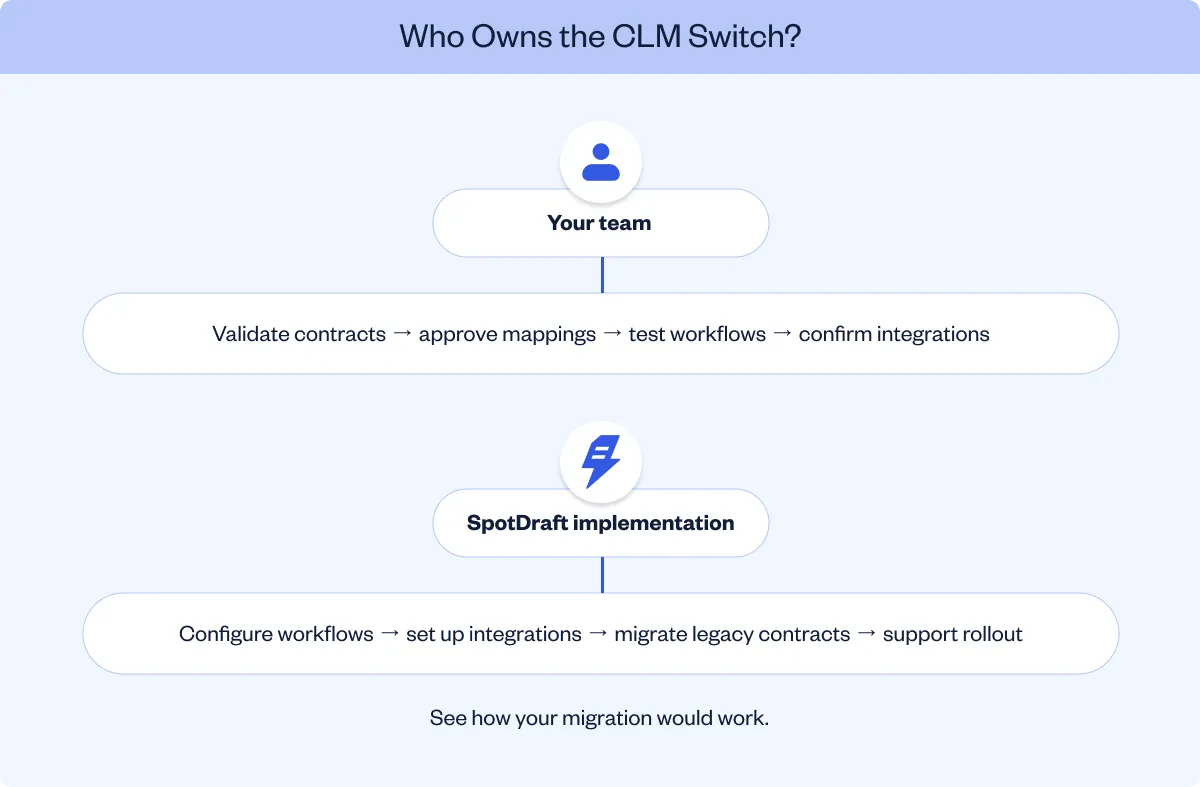
After launch, Legal can maintain approved templates, questionnaires, conditional approvals, permissions, execution workflows, repository data, and reporting while business teams complete routine contract work within those controls. The SpotDraft Contract Repository supports full-text search, metadata filtering, related-contract linking, custom views, access controls, and scheduled reports.