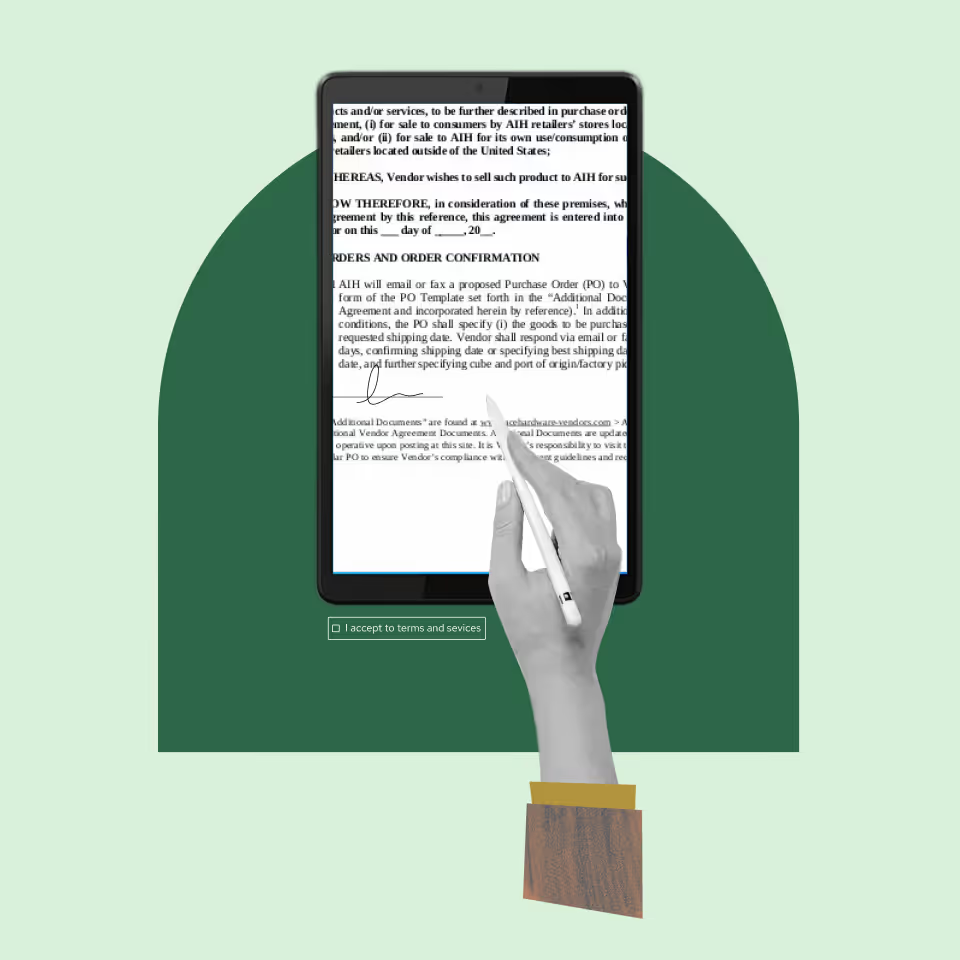
What is Contract Management? Definition, Benefits and Processes

Sreshtha Das
By 
Sreshtha Das
Feb 5, 2025
Updated  
June 9, 2026
12 min read
Sreshtha Das is an Ex- Senior Content Marketing Manager at SpotDraft with over seven years of experience creating and leading content strategies for startups and enterprises.
What is Contract Management? Definition, Benefits and Processes

TL;DR

  • Contract management helps businesses create, approve, track, and renew contracts efficiently
  • A structured contract management process improves visibility and reduces operational risks
  • Workflow automation helps accelerate approvals and reduce manual work
  • Centralized contract visibility improves compliance and collaboration across teams
  • AI-assisted contract management tools help businesses scale contract operations more efficiently

Contracts are at the center of almost every business relationship, from vendor agreements and sales deals to employment contracts and compliance documentation. But when such important documents are managed via email, spreadsheets, and disconnected workflows, businesses are at high risk of approval delays, missed obligations, compliance risks, and limited visibility. That’s why organizations are increasingly investing in structured contract management processes to improve efficiency and reduce operational bottlenecks.

Effective contract management helps teams streamline approvals, improve collaboration, reduce legal risk, and maintain better control over contracts throughout their lifecycle.

See how SpotDraft helps legal and business teams streamline approvals, negotiations, contract visibility, and collaboration from one centralized platform.

Contract Management Defined

Contract management is the process of creating, reviewing, negotiating, approving, executing, storing, tracking, and renewing contracts throughout their lifecycle. In simple terms, it is a structured approach to manage agreements efficiently while reducing legal, financial, and operational risks.

A strong contract management process helps organizations maintain visibility into obligations, approval timelines, renewal dates, compliance requirements, and contract performance. Instead of relying on manual tracking or scattered documentation, businesses create standardized workflows to ensure contracts move smoothly from request to execution and beyond.

Effective contract management typically includes:

  • Contract drafting and template management
  • Internal review and approvals
  • Negotiation and redlining
  • eSignature and execution workflows
  • Obligation and renewal tracking
  • Reporting and analytics

Contracts impact multiple departments, including legal, procurement, sales, finance, HR, and operations. A well-structured contract management process helps these teams collaborate more efficiently while reducing bottlenecks and compliance issues.

Modern businesses also use automation and AI to simplify repetitive tasks such as contract review, approval routing, metadata extraction, and renewal reminders. This improves speed, consistency, and visibility across the entire contract lifecycle.

Who Uses Contract Management?

Contract management is used across multiple business functions because contracts impact everything from revenue and procurement to compliance and vendor relationships. A well-defined contract management process helps teams collaborate more efficiently while maintaining visibility and control over agreements.

Legal Teams

Legal teams use contract management to standardize templates, review clauses, manage approvals, reduce risk, and maintain compliance across contracts. With a contract management system, legal departments can handle increasing contract volumes without slowing business operations.

Sales Teams

Sales teams rely on efficient contract workflows to accelerate deal closures and reduce approval delays. Faster negotiations and streamlined approvals help improve customer experience and revenue generation.

Procurement Teams

Procurement teams use contract management to manage supplier agreements, track obligations, monitor vendor performance, and maintain better control over purchasing processes.

Finance Teams

Finance teams depend on contract visibility for budgeting, payment tracking, revenue forecasting, and compliance monitoring. Clear access to the contract helps teams to reduce billing disputes and financial risks.

HR Teams

HR teams have to manage employment agreements, offer letters, onboarding documentation, confidentiality agreements, and policy acknowledgments. Here, template consistency and standard terms protect the organization from avoidable disputes. Managing the whole process can be much easier through a structured contract workflow.

Operations and Leadership Teams

Business leaders and operations teams use contract data to improve decision-making, monitor risks, track business commitments, and maintain visibility across organizational agreements.

Different Stages of Contract Management

The contract management process moves through eight stages. Each one is a potential point of failure without the right process in place.

1. Contract Request

The process starts when a team requests a new contract. This stage captures important details about the contract, like contract type, stakeholders, timelines, pricing terms, and approval requirements.

2. Contract Drafting

In the second stage, legal or business teams create contracts using approved templates, clause libraries, and fallback language. Standardized drafting helps reduce errors and maintain consistency across agreements.

3. Contract Review and Negotiation

Stakeholders review the contract, suggest edits, negotiate terms, and finalize legal or commercial details. This stage often involves multiple rounds of redlining and collaboration between internal and external parties.

4. Internal Approval

Contracts move through approval workflows involving legal, finance, procurement, security, or leadership teams. Structured approval routing helps reduce bottlenecks and improve accountability.

5. Contract Execution

Once approved, contracts are signed electronically or manually. eSignature workflows help accelerate execution while maintaining secure records and audit trails.

6. Contract Storage and Organization

Executed contracts are stored in a centralized repository where teams can easily search, access, and track agreements. Proper storage improves visibility and reduces the risk of lost contracts.

7. Obligation and Compliance Tracking

Businesses must monitor deadlines, deliverables, payment terms, renewals, and compliance requirements throughout the contract lifecycle. Automated reminders help reduce missed obligations and legal risks.

8. Contract Renewal or Termination

The final stage involves renewing, renegotiating, extending, or terminating agreements based on business needs and contract performance.

Benefits and Importance of Contract Management

Structured contract management delivers measurable impact across the business.

1. Reduced Financial Risk

A 2025 WorldCC study found that poor contract management costs organizations an average of 8.6% in annual revenue, which is rising to 15% in complex or regulated industries. Standardized templates, obligation tracking, and renewal management directly address the most common sources of this loss.

2. Faster Approvals and Turnaround Times

Structured workflows help contracts move faster through drafting, review, negotiation, and approval stages. This reduces delays and accelerates business operations.

3. Better Contract Visibility

Centralized access to contracts, obligations, and renewal dates helps teams track agreements more efficiently and avoid missed deadlines.

4. Reduced Legal and Compliance Risks

Standardized templates, approval workflows, and audit trails help businesses maintain consistency and reduce compliance issues across contracts.

5. Improved Cross-Team Collaboration

Legal, procurement, sales, finance, and HR teams can collaborate more effectively when contracts are managed through centralized workflows instead of disconnected emails and spreadsheets.

6. Stronger Reporting and Oversight

Contract reporting and analytics help businesses monitor approval timelines, obligations, contract performance, and operational bottlenecks more effectively.

7. Improved Scalability

As contract volume increases, streamlined contract management processes help businesses scale operations without significantly increasing administrative workload.

Tired of missed renewals and approval delays? Book a demo today and see how SpotDraft Contract Management automates your contract management process.

Common Contract Management Challenges and How to Overcome

Many businesses struggle with contract inefficiencies because of manual workflows, scattered documentation, and limited visibility into agreements. Identifying these challenges early helps organizations build a more effective and scalable contract management process.

Challenge How to Overcome It
Slow approval cycles Automate approval workflows with predefined routing rules.
Poor contract visibility Store agreements in a centralized contract repository.
Missed renewals and obligations Set automated reminders and renewal alerts.
Inconsistent contract language Use standardized templates and clause libraries.
Lengthy contract negotiations Streamline collaboration with version control and redlining tools.
Compliance and audit risks Maintain audit trails and role-based access controls.
Difficulty tracking contract data Use reporting dashboards and searchable metadata.
Low cross-team collaboration Create centralized workflows for legal and business teams.


Modern contract management workflows help businesses reduce delays, improve compliance, and maintain better control over contracts throughout their lifecycle.

Contract Management Workflow Automation

Manual contract management relies on people to remember, follow up, and route correctly, which means it fails predictably when people are busy or when volumes increase.

The contract management process becomes significantly more reliable when key steps are automated:

  1. Intake routing: Contract requests trigger the right workflow automatically based on type, value, or requesting team
  2. Approval escalation: Overdue approvals escalate without manual follow-up; reviewers are notified automatically
  3. Obligation alerts: Payment milestones, compliance requirements, and key dates trigger reminders before deadlines arrive
  4. Renewal notifications: Advance alerts give your team time to review and renegotiate before the window closes
  5. Reporting: Cycle time, compliance rate, and portfolio status update automatically without manual extraction

Automation does not replace legal judgment. It removes the administrative friction around legal work, so your team applies expertise where it is actually needed, instead of chasing approvals and tracking calendar dates.

What Does Contract Management Software Do?

Contract management software helps businesses streamline the creation, review, approval, execution, storage, tracking, and renewal of contracts. It replaces manual processes, scattered spreadsheets, and disconnected email workflows with centralized automation and visibility.

Core capabilities typically include:

Capability What It Does
Template and clause library Self-service drafting with pre-approved language.
Approval workflow automation Rules-based routing, escalation, and conditional logic.
Version control and redlining Clean negotiation history without email attachment chaos.
eSignature integration Digital execution without leaving the platform.
Contract repository Full-text search and metadata-tagged centralized storage.
Obligation and renewal tracking Automated alerts before deadlines and expiry windows.
AI-assisted review Risk clause flagging and contract summarization.
Analytics dashboards Cycle time, volume, and compliance reporting.


The value is not in any single feature; it is in the connection between them. When authoring, approval, execution, and monitoring occur in a single system, nothing falls through the cracks between tools.

Contract Management Best Practices to Follow

Following the right contract management practices helps businesses improve efficiency, reduce risks, and maintain better control over agreements throughout their lifecycle.

Standardize Contract Templates

Use pre-approved templates and clause libraries to maintain consistency across contracts. Standardization reduces drafting errors and speeds up approvals.

Build Your Clause Library Early

Pre-approved language for common scenarios like indemnification, limitation of liability, IP ownership, data protection, etc. frees legal from routine review loops and helps focus on negotiating genuinely non-standard terms.

Automate Approval Workflows

Automated workflows help eliminate manual follow-ups and ensure contracts move through the right approval stages without delays.

Centralize Contract Storage

Store all agreements in a searchable repository instead of scattered folders or email threads. Centralized visibility improves accessibility and compliance tracking.

Integrate Contract Management With Existing Business Tools

Contracts created in Salesforce should automatically move into approval and review workflows. Signed agreements should sync with ERP and finance systems to maintain accurate records and reporting. Disconnected systems create duplicate work, data inconsistencies, and operational delays.

Track Obligations and Renewals

Set automated reminders for payment deadlines, renewals, milestones, and compliance obligations to avoid missed commitments and revenue leakage. A 30-day alert is rarely sufficient for agreements that require renegotiation. Set alerts at 90 days for strategic contracts, 60 days for review, and 30 days as a final confirmation.

Maintain Clear Audit Trails

Track contract edits, approvals, negotiations, and activity history to improve accountability and support compliance requirements.

Improve Cross-Team Collaboration

Create structured workflows that allow legal, procurement, finance, sales, and HR teams to collaborate efficiently throughout the contract lifecycle.

Use AI to Reduce Manual Work

AI-assisted review, metadata extraction, and smart search capabilities help teams accelerate contract analysis and improve operational efficiency.

How SpotDraft Improves Your Contract Management Process

Managing contracts manually often leads to approval delays, scattered documentation, missed obligations, and limited visibility across teams. SpotDraft helps businesses simplify and standardize the entire contract management process through automation, AI-assisted review, and centralized collaboration.

SpotDraft allows legal and business teams to:

  • Automate contract approvals and routing workflows
  • Create contracts using standardized templates and clause libraries
  • Manage negotiations and redlining more efficiently
  • Track obligations, renewals, and key deadlines
  • Store contracts in a searchable, centralized repository
  • Improve visibility through analytics and reporting dashboards

The platform also integrates with tools like Salesforce, Microsoft Word, Slack, and DocuSign to reduce manual work and improve cross-functional collaboration.

With AI-assisted contract review and workflow automation, SpotDraft helps businesses accelerate contract turnaround times while maintaining compliance and operational control.

Ready to bring structure, speed, and visibility to your contract management process? 

Book a demo with SpotDraft today!

Frequently Asked Questions

What Is Contract Management?

PLUS icon

Why Is Contract Management Important?

PLUS icon

How Can Businesses Improve Contract Management?

PLUS icon

What Are the Benefits of Contract Workflow Automation?

PLUS icon

Who is responsible for contract management in an organization?

PLUS icon

Related content

DocuSign CLM Pricing: Costs, Hidden Fees & Alternatives
latest

DocuSign CLM Pricing: Costs, Hidden Fees & Alternatives

Explore DocuSign CLM pricing, implementation costs and hidden fees. Compare plans and alternatives to understand what businesses can expect to pay in 2026.
popular articles