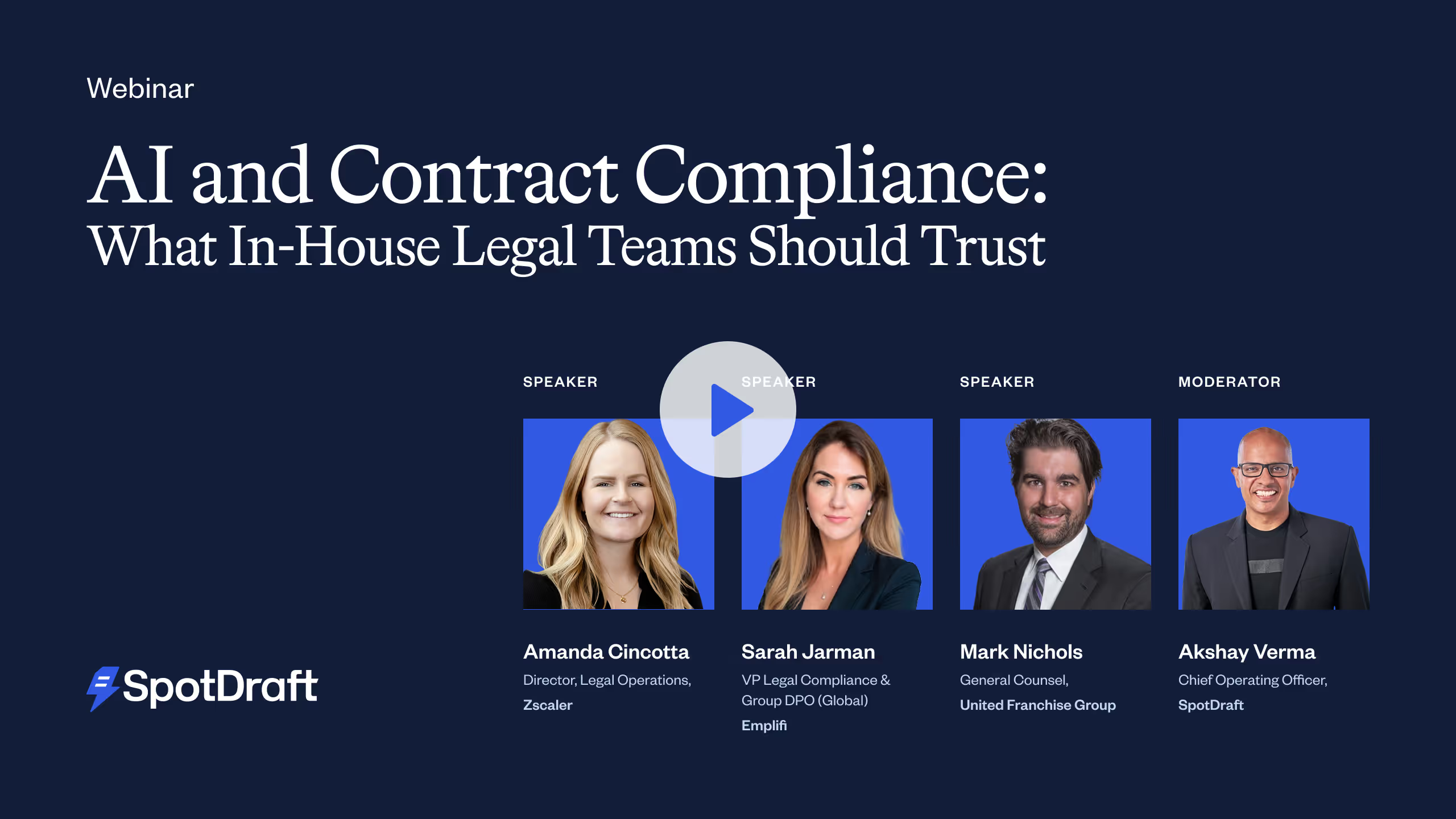
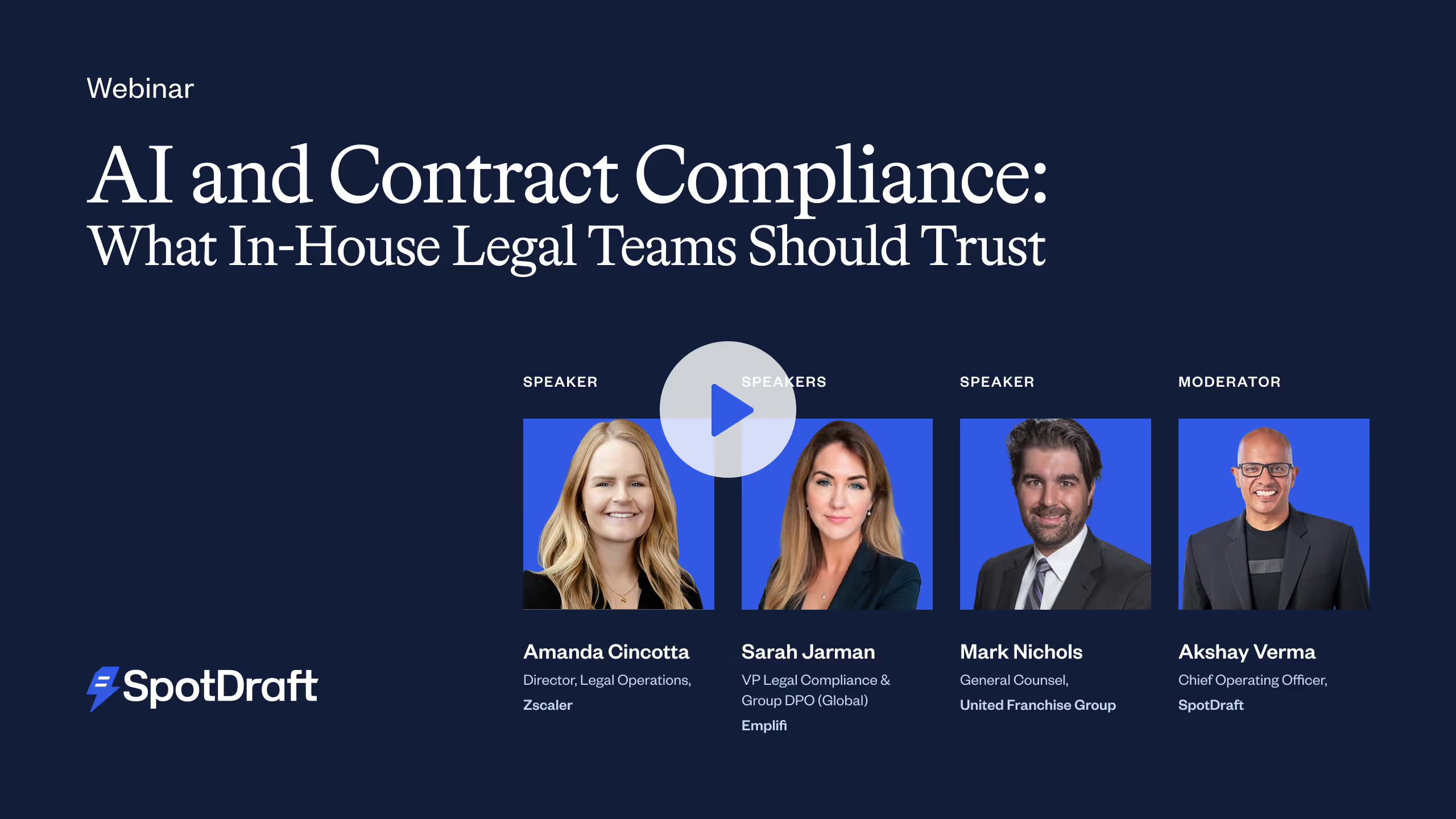
AI and Contract Compliance: What In-House Legal Teams Should Trust

.svg)



Webinar Recap & Key Takeaways
This webinar by SpotDraft brought together legal leaders to explore how AI is transforming contract review, compliance, and legal operations. The discussion covered how in-house teams are leveraging AI for tasks such as term extraction, clause review, negotiation support, and identifying hidden risks while ensuring that human oversight remains central to maintain accuracy, compliance, and sound decision-making.
Speakers also emphasized the importance of clean data, strong governance, and clearly defined ownership to drive successful AI adoption. The key takeaway was clear: AI is not replacing lawyers - it is enabling legal teams to work more efficiently, move faster, and focus on higher-value, strategic business impact.
Session highlights (with timestamps):
- 04:22 Amanda Cincotta explains how Zscaler uses AI to extract key terms for reporting and reverse-engineer historical agreements to build foundational playbooks
- 07:04 Mark Nichols highlights that AI provides measurable value through time savings in identifying "prickly" clauses and managing post-signature obligations like auto-renewals
- 09:40 The panel discusses a high-profile case where a law firm faced significant issues due to AI hallucinations in court briefs, emphasizing the reality of technology errors.
- 12:01 Sarah Jarman warns that the greatest danger is when AI is "plausibly right but subtly wrong," necessitating human validation for high-stakes context.
- 15:46 Sarah Jarman notes that without understanding existing workflows before inputting data, organizations risk simply "automating chaos".
- 17:12 Mark Nichols points out that AI struggles with rapidly evolving regulations, such as new state-level non-compete laws, which require manual legal updates.
- 22:06 Amanda Cincotta shares a "lesson learned" where a lack of pilot testing and poor early outputs led to a total loss of team trust, forcing the removal of a tool.
- 27:14 The discussion shifts the human role into a "judgment role," where AI performs the first pass and humans focus on flagging risks and surfacing deviations.
- 29:04Mark Nichols presents a counter-view on low-risk documents, suggesting that over-lawyering NDAs with AI may be less efficient than a quick human review for specific terms.
- 31:41 Sarah Jarman discusses the rise of "agentic AI" and the potential for autonomous negotiations, which will still require escalation to humans for complex points like liability.
- 42:40 At Zscaler, ownership of AI training is centralized in Legal Operations because they sit at the intersection of process, technology, and legal substance.
- 48:13 Amanda Cincotta stresses that for agentic AI to work, having clean data and mapped processes is a "non-negotiable" to avoid "garbage in, garbage out".
- 51:18 The session concludes with the "Jevons Paradox," suggesting that AI efficiency will not reduce legal work but rather increase the demand for tech-proficient lawyers.
"Technology and AI can scale our best process, but it can also scale our worst. ... If you put the best tech on a [poor] process, it's going to be not good. ... Cleaning up house and getting our docs in order ... is the critical part."
— Amanda Cincotta, Director of Legal Operations at Zscaler
Watch the webinar now!

.avif)








.avif)
.avif)
.avif)




.avif)

.avif)



.avif)






.avif)

.avif)
.svg)