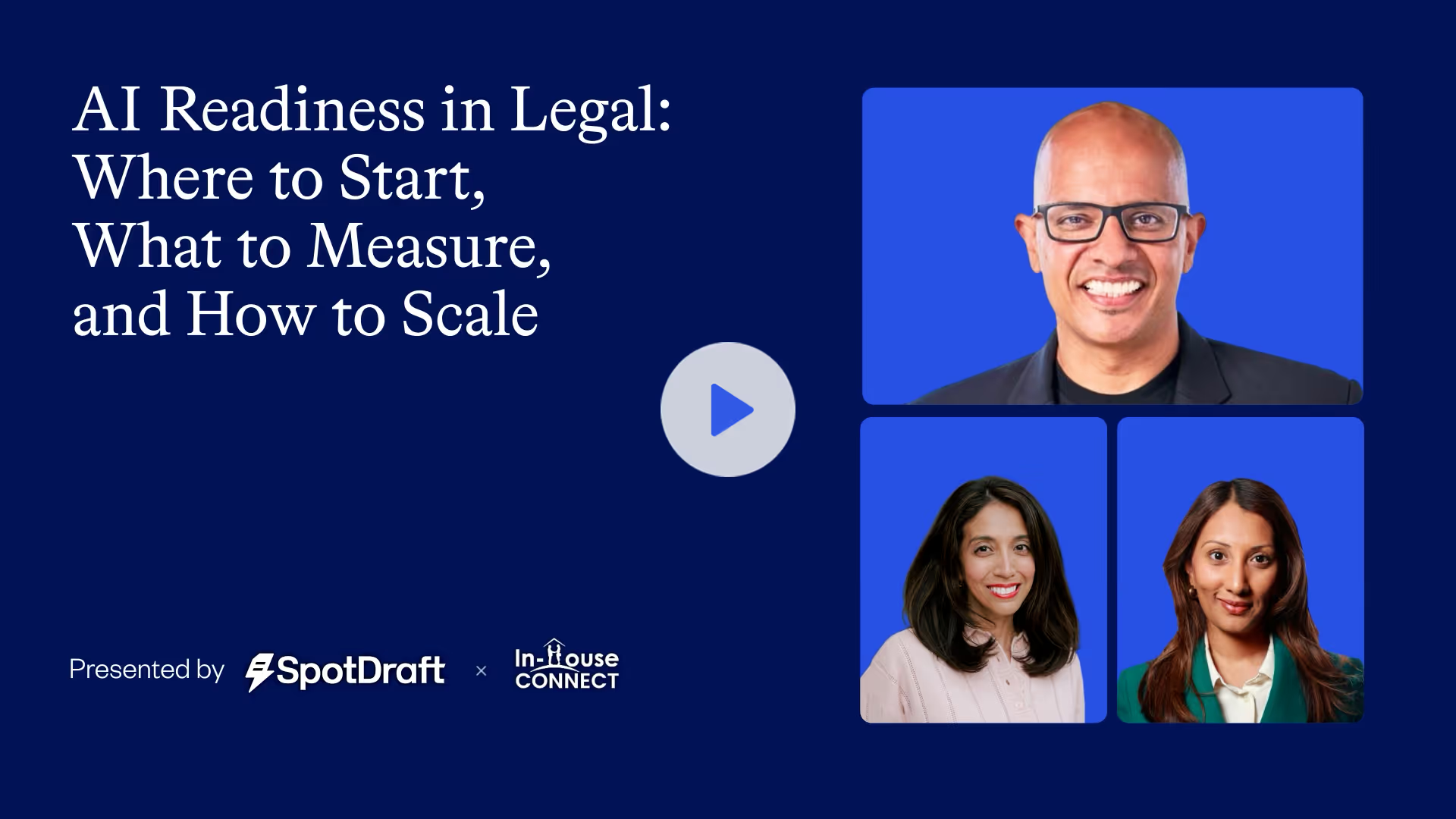
AI Readiness in Legal: Where to Start, What to Measure, and How to Scale

.svg)


Webinar Recap & Key Takeaways
Legal departments are increasingly exploring how AI can support faster, more efficient work without compromising accuracy, compliance, or trust. This webinar brought together legal leaders and operations experts to discuss what true AI readiness looks like in practice.
The session explored where AI can deliver the most immediate impact for legal teams. Practical use cases included AI-assisted contract review for high-volume agreements like NDAs, drafting internal policies, generating meeting materials, and even analyzing team communications to uncover cultural insights. Rather than replacing legal professionals, the goal is to equip them with tools that reduce repetitive work and allow them to focus on higher-value strategic contributions to the business.
Session highlights (with timestamps)
01:15 The panel outlines the goal of providing concrete takeaways for using AI in lawyering and legal departments.
04:44 Lisa Schneider explains the importance of establishing accountability when using AI-enabled tools, emphasizing that lawyers remain responsible for the final work product.
07:09 Avita Delerme highlights that the legal role is to build guardrails and infrastructure—such as policies and request forms—to enable safe AI adoption.
11:01 The speakers discuss legal's unique position to lead enterprise AI initiatives due to their role in setting governance, policies, and risk tolerance.
12:04 Avita introduces a quadrant framework for identifying "easy wins," such as high-impact, low-risk internal use cases like contract review assistants.
16:01 Lisa describes the "deflect, automate, enable" framework used to categorize AI tasks, such as using chatbots to deflect repetitive policy questions.
23:14 The conversation covers measuring success, noting that tracking the impact of adoption, such as reduced contract cycle times, is more critical than just measuring usage.
27:51 Lisa addresses headcount concerns, explaining that AI adoption can lead to reallocating roles and demonstrating cost savings rather than simply losing staff.
34:26 The panel emphasizes the need for role-specific AI education and "basic training" on what data is safe to input into generative models.
37:01 The speakers warn about AI hallucinations, particularly in precise areas like security questionnaires, and the absolute necessity of keeping a "human in the loop."
46:48 The session closes with advice on starting small, aligning with key stakeholders, and maintaining a cultural philosophy that uses AI to augment rather than replace human judgment.
“The legal role is not to block AI adoption. Really, it's to build guard rails that can let adoption happen easily and safely.”
— Avita Delerme, General Counsel, The Channel Company
Watch the webinar now!

.avif)


















.avif)
.avif)
.avif)





.avif)

.avif)




.avif)






.avif)

.avif)
.svg)