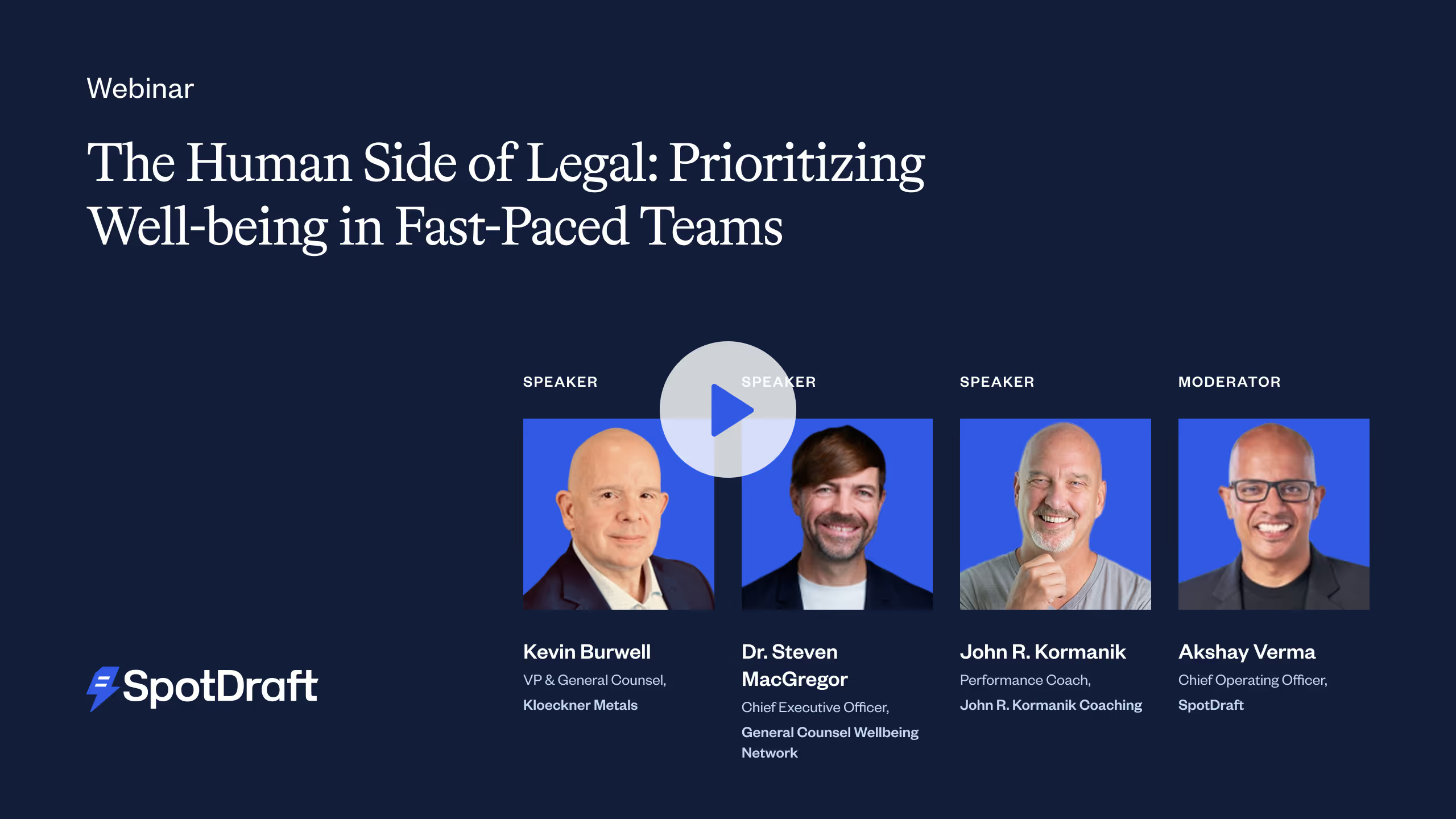
The Human Side of Legal: Prioritizing Well-being in Fast-Paced Teams

.svg)



Webinar Recap & Key Takeaways
The in-house legal profession is facing a well-being crisis it rarely names out loud. Legal leaders are absorbing more business risk, fielding more requests, and managing more complexity, all with lean teams and little structural support for the human cost of that pressure.
This panel, hosted by SpotDraft and In-House Connect, brought together senior legal leaders to have the conversation that most professional forums avoid. Not a discussion about productivity frameworks or legal tech ROI, but an honest reckoning with what it actually takes to lead a legal team sustainably, protect the people on it, and still show up as a credible business partner.
The session covered the early warning signs of burnout that legal leaders miss in themselves and their teams, the structural and cultural changes that actually move the needle, and the language legal leaders can use to make the case for well-being investment to business stakeholders who speak in metrics, not feelings.
Session highlights (with timestamps):
02:05 Kevin Burwell shares his experience as the first General Counsel for a large metals company, navigating the high-stress environment of corporate takeovers and integrations.
03:17John R. Kormanik discusses his transition from high-stakes criminal defense to coaching, driven by the desire to help attorneys address systemic stress and substance abuse.
05:06 Dr. Steven MacGregor introduces the General Counsel Well-being Network, focusing on peer support and the physical aspects of executive performance.
06:50 The panel reviews alarming statistics, noting that 80% of in-house counsel report feeling stressed or burnt out, with severity increasing in leadership ranks.
08:48 Kevin Burwell emphasizes the importance of "pace and boundaries" and describes a company culture built on physical, mental, and financial well-being.
12:10 Dr. Steven MacGregor explains the "systemic squeeze" on senior counsel caused by high workloads, isolation, and under-resourcing.
14:15 The discussion addresses the disruption of AI, suggesting it should be approached with a proactive mindset rather than a victim mentality.
16:28 John R. Kormanik encourages leaders to create a "personal board of directors" to overcome isolation and manage cognitive load.
21:51 Dr. Steven MacGregor applies design thinking to wellness, urging legal teams to intentionally design and "upgrade" their daily operating systems and habits.
37:42 John R. Kormanik identifies the "24/7 availability" expectation as a lie and advises starting small when communicating new boundaries to the business.
41:59 The "Yes-No-Yes" method is introduced as a tactical way to protect boundaries while remaining a collaborative business partner.
46:31 The panel discusses the high cost of burnout, noting that replacing a well-trained associate can cost a firm $250,000 in addition to damaging team culture.
52:33 The session concludes with a reminder that neuroplasticity allows individuals to get better at setting boundaries and practicing positive self-talk over time.
"Wellness for me is something that is separate from the main flow of work and it also connotes some form of fixing... whereas for me well-being... is in our normal flow of work. ... How do you get work done? How do you do excellent work? ... The business case is undoubted."
— Dr. Steven MacGregor, CEO, General Counsel Wellbeing Network
Watch the webinar now!

.avif)




























.avif)
.avif)
.avif)




.avif)

.avif)




.avif)






.avif)

.avif)
.svg)