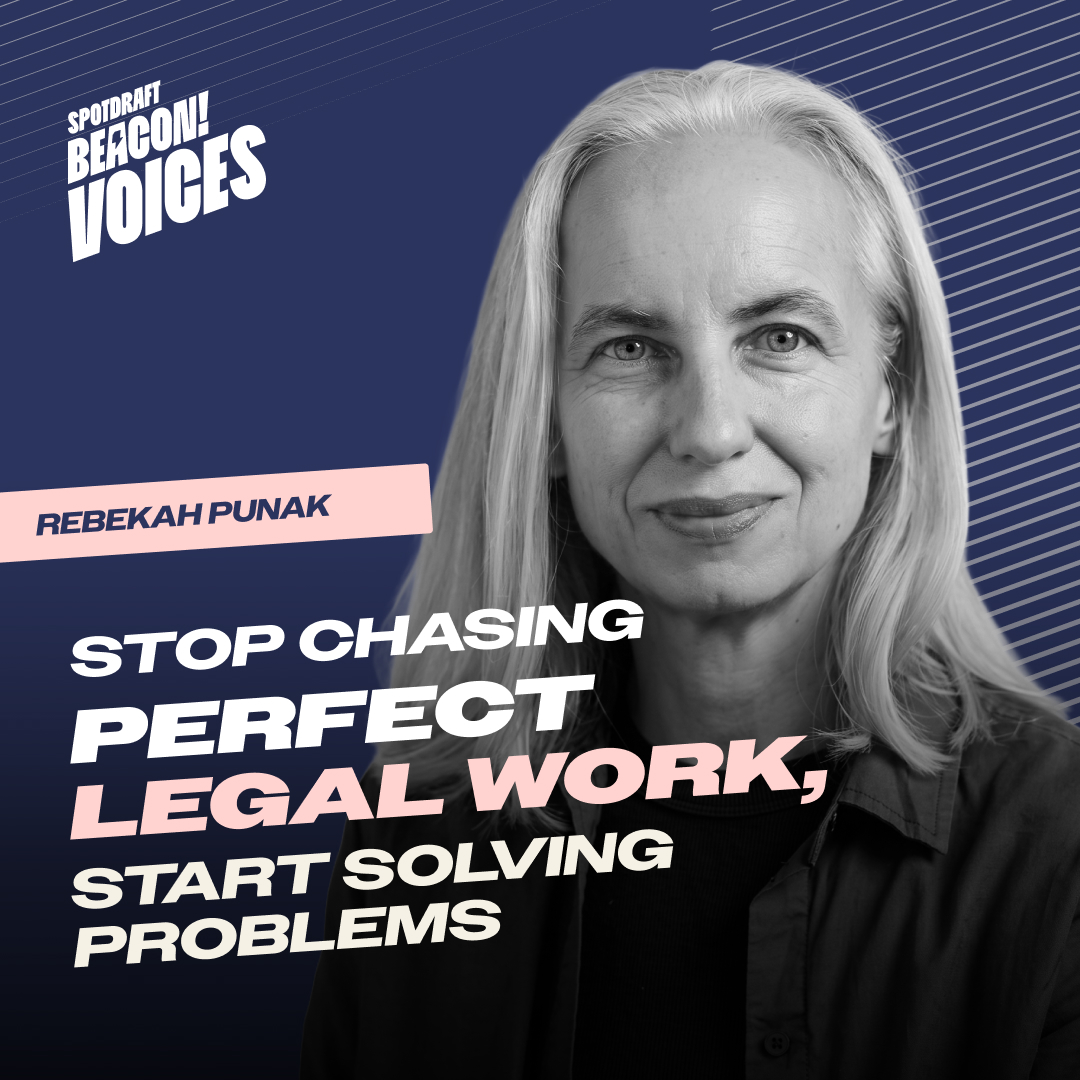
Building Legal Ops at Google: DeAnna Papedis, Head of Legal Contracts & Operations, Google
Key insights
1. Legal Ops exists to protect legal judgment
DeAnna is clear: lawyers should spend their time making decisions that require legal expertise. Everything else — intake, routing, prioritization, reporting, tooling — should be owned by Legal Ops. When lawyers carry operational work, the department slows down and burns out.
2. Perfection is the enemy of scale
Coming from a law firm background, DeAnna describes how hard it was to let go of perfect execution. At scale, “good enough and consistent” beats “perfect but slow.” Legal Ops leaders must design systems that move work forward, not stall it in review cycles.
3. Legal Ops is operations, not administration
She strongly rejects the idea that Legal Ops is a support or admin function. The skills required — systems thinking, stakeholder management, prioritization, change management — are the same skills found in business operations teams. Legal Ops leaders are operators, not helpers.
4. Team structure must follow complexity, not titles
At Google, Legal Ops is neither fully centralized nor fully embedded. Some functions scale better centrally, while others must live close to the business. DeAnna emphasizes that copying another company’s structure without understanding volume and complexity leads to failure.
5. Community accelerates professional growth
Because Legal Ops is still evolving, peer learning matters more than formal training. DeAnna highlights how conferences and peer groups fill the gaps that no playbook can. Shared experience becomes the fastest way to learn what works.
6. AI will increase the need for Legal Ops, not reduce it
She takes a grounded view on AI. Tools may automate tasks, but someone must govern accuracy, risk, and accountability. That responsibility naturally sits with Legal Ops. As technology accelerates, operational ownership becomes more critical — not less.
7. Closing insight
DeAnna Papedis’ career reinforces a simple truth: Legal Ops isn’t about doing more work — it’s about making legal work sustainable. As complexity increases, Legal Ops leaders who protect focus and own operations will define the future of legal departments.
In this podcast, we cover
0:00 Introduction
4:55 Transitioning from contracts manager into legal ops
8:56 Growing legal ops within Google
11:44 Managing a legal ops team
13:40 Attending CLOC from the beginning
16:24 Imagining the future of legal ops
19:11 Book recommendations
20:00 What you wish you’d known as a young lawyer

.svg)



.svg)
.svg)


























.avif)


.avif)